Posted by
 Astrobiology is a strange kind of science, because for most of its history it has studied something it has never actually found. There is exactly one planet we know of with life on it, and you are standing on it. Everything else is inference, chemistry, and patience. That single-example problem sits at the heart of this beginner guide to astrobiology, and it shapes almost everything researchers do: how they read starlight, which exoplanets they point telescopes at, and why a whiff of the wrong gas can send a whole field into argument for years.
So what is the field, exactly? At its simplest, astrobiology is the study of life in the universe — where it might come from, how it starts, and whether any of it exists beyond Earth. It borrows tools from astronomy, biology, chemistry, and planetary science, and stitches them together into one long question. Not a tidy discipline. More a conversation between fields that used to ignore each other.
Starting at home: extreme life and the origin question
A lot of the most useful astrobiology never leaves Earth. Before you can guess where alien life might survive, it helps to know how stubborn life actually is here. Microbes live in near-boiling volcanic springs, in the crushing dark of the deep ocean, inside Antarctic rock, in water so acidic it would strip paint. These are the extremophiles, and every time we find one thriving somewhere that “should” be sterile, the definition of a habitable place quietly stretches a little wider.
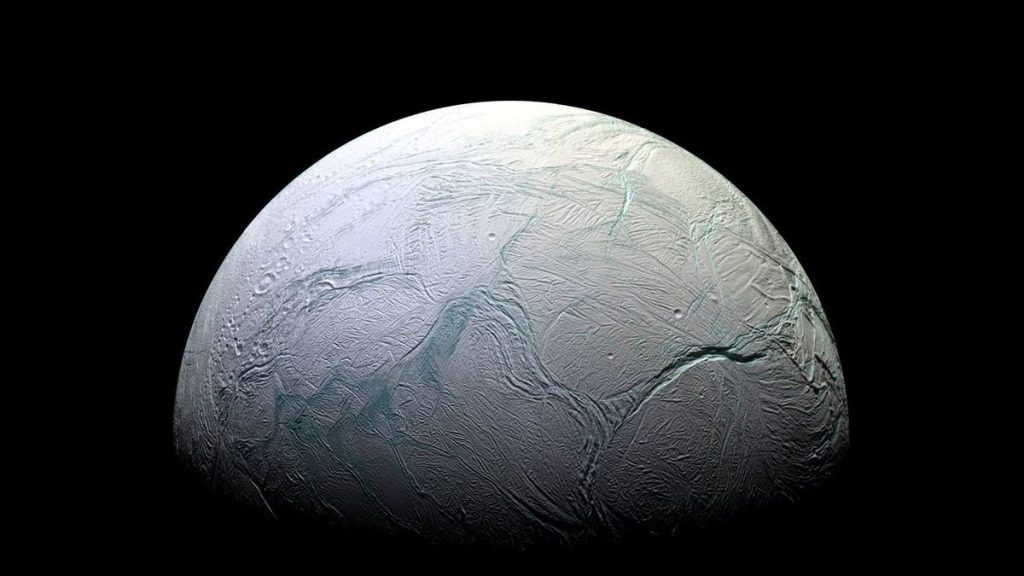
That matters for space science in a very direct way. If life on Earth clings on in brine pockets and hydrothermal vents, then a frozen moon with a hidden ocean stops looking hopeless. The origin-of-life question is the harder one, and honestly we still don’t really know how the first self-copying chemistry got going here, let alone whether the same trick happens easily elsewhere. That gap in our own history is one reason astrobiologists are careful about big claims.
Reading planets we cannot visit
The action right now is mostly around exoplanets — worlds orbiting other stars. We’ve confirmed thousands of them, and the number keeps climbing. Missions like NASA’s Kepler telescope, and now TESS, found most of these by watching for the tiny, repeated dip in a star’s brightness when a planet crosses in front of it. It’s the transit method, and it’s almost absurdly subtle: a rocky world blocks a fraction of a percent of the light, once per orbit, and from that flicker you can work out the planet’s size and year.
The other main technique is the radial-velocity method, which tracks the small wobble a planet’s gravity induces in its star. Between the two, astronomers have built a rough census of what’s out there. And it turns out planets are everywhere. Small ones, in particular, are common.
The prize target is a rocky planet in the habitable zone — the band of orbits where a world could, in principle, hold liquid water on its surface without boiling it off or freezing it solid. The TRAPPIST-1 system is the poster child: seven Earth-sized planets around a small red dwarf, several of them in or near that zone. Proxima Centauri b, orbiting the nearest star to the Sun, sits in its star’s habitable zone too. Kepler-452b and TOI-700 d get named a lot in the same breath. None of these is a confirmed second Earth. They’re candidates — places worth staring at harder.
Biosignatures, and why one gas isn’t proof
Once you have a planet worth studying, the next move is to sniff its air. When a planet transits its star, a sliver of starlight filters through its atmosphere on the way to us, and different gases absorb different colors. Split that light into a spectrum and you can, with a lot of effort, read off what the atmosphere is made of. This is where the James Webb Space Telescope has changed the game — it’s the first observatory sensitive enough to start pulling atmospheric chemistry off small, distant worlds.
The gases we care about are called biosignatures: chemical fingerprints that might point to life. Oxygen is the obvious one, since Earth’s atmosphere is soaked in it because of photosynthesis. Methane is another, especially alongside oxygen, because the two react with each other and shouldn’t linger together unless something keeps topping them up. Water vapor, carbon dioxide, and other molecules round out the list.
Here’s the catch, and it’s a big one. Non-living chemistry can fake almost all of these. Volcanoes belch methane. Certain kinds of starlight can split water and leave oxygen behind with no biology involved at all. So a single interesting gas is never a smoking gun — it’s a reason to keep looking. The recent argument over K2-18b is a good example of how messy this gets: claims of possible biosignature gases in its atmosphere drew intense interest and equally intense skepticism, and the debate is far from settled. The phosphine-on-Venus story played out the same way a few years back — a bold detection, then years of picking apart whether the signal was even real. That back-and-forth isn’t the system failing. It is the system working.
Listening for the engineers
Biosignatures hunt for life of any kind, including pond scum. Technosignatures aim higher: signs of a civilization that builds things. The classic example is a radio signal — a narrow, structured broadcast that nature doesn’t tend to produce. This is the domain most people think of as SETI, the search for extraterrestrial intelligence, and it’s been scanning the sky on and off for decades with radio telescopes. Other proposed technosignatures include pulsed laser light or industrial pollutants in an atmosphere.
Nothing confirmed has ever turned up. No verified signal, no message, silence on every channel we’ve checked so far. That silence is itself a puzzle — the Fermi paradox asks, if the galaxy is old and full of stars, where is everybody? The Drake equation is the other famous bit of shorthand here, a way of chopping the odds of contact into factors we can argue about one at a time. Neither gives an answer. They give you a better-organized version of not knowing.
The hard limits, and why it’s still worth doing
Distance is the wall this whole field keeps running into. Exoplanets are faint specks next to blindingly bright stars, often trillions of kilometers away, and teasing a planet’s atmosphere out of that glare pushes even Webb to its limits. The data is noisy. Signals overlap. Machine-learning tools now help comb through the flood of telescope data to flag the promising cases and filter out false alarms, which is genuinely useful when a single mission produces more light curves than any human could ever inspect by hand.
New instruments are coming that should widen the view — the Extremely Large Telescope on the ground, and the enormous Square Kilometre Array for radio work. They won’t settle the question overnight. But they’ll let us check more worlds, more carefully.
Why bother, when the honest answer to “are we alone” is still maybe? Because either answer changes everything. Find even one microbe with a separate origin, and life stops looking like a fluke and starts looking like something the universe does. Find nothing, keep finding nothing, and that emptiness tells us something sobering about how rare our own story might be. Astrobiology is the rare science where a blank result is still a profound result.
If any of this pulls at you, come explore more of it with us over at the SETIworld portal — there’s a lot more of this story to follow.