Posted by
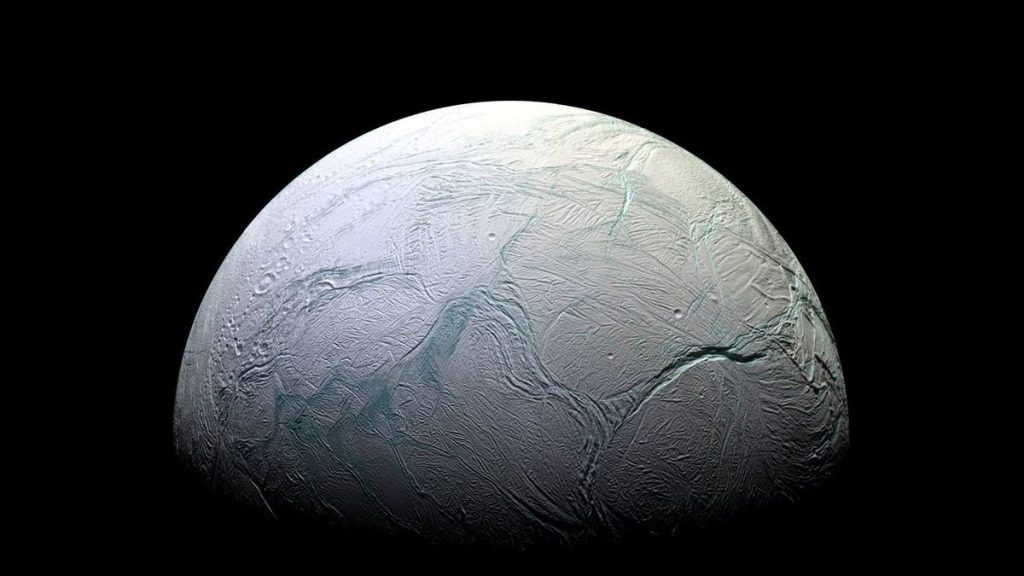
 The nearest genuinely promising environment beyond Earth is probably not a planet at all. Europa and Enceladus have oceans. Titan has weather. So the obvious follow-up is whether alien moons — satellites of planets around other stars — could work the same way, and whether some of them might be better places to be alive than the planets they circle.
The physics of that question is more tangled than it looks. A moon sits inside three or four overlapping energy systems at once, and each of them can help or ruin it.
Nobody Has Confirmed One Yet
This has to be said before anything else. Thousands of exoplanets are confirmed; the confirmed exomoon count is zero. Not because moons are thought to be rare — our own system has hundreds, with Jupiter and Saturn each carrying well over a hundred confirmed satellites — but because the signal is brutal to extract.
David Kipping’s group at Columbia has pushed hardest at this. Their Hunt for Exomoons with Kepler programme produced a candidate around Kepler-1625b in 2017, a Neptune-sized object orbiting a Jupiter-sized planet, based on Hubble observations of a transit. Reanalyses by other teams disputed how the data had been detrended, and the case has never fully closed. A second candidate, Kepler-1708b i, followed in 2022 and drew the same kind of pushback. Meanwhile ALMA imaged a disc of dust and gas around the young planet PDS 70c in 2021 — a circumplanetary disc, the raw material moons form out of, caught in the act. That is the strongest indirect evidence we have that moon formation is a normal part of planet formation.
The Energy Problem Works Differently
A planet gets essentially one external energy source: its star. A moon gets four.
Starlight still dominates, assuming the planet orbits anywhere near the habitable zone. On top of that the host planet reflects starlight onto its satellites and radiates thermal infrared of its own, which for a warm young giant can be substantial. Radioactive decay in the moon’s interior adds a slow trickle. And then there is tidal heating, which is the interesting one, because it does not care where the star is at all.
Tidal heating comes from a moon being stretched and squeezed as it moves through a slightly eccentric orbit. The gravitational gradient across the moon changes over each circuit, the body flexes, internal friction turns that flexing into heat. Orbital resonances with sibling moons keep the eccentricity from damping away, which is why the process can run for billions of years instead of shutting off.
The Narrow Band Between Frozen and Molten
Io is the cautionary tale. Locked in a resonance with Europa and Ganymede, it is flexed hard enough to drive something like four hundred active volcanoes and resurface itself continuously. Nothing about it is habitable. Europa, further out, gets a gentler version of the same treatment and appears to hold a global ocean beneath its ice.
René Heller and Rory Barnes formalised this in 2013 with what they called the habitable edge — the orbital distance inside which tidal heating alone drives a moon into a runaway greenhouse, regardless of how much starlight it receives. It is a hard inner boundary that has no equivalent for planets. Push a moon too close to its giant and it cooks from within.
So habitability for alien moons is bounded on both sides by orbital geometry, and the window is not enormous.
Holding On to Air
Mass is the constraint here, and moons are generally small. Ganymede and Titan are both larger than Mercury, which is a useful reminder that satellites can be substantial worlds — but Titan is the only moon in the Solar System with a thick atmosphere, and it manages it largely because it is cold enough that nitrogen molecules move too slowly to escape.
A warm moon has a harder time. Atmospheric escape depends on temperature, gravity and the ultraviolet and X-ray flux reaching the upper atmosphere, and a moon orbiting a giant planet in a habitable zone gets a fairly punishing dose. Models suggest a satellite needs to be at least a substantial fraction of Earth’s mass to hold a breathable-scale atmosphere for billions of years. Whether such moons form regularly is unknown; the giant-planet satellites we can measure all came out much lighter than that, though a captured object or a collision-formed moon could break the pattern.
The Radiation Belt Problem
Jupiter’s magnetosphere is the largest structure in the Solar System after the Sun’s own influence, and it is full of charged particles trapped and accelerated by the planet’s rotation. Europa orbits inside it. The surface dose there would kill an unshielded human in well under a day, which is why Europa Clipper, launched in October 2024, will fly repeated fast passes rather than settle into orbit — its electronics sit inside a titanium vault.
For a subsurface ocean this hardly matters; a few kilometres of ice is excellent shielding, and the radiation chemistry at the surface may even manufacture oxidants that eventually work their way down. For anything living on a surface it is close to fatal. A moon would need either an orbit outside the harshest belts or a magnetic field of its own. Ganymede has one, the only moon known to, and ESA’s JUICE mission — launched in April 2023, arriving in the mid-2030s — was built substantially to understand how it works.
Skies That Do Not Behave
Climate on a large moon would be strange in ways with no terrestrial analogue. The planet would hang fixed in the sky over one hemisphere, since the moon would almost certainly be tidally locked to it. Eclipses would come round on the moon’s orbital period, cutting the starlight repeatedly — daily, in effect, for a close-in satellite. Planetshine would light the night side.
None of this necessarily breaks habitability. Regular short eclipses average out in a system with an ocean and an atmosphere to buffer them, and the day-night cycle set by the moon’s orbit rather than its spin might actually be gentler than the permanent-daylight and permanent-night hemispheres that afflict tidally locked planets around red dwarfs. It does mean climate modellers cannot just reuse their exoplanet codes.
Why It Is Worth the Trouble
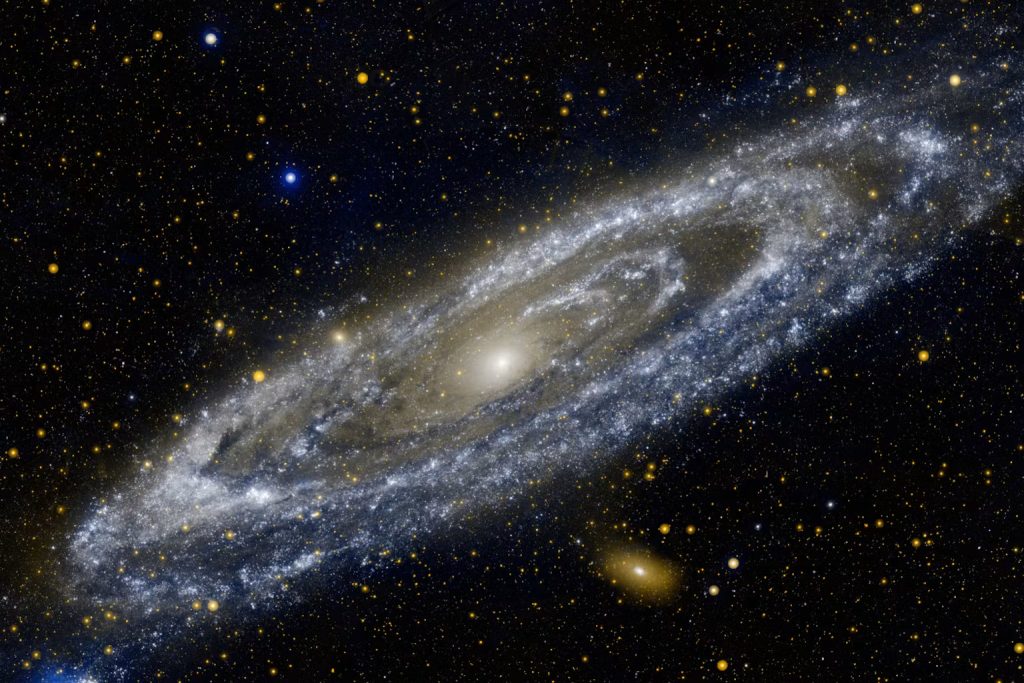
If large satellites turn out to be common, the number of candidate habitats in the galaxy is not a planet count at all. A single giant planet in a habitable zone could carry several sizeable moons, each with its own chemistry and thermal history, and gas giants at those orbital distances are things we already know how to find.
What would move this from speculation to science is one solid detection — a confirmed exomoon, mass and radius measured, with an orbit well enough characterised to estimate its tidal heating. Then the modelling has something to be anchored to. Until that happens the case for alien moons rests on an analogy from our own system, which is suggestive but is not evidence, and the honest position is that nobody knows how much habitable real estate is hiding in orbit around other people’s planets.
SETIworld keeps an eye on the exomoon candidates as they appear and, more usefully, on the reanalyses that follow, which is where most of these claims are actually decided.