Posted by
 Are we alone in the Milky Way? Sixty-five years of organised searching have not answered that, which sounds like failure until you look at how much of the problem has actually been covered. The honest summary is that the search has barely started, and the people running it are the first to say so.
What has changed in that time is that the question stopped being philosophy. It is now a set of observations with instruments, budgets, false-positive rates and published null results.
The Numbers That Made the Question Serious
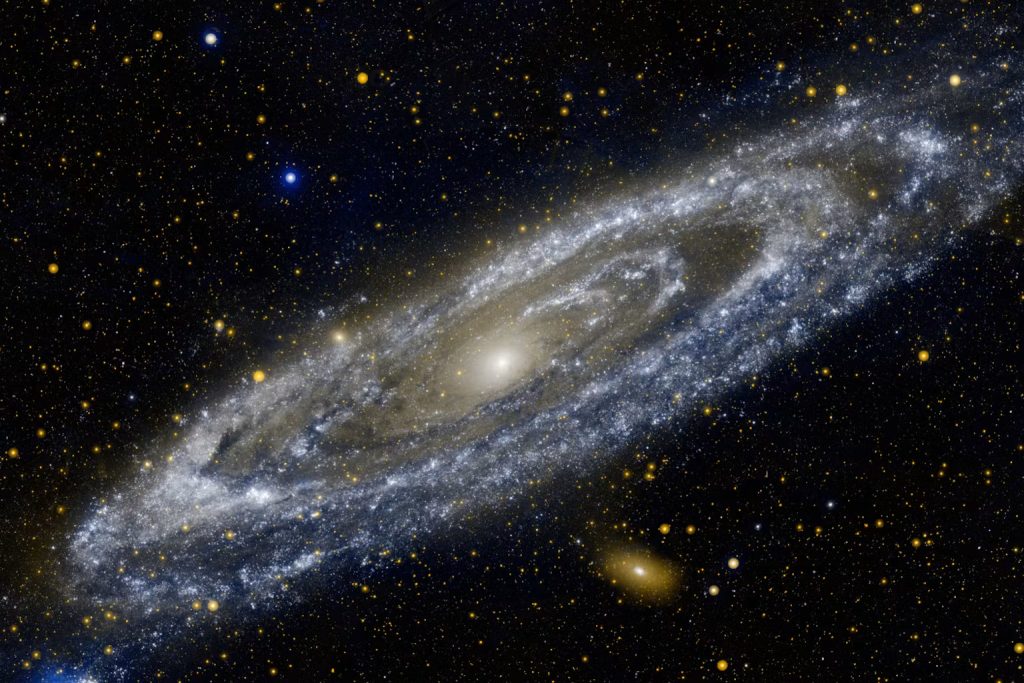
The galaxy is about 100,000 light years across and holds somewhere in the range of a hundred to four hundred billion stars — the uncertainty is real, since we are inside the thing and dust blocks most of it from view.
Before 1995 nobody knew whether other stars had planets at all. Then Michel Mayor and Didier Queloz found 51 Pegasi b, and Kepler spent four years from 2009 staring at one patch of Cygnus and Lyra to work out how common planets are. The answer was: very. Analyses of that dataset by Erik Petigura and colleagues put roughly one in five Sun-like stars as hosting an Earth-sized planet in the temperate zone, with substantial error bars but a clear message.
That converts the Drake equation’s astronomical terms from guesses into measurements. It leaves every biological and sociological term exactly as unknown as it was in 1961.
Sixty-Five Years of Listening
Frank Drake started it in April 1960, pointing an 85-foot dish at Green Bank at Tau Ceti and Epsilon Eridani for a couple of hundred hours. Project Ozma found nothing. He named it after the princess of Oz, a land he described as far away and populated by exotic beings.
The searches since have been sporadic and chronically underfunded. Project Phoenix, run by the SETI Institute from 1995 to 2004, examined about 800 nearby Sun-like stars using Parkes, Green Bank and Arecibo. SETI@home turned several million home computers into a distributed signal processor between 1999 and 2020. The Allen Telescope Array in northern California came online with 42 dishes of a planned 350, the shortfall being entirely about money.
Breakthrough Listen changed the funding picture in 2015 when Yuri Milner committed a hundred million dollars over ten years, announced alongside Stephen Hawking. It buys serious time on the Green Bank 100-metre, on Parkes, and on MeerKAT, and its target list runs to a million nearby stars. Arecibo, which had done much of the earlier work, collapsed in December 2020. China’s 500-metre FAST dish in Guizhou has since taken up part of the load.
The Two Signals Everyone Remembers
On 15 August 1977 the Big Ear radio telescope in Ohio recorded a narrowband burst near the hydrogen line, thirty times the background, lasting the full 72 seconds the beam took to sweep past. Jerry Ehman found it on the printout days later and wrote “Wow!” in the margin. Nothing has ever come from that patch of Sagittarius again, despite repeated searches with far better equipment. A 2017 proposal blamed hydrogen clouds around a passing comet, and most radio astronomers found the fit unconvincing. No natural explanation has stuck. It remains the most cited unexplained result in the field precisely because it happened once.
The other is more recent and more instructive. In 2020 Breakthrough Listen flagged BLC1, a narrowband signal at 982 MHz drifting in frequency the way an emitter on a moving planet should, coming from the direction of Proxima Centauri. It survived the first rounds of checking. Then Sofia Sheikh’s team worked through it properly and found matching signals elsewhere in the data, which meant terrestrial interference — almost certainly consumer electronics somewhere near the telescope.
The BLC1 analysis has become a template. It took months of work by people who wanted it to be real, and they published the refutation themselves.
A Hot Tub of Ocean
Here is the most useful thing to know about the null result so far. Jason Wright and colleagues did the arithmetic in 2018 on how much of the SETI search space has actually been examined — the space being sky position, frequency, sensitivity, polarisation, signal type and time.
Their answer: if the full search space is the volume of Earth’s oceans, everything SETI has done to date amounts to about a hot tub’s worth of water.
So the absence of a detection carries almost no information. It rules out a galaxy densely packed with high-powered omnidirectional transmitters aimed roughly our way at frequencies we happened to be watching, during decades we happened to be listening. That is a narrow thing to have ruled out.
There is a related point about verification that rarely gets airtime. Any candidate signal has to be reacquired by an independent telescope, on different hardware, in a different part of the world, before anyone in the field will treat it as real. The protocols for this were written down decades ago and have been exercised on every candidate so far, which is why no SETI claim has ever needed a public retraction — the failures happen before the announcement rather than after.
Beyond Radio
The field has widened considerably since Drake’s dish. Optical SETI looks for nanosecond laser pulses that would briefly outshine a star — a technique with the advantage that no natural process produces them. Technosignature work now includes waste heat in the infrared, industrial pollutants in exoplanet atmospheres, artificial illumination on night sides, and anomalous stellar dimming of the sort that made Tabby’s Star briefly famous.
Exoplanet catalogues have also made the searching targeted. Drake had to guess which stars were worth pointing at. Now a search can prioritise systems with known rocky planets in temperate orbits, which is a meaningful improvement even if the underlying probability stays unknown.
The Square Kilometre Array, under construction in South Africa and Western Australia, will be sensitive enough to pick up airport-radar-strength leakage from nearby stars. That is a genuinely different regime — detecting a civilisation that is not trying to be found.
So, Are We Alone?
Nobody knows, and anyone offering a confident answer in either direction is going past the evidence. The Fermi paradox — Enrico Fermi’s lunchtime question at Los Alamos in 1950 about where everybody is — has as many live explanations now as it did then. Life could be rare. Complexity could be rare. Technology could be rare. Civilisations could be short-lived, or quiet, or using methods we have not thought to check.
Timing may be the hardest constraint of all. Humans have been radio-visible for about a century out of the planet’s four and a half billion years. Two civilisations have to overlap in time as well as in space, and the galaxy has been making stars for a very long time.
What SETI has actually established is more modest and more solid than a yes or no. It has shown the question is testable, built the instruments, worked out how to distinguish a real signal from a microwave oven in the car park, and demonstrated that the search space is vastly larger than anyone assumed in 1960. If you want to follow where the listening goes next, SETIworld tracks the surveys, the candidates and the retractions as they come.