Posted by
 Are we alone in the universe? For most of recorded history that question belonged to philosophers, because nobody owned an instrument that could touch it. Astronomy changed the situation in 1995, when Michel Mayor and Didier Queloz announced a Jupiter-mass planet whipping around the star 51 Pegasi once every four days. The discovery was strange, unexpected and, above all, measurable. Since then the question of whether we are alone has slowly turned into a research programme with catalogues, spectra, budgets and instruments pointed at specific targets.
Nobody has confirmed extraterrestrial life. Nobody has confirmed an alien civilization either. What has changed over three decades is the backdrop against which that silence gets measured.
A Galaxy That Turned Out to Be Crowded
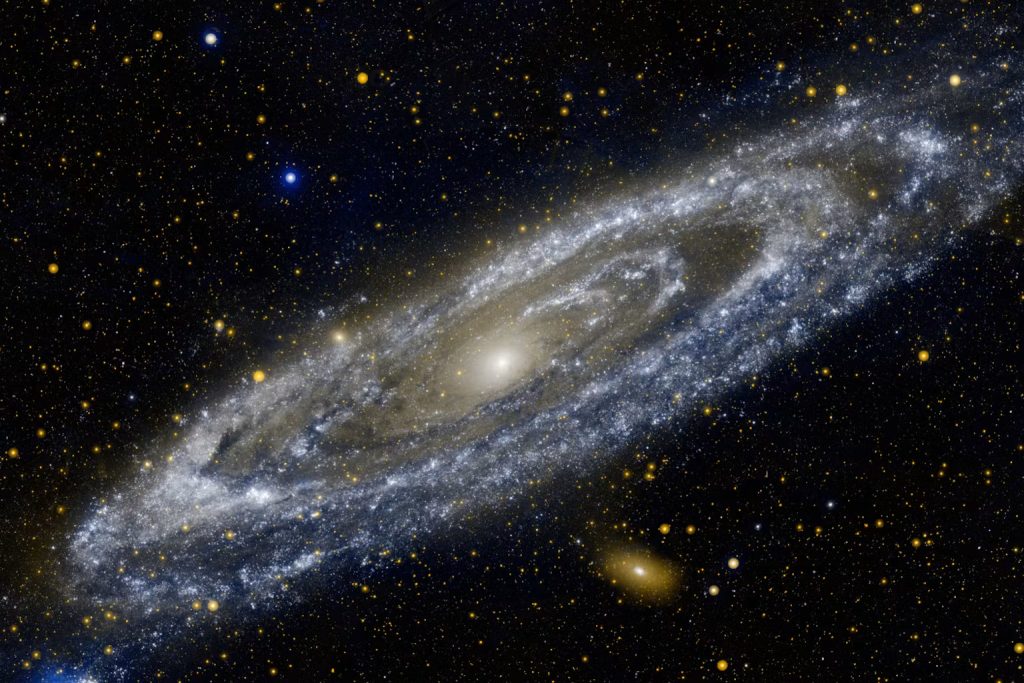
The Sun is one star among several hundred billion in the Milky Way, and our galaxy is one among a population so large that the estimates themselves carry error bars. Numbers at that scale stop meaning anything, so here is a more concrete version. NASA’s Kepler telescope launched in 2009 and spent four years staring at a single patch of sky straddling Cygnus and Lyra, monitoring roughly 150,000 stars for brightness dips of a few hundredths of a percent. It found planets nearly everywhere it looked. The statistical work built on that survey points to a galaxy where planets are at least as numerous as stars.
Large numbers on their own settle nothing. If the origin of life is a fluke of extraordinary improbability, Earth stays unique in a universe packed with rocky worlds, and the arithmetic does not object.
What astronomy has actually established is narrower and more useful than the headline version. The physical settings in which the relevant chemistry could run are common, and we now know where a good number of them are.
Rocky Worlds and the Trouble With the Word Habitable
Thousands of exoplanets have been confirmed, and the catalogue is a zoo: puffed-up hot Jupiters, dense super-Earths, planets on orbits tighter than Mercury’s, systems with several worlds packed into a space smaller than the inner Solar System. Kepler-186f, announced in 2014, was the first Earth-size planet found in the habitable zone of another star. Three years later came TRAPPIST-1, a dim red dwarf about forty light years away with seven roughly Earth-sized planets, several of them in the temperate range. Proxima b, reported in 2016, orbits the nearest star to the Sun.
The habitable zone is the band of orbital distances where a rocky planet with a suitable atmosphere could hold liquid water on its surface. Earth sits inside the Sun’s. So, depending on how generously you draw the boundary, do Venus and Mars.
That last detail is the whole problem. Venus has a surface hot enough to melt lead, and Mars lost most of its atmosphere. Both are in or near the zone. Orbital distance is a screening tool, not a verdict, and habitability depends on atmospheric composition, stellar flares, interior geology, magnetic shielding and whether a climate stayed stable across billions of years rather than a few hundred million.
Red dwarf systems make this sharper. Stars like TRAPPIST-1 and Proxima Centauri are prone to violent flares, and planets close enough to stay warm are probably tidally locked, with one hemisphere in permanent day. Whether such worlds keep their atmospheres is genuinely unresolved, and it is one of the questions JWST is being used to answer.
Water Is Everywhere, and Some of It Is Liquid
Water ice turns up on planets, moons, asteroids and comets. That much has been known for decades. The surprise of the last thirty years is how much of it is warm enough to flow.
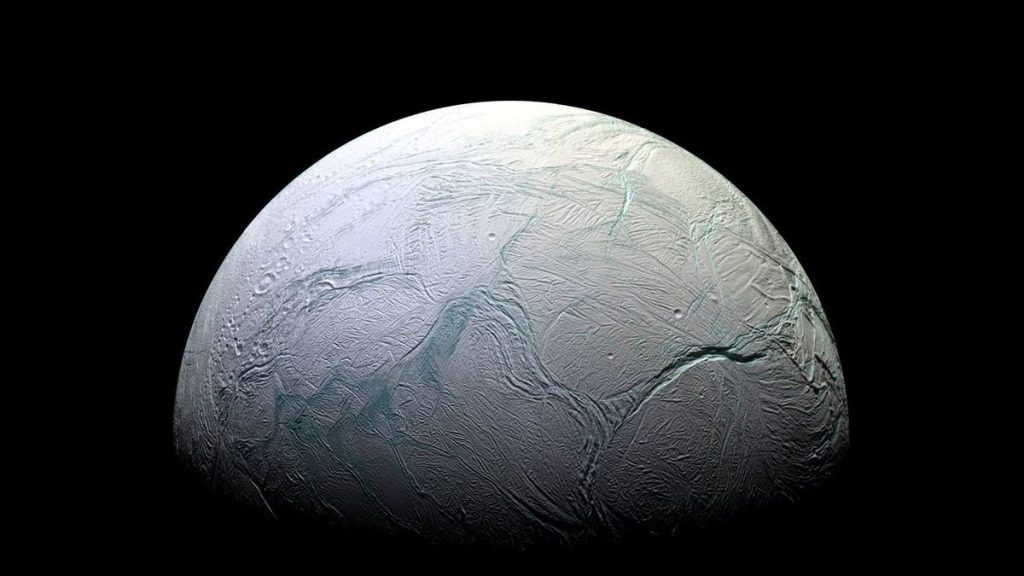
Ancient Mars had rivers, deltas and standing lakes; Curiosity has been driving through the sedimentary record of one of them in Gale Crater since 2012. Europa appears to hold a salt ocean beneath its ice shell, plausibly containing more water than all of Earth’s seas. Enceladus, a moon barely 500 kilometres across, vents plumes into space from a subsurface sea, and Cassini flew straight through them, tasting salts, silica grains and molecular hydrogen — the last a hint of hot water meeting rock on the seafloor.
None of that requires sunlight. Which means the habitable real estate in any given planetary system may be considerably larger than a narrow band around the star, and the search for extraterrestrial life has quietly expanded to include worlds nobody would have listed fifty years ago.
The Ingredients Come With the Territory
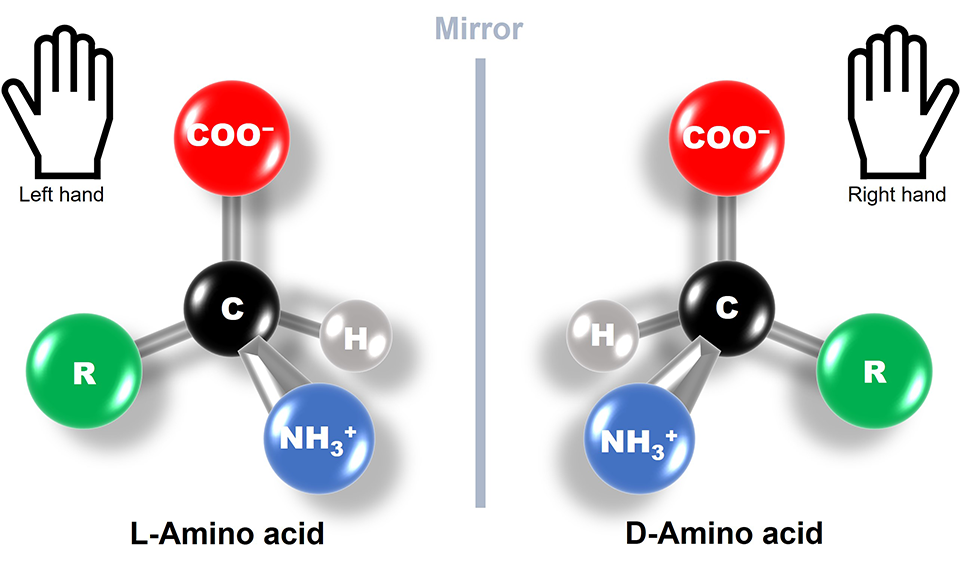
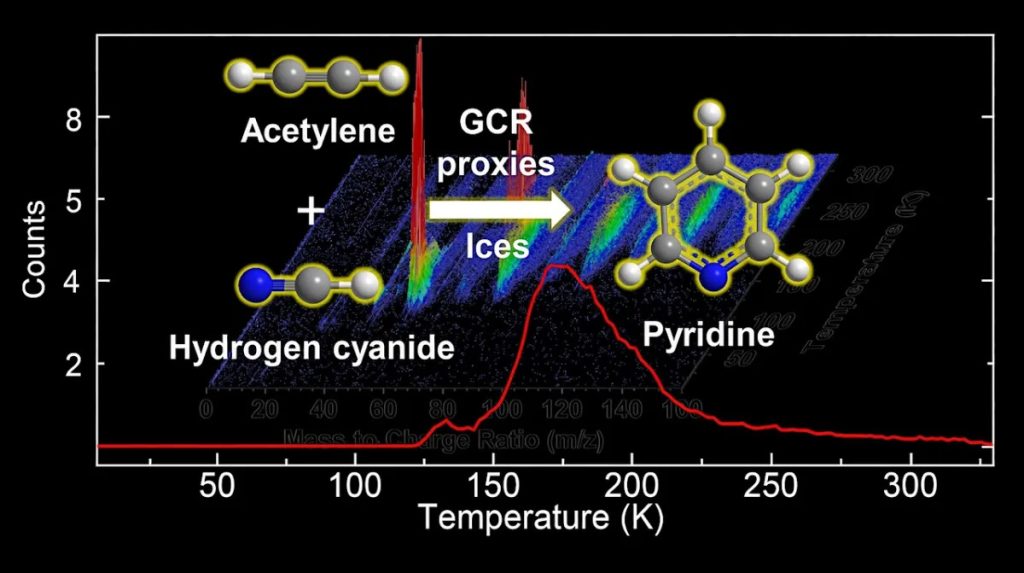
Life here runs on carbon. Carbon chemistry, it turns out, runs almost everywhere. The Murchison meteorite, which fell in Australia in 1969, contains dozens of amino acids, including ones biology on Earth never uses. Radio astronomers have identified a long list of organic molecules in interstellar clouds. When OSIRIS-REx delivered its sample from the asteroid Bennu in September 2023, the grains proved rich in carbon-bearing compounds and clay minerals altered by water.
None of this is evidence of organisms. Ordinary chemistry makes these molecules without any help from biology, and saying otherwise would be a serious overreach. The significance is different: the raw material is delivered to young planets as a matter of course, free of charge, in quantity.
Biology on Earth has been just as unhelpful to tidy assumptions. Microbes live inside rock kilometres underground, in brine pockets in Antarctic ice, in water hot enough to sterilise surgical instruments, and in the dark around hydrothermal vents where the energy budget comes from chemistry rather than the Sun. A world that looks lethal from orbit can still have a habitable basement.
Reading Atmospheres Without Fooling Yourself
The current frontier is spectroscopy. When a planet crosses in front of its star, a sliver of starlight filters through the planet’s atmosphere on its way to us, and the molecules there leave fingerprints in the spectrum. JWST has made this routine for a handful of worlds. The hope is to find a biosignature — a chemical combination that is difficult to produce without life, such as oxygen alongside methane, two gases that ought to destroy each other.
K2-18b shows how careful this needs to be. JWST detected methane and carbon dioxide in its atmosphere in 2023, alongside a tentative hint of dimethyl sulfide, a gas produced on Earth mainly by marine plankton. The headlines were enormous. The signal itself was weak, other teams disputed the statistics, and even the basic nature of the planet — ocean world, or a mini-Neptune with a crushing hydrogen envelope — is still argued over.
That argument is science working properly, not failing. A single molecule with a geological or photochemical explanation is not a discovery, and any real claim will need independent instruments and repeated observations before anyone should believe it.
Listening for Engineers
Astronomy can look for technology as well as biology. SETI searches concentrate on technosignatures, most famously narrow-band radio emission of a kind nature does not produce. The field has had exactly two moments that made the pulse jump, and both illustrate the difficulty. In August 1977 the Big Ear telescope in Ohio recorded a 72-second burst that Jerry Ehman circled on the printout with the word Wow!; it never repeated and was never explained. In 2020 Breakthrough Listen flagged BLC1, a candidate signal from the direction of Proxima Centauri, which careful follow-up traced to human interference.
The infrastructure keeps shifting as well. Arecibo, for half a century the largest single dish on the planet, collapsed in December 2020. Green Bank, the Allen Telescope Array and the VLA still work the problem, and the Square Kilometre Array will eventually change the scale of what a survey can cover.
The Fermi paradox — Enrico Fermi’s lunchtime question at Los Alamos in 1950, so where is everybody? — hangs over all of it. Perhaps intelligence is rare. Perhaps technological societies are short-lived, or communicate in ways we do not recognise, or simply have no reason to broadcast. The absence of a signal does not currently distinguish between those options, and pretending it does would be dishonest.
How Much Have We Actually Looked?
Very little, is the honest answer. Thousands of exoplanets sound impressive until you set them against a galaxy of hundreds of billions of stars. Detailed atmospheric characterisation exists for a few dozen worlds at most. Radio searches have covered a modest fraction of the sky across a modest slice of the spectrum, at sensitivities that would miss anything much fainter than a deliberate beacon.
Earth remains the only place known to host life. That is an observational fact about our coverage, not a conclusion about the universe. A microbial biosignature anywhere else would prove biology started twice; a confirmed atmospheric biosignature would prove another planetary system became inhabited; a verified technosignature would answer a still larger question in a single afternoon.
Until one of those lands, are we alone stays open — which is the whole point of continuing to look. If you want to follow the work as it happens, SETIworld tracks the exoplanet catalogues, the biosignature debates and the SETI surveys, and the arguments there are usually more interesting than the headlines.