Posted by
 Astrobiology jobs are real, they are paid, and there are far fewer of them than the popularity of the subject would suggest. That is the honest starting point for anyone typing the phrase into a search bar at seventeen or at thirty-two. The field is genuinely hiring, in the sense that hundreds of people around the world draw a salary for work aimed at whether life exists anywhere other than here. It is not hiring in the sense that a hospital hires nurses.
Part of the confusion comes from the word itself. Astrobiology is a question, not a department. It sits across planetary science, microbiology, geochemistry, atmospheric physics, instrument engineering and statistics, and the people doing it were trained in one of those, not in the question. When Michel Mayor and Didier Queloz found 51 Pegasi b in 1995, nobody called them astrobiologists. They were astronomers with a very good spectrograph. The Nobel came twenty-four years later.
The job title almost never says astrobiologist
Go and read the actual postings. Almost none of the astrobiology jobs on offer are advertised under that name. Look at what the NASA Postdoctoral Program puts out, or what a university puts out when a planetary science line opens up, and you will find titles like “assistant professor of geobiology,” “research scientist, planetary atmospheres,” “instrument scientist, mass spectrometry,” “postdoctoral fellow in exoplanet characterization.” The word astrobiology usually appears in the third paragraph, describing the group, not the person.
This matters more than it sounds. It means you do not apply to astrobiology. You apply to a discipline, and you make that discipline point at the question. A geochemist who can read isotope ratios out of ancient carbonates is employable in oil, in climate science and in the search for biosignatures in Martian rock. The reverse route, majoring in something vaguely interdisciplinary and hoping the field will recognize you, tends to end badly.
Five kinds of work that actually get funded
Planetary science is the largest pipe. These are the people who argue about Jezero crater stratigraphy, who spent years deciding where Perseverance should drill and which tubes it should seal. Mars work has employed more astrobiologists than any other single target, and it comes with an ugly dependency: the science depends on missions, and missions depend on budget lines that move. The samples Perseverance cached are still on Mars. The return architecture has been rescoped more than once, and a generation of early-career researchers built plans around a delivery date that keeps sliding.
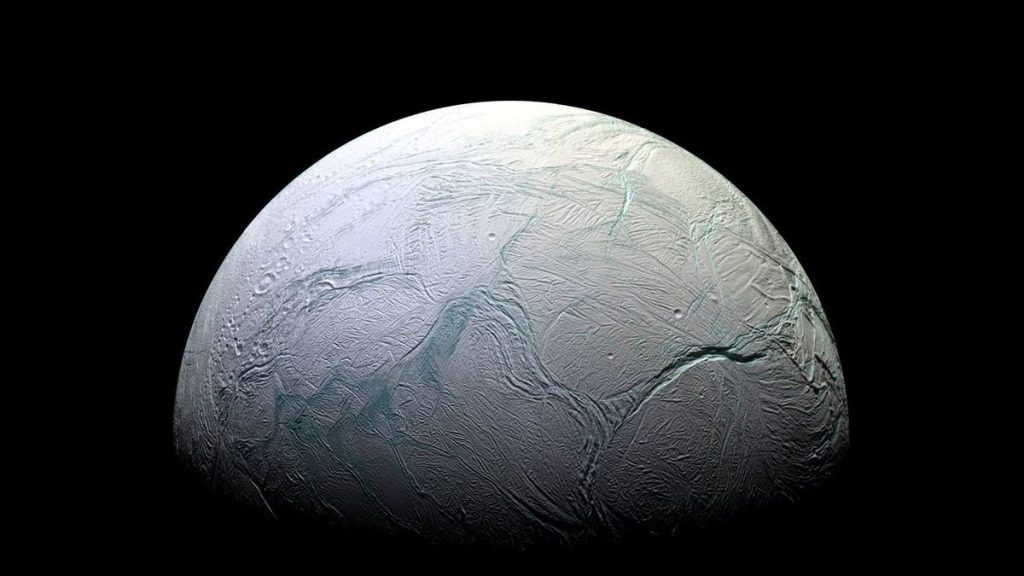
Microbiology is the second pipe, and the least glamorous to explain at a party. Someone has to know what life actually tolerates. Deinococcus radiodurans shrugging off radiation doses that would kill you many times over, microbes pulled from kilometers down in continental crust, communities living in Atacama soils that see rain once a decade — every one of those findings widened the definition of a habitable environment, which is why Europa and Enceladus are on the table at all. Field seasons in Antarctica or the high desert are part of the work. So is a lot of pipetting.
Geochemistry and cosmochemistry sit next to it. This is the ALH 84001 lineage: the 1996 claim that a Martian meteorite held fossilized microbes, and the twenty years of careful work that explained most of those structures without biology. That reversal built careers. It also taught the field how hard it is to prove a rock was ever alive, which is the discipline that people analyzing the Bennu sample, delivered by OSIRIS-REx in September 2023, inherited.
Then instruments. Somebody designs the mass spectrometer, the Raman system, the seismometer, the contamination controls that stop your own skin bacteria from becoming the discovery of the century. Instrument scientists at places like the Johns Hopkins Applied Physics Laboratory or the Jet Propulsion Laboratory are, in headcount terms, one of the most reliable ways into this world. Engineering degree, hardware skills, patience with a decade-long build.
Data work is the fifth, and it has quietly become the biggest growth area. Kepler stared at one patch of sky near Cygnus and Lyra for four years, watching roughly 150,000 stars for brightness dips of a few hundredths of a percent; TESS now does something similar across most of the sky; Breakthrough Listen pushes petabytes off Green Bank. None of that is readable by a human. If you write good Python, understand statistics properly and can explain what a false positive rate means to someone who does not want to hear it, you are useful immediately.
Who signs the paychecks
In the United States, the NASA Astrobiology Program underwrites a large share of the astrobiology jobs that exist, mostly as grants routed through universities rather than as staff jobs. Worth knowing: the NASA Astrobiology Institute, which had been the field’s organizing structure since the late 1990s, was wound down in 2019 and replaced with research coordination networks. Institutional homes are less stable than they look.
The SETI Institute in Mountain View employs both technosignature researchers and a broad astrobiology staff, funded by a mix of NASA grants, philanthropy and partnerships. It runs the Allen Telescope Array at Hat Creek and has a commensal search riding along on the Very Large Array. Its history explains the field’s rhythm: Project Phoenix ran targeted searches from 1995 to 2004, then stopped when the money did. Arecibo, which did some of the most famous listening in the discipline, collapsed in December 2020 and is not coming back.
ESA supports astrobiology mostly through missions and through national institutes across member states. The Rosalind Franklin rover, built to drill two meters into Martian ground, lost its launch arrangement in 2022 and is now aimed at the end of this decade. Universities are the largest single employer everywhere, and the Square Kilometre Array in Australia and South Africa plus the Extremely Large Telescope in Chile will pull in instrument and data staff for years before they produce a single paper about life.
The pipeline, and where people leave it
The route into most astrobiology jobs is well worn and slow. Undergraduate degree in physics, chemistry, biology, geology or astronomy. Research experience during it, because a PhD application without any is weak. Then five to seven years of doctoral work on something specific enough to defend — not “life in the universe,” but the thermal stability of a particular organic molecule under Europa-like irradiation.
After that, postdocs. Usually two, sometimes three, two or three years each, often on different continents. Some are prestigious and reasonably paid, like the NASA Postdoctoral Program appointments or the 51 Pegasi b Fellowship funded by the Heising-Simons Foundation. Most are ordinary soft-money positions attached to whichever grant is currently live. You are in your mid-thirties before you have any chance at something permanent, and by then a lot of people have partners, children, and a limit on how many times they will move for a two-year contract.
This is where the market’s narrowness becomes concrete. A tenure-track opening in planetary science draws applications from far more qualified people than there are jobs, and the same is true of permanent research staff positions at national labs. Nobody hides this. Every advisor worth working with will say it out loud in your first year.
What the work is actually like
Ambiguity, mostly. Curiosity has measured methane in Gale crater that comes and goes with the seasons, while ESA’s orbiter looking from above has struggled to see it at all, and that disagreement has stayed unresolved for years. The 2020 phosphine detection at Venus set off a fight about data processing that still has not fully settled. The claimed dimethyl sulfide signature in K2-18b’s atmosphere from JWST data was announced, contested, reanalyzed and downgraded by other groups within months.
If that sounds frustrating, this may not be your field. If it sounds like the interesting part, it might be. The skill being paid for is not detecting life. It is knowing, rigorously, how much you are allowed to conclude from a weak signal — which is what happened to BLC1, the Breakthrough Listen candidate from the direction of Proxima Centauri that turned out to be interference from human equipment. Somebody had to do the unglamorous work of killing it, and that work was the science.
If you still want in
Pick a hard discipline and get genuinely good at it. Learn to program properly, not just enough to run someone else’s notebook. Get into a lab early, even washing glassware, because letters from people who have watched you work are worth more than grades. Read the actual literature rather than the coverage of it, and notice how carefully real papers hedge. Build at least one skill — instrumentation, statistics, field geology, machine learning — that would pay your rent if you left academia, and treat that as insurance, not betrayal.
And stay close to the argument itself, wherever you end up professionally. Most of the people who care about whether we are alone will never hold one of these jobs, and the questions belong to them just as much. That is what SETIworld exists for — the results, the disputes, the missions in progress, and the people following them. Come read with us, and bring your own doubts.