Posted by
 The best thing about stargazing as a hobby is how little you need to start. No telescope, no expensive gear, no membership — just a clear night, a bit of patience, and a willingness to look up. Almost everyone makes the same mistake at the beginning: they rush out and buy a cheap telescope. Don’t. Your first few nights should be spent with nothing but your own eyes, learning the sky. Here’s how to actually do it.
Let Your Eyes Adjust
The single most important skill costs nothing: dark adaptation. When you step outside from a lit room, your eyes are nearly useless for faint objects. Give them time. Over 20 to 30 minutes in darkness, your pupils widen and your eyes grow dramatically more sensitive — you’ll see far more stars at the end of that half hour than at the start.
The catch is that a single glance at a phone screen ruins it instantly, sending you back to square one. The solution astronomers use is a red flashlight, or a red filter over your phone — red light lets you see your way and read a star map without destroying your night vision. Protect your dark adaptation, and the sky opens up.
Start With the Moon
For your very first target, point yourself at the Moon — but not the full Moon. A full Moon is flatly lit and, frankly, a bit boring through any instrument, while also being bright enough to wash out everything else in the sky. Instead, look during the days around first quarter, when the Moon is half-lit.
The reason is the terminator — the line dividing the lit and dark halves. Along that line, the Sun strikes the surface at a low angle, throwing long shadows that make craters, mountains, and valleys leap into relief. Even with the naked eye you can see the Moon’s character; with cheap binoculars, the terminator is genuinely stunning. It’s the perfect first object: easy to find, endlessly detailed, and forgiving of light pollution.
Find the Planets
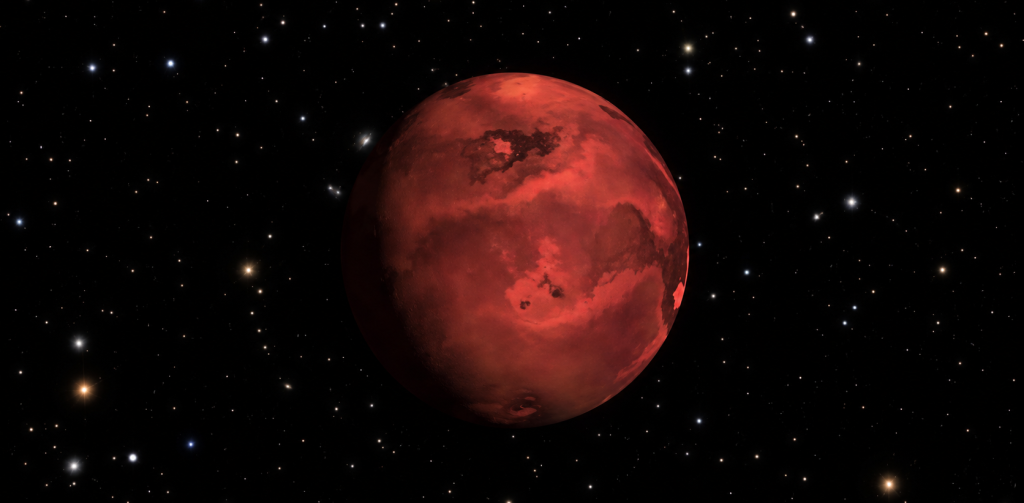
Several planets are visible to the naked eye and outshine every star around them, which makes them easy wins for a beginner. Venus, when it’s around, is the brightest point in the sky after the Moon — unmistakable, low in the west after sunset or the east before dawn. Jupiter is a steady brilliant beacon. Mars shows a distinct reddish tint. Saturn is fainter but reaches naked-eye visibility.
The trick to spotting planets is a simple one: planets generally shine with a steady light, while stars twinkle. That twinkle is starlight being disturbed by our atmosphere; planets, being closer and appearing as tiny disks rather than points, are far less affected. If you see a bright “star” glowing steadily without flickering, you’re very likely looking at a planet.
Learn a Few Signposts
You don’t need to memorize dozens of constellations. You need a couple of reliable signposts to orient yourself. In the northern sky, the Big Dipper is the obvious starting point. The two stars at the end of its “bowl” point straight to Polaris, the North Star — which marks true north and barely moves all night as the rest of the sky wheels around it.
From those anchors, you can star-hop to others. Orion, with its three-star belt, is one of the easiest and most striking constellations when it’s in season. Learn three or four patterns first, use them as landmarks, and the rest of the sky gradually becomes navigable. There’s no rush; the constellations aren’t going anywhere.
Catch Things That Move
Some of the most satisfying naked-eye sights aren’t stars at all. The International Space Station passes overhead regularly, visible as a bright, steady point gliding silently across the sky in a few minutes — and because it’s predictable, you can look up exactly when it’ll appear using free pass-prediction tools. Watching a crewed spacecraft cross the sky never quite gets old.
Meteor showers are the other great free show. A few times a year, Earth passes through debris trails and the sky produces a reliable display — the Perseids in August and the Geminids in December are the strongest. On a dark night during a shower’s peak, you can see dozens of meteors an hour, no equipment required. Just lie back, let your eyes adapt, and watch.
Where and When to Look
Two practical factors matter more than any equipment. The first is darkness: light pollution from cities drowns out all but the brightest objects. Even a short drive to a darker location reveals a stunning difference — under a truly dark sky, the band of the Milky Way itself becomes visible. The second is the Moon: ironically, a bright Moon is the enemy of faint-object viewing, so for stars and the Milky Way, observe when the Moon is absent or thin.
Beyond that, just check the weather for clear skies, dress far more warmly than you think you’ll need, and give yourself time. Stargazing rewards patience more than equipment. Start with your eyes, learn the sky’s landmarks, and you’ll build a foundation that makes every future telescope or pair of binoculars far more rewarding. The universe is up there every clear night, free for anyone willing to look.
A Simple Plan for Your First Night
Knowing the principles is one thing; knowing what to actually do when you step outside is another. Here’s a concrete first session that almost guarantees a rewarding night. Pick an evening a few days after the new moon, when a crescent or half Moon is up but not overwhelming. Check a weather app for clear skies, and dress far more warmly than the temperature suggests — standing still under an open sky gets cold fast.
Step outside and resist the urge to look at anything closely for the first half hour. Let your eyes dark-adapt while you simply take in the whole sky. Then start with the Moon, finding the terminator line where the shadows are longest. Next, hunt for any bright “stars” that don’t twinkle — those are your planets. Find the Big Dipper and trace its pointer stars to Polaris to get your bearings. Finally, just lie back and watch for a while; you may catch a satellite gliding over or a stray meteor. That’s a complete, satisfying first night, and it requires nothing but your eyes, warm clothes, and patience. Each session after that adds a little more.
How the Sky Changes Through the Year
One thing beginners often don’t realize is that the night sky is seasonal — the constellations on display shift gradually as Earth orbits the Sun, so the sky in January looks quite different from the sky in July. This is a feature, not a frustration: it means there’s always something new to learn, and old favorites return like familiar friends each year.
Winter evenings in the northern hemisphere offer some of the richest views, dominated by brilliant Orion with its unmistakable three-star belt and the dazzling stars around it. Spring swings toward galaxies, as the night side of Earth faces away from our own galaxy’s crowded plane. Summer brings the core of the Milky Way arching overhead, its dense star clouds stunning from a dark site, along with the bright “Summer Triangle.” Autumn offers the great square of Pegasus and, for northern observers, the Andromeda Galaxy — the most distant object easily visible to the naked eye, its light over two million years old. Learning the sky is partly learning this annual rhythm, and it rewards you with a different show every season.
Common Beginner Mistakes to Avoid
A few predictable missteps trip up almost everyone starting out, and knowing them in advance saves a lot of frustration. The first is buying a cheap, high-magnification telescope before learning the sky — the magnification numbers on the box are marketing, and a wobbly department-store scope showing a shaking blur has ended more budding interest than anything else. Start with your eyes, then binoculars.
The second is expecting too much. The glorious color images you’ve seen are long-exposure photographs; through binoculars or a small scope, a galaxy is a faint grey smudge, and that’s normal — and quietly thrilling once you realize you’re seeing ancient light with your own eye. The third is giving up after one cloudy or disappointing night. Stargazing rewards persistence; conditions vary, skills build slowly, and the observer who keeps going is the one who eventually sees the spectacular stuff. The final mistake is ruining your night vision with phone screens and porch lights — protect your dark adaptation religiously, and the sky will reward you with far more than you’d expect.
SETIworld helps you start exploring the real night sky — no equipment required. Join the portal to keep learning the cosmos one clear night at a time.
References
- Dickinson, T., NightWatch: A Practical Guide to Viewing the Universe, Firefly 2006
- Consolmagno & Davis, Turn Left at Orion, Cambridge University Press 2018
- International Dark-Sky Association — darksky.org darksky.org
- American Meteor Society — annual shower calendar
- NASA Spot the Station — spotthestation.nasa.gov spotthestation.nasa.gov
- Stellarium open-source planetarium — stellarium.org stellarium.org