Posted by
 Ask whether intelligence is common in the universe and you’ll get answers ranging from “almost certainly, the galaxy is full of it” to “we may be the only ones.” Both come from serious scientists. The enormous spread isn’t because anyone is being careless — it’s because the calculation depends on numbers we genuinely don’t know yet. Walking through those numbers shows exactly where the uncertainty lives.
The Framework
The standard way to estimate the number of detectable civilizations is the Drake Equation, formulated by Frank Drake in 1961. It chains together a series of factors: the rate of star formation, the fraction of stars with planets, the number of habitable planets per system, the fraction where life arises, the fraction where life becomes intelligent, the fraction that develops detectable technology, and the average lifetime of such a civilization.
Multiply them and you get an estimate. The trouble — and the entire story — is that some of these factors are now well measured, and others are almost pure guesswork. The equation doesn’t give an answer; it tells you precisely which unknowns matter.
The Terms We’ve Pinned Down
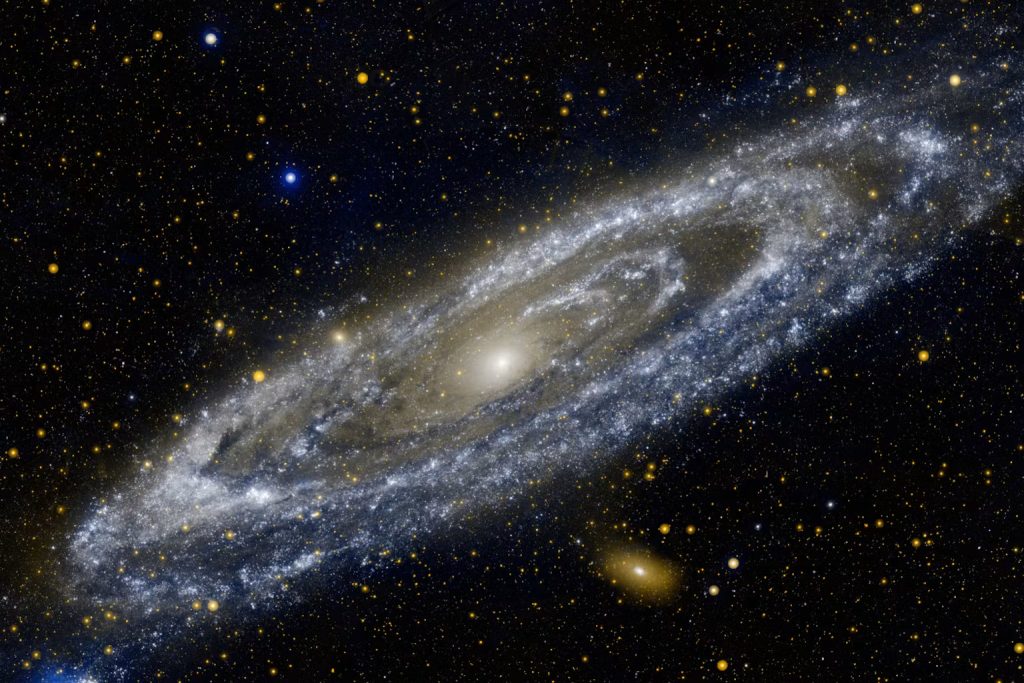
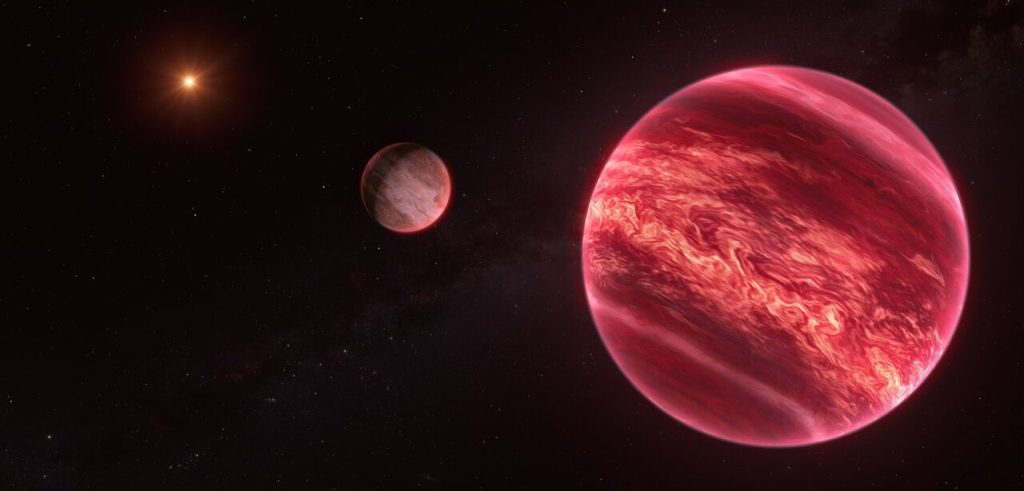
The good news is real. The early factors, once total mysteries, are now constrained by data. We know stars form steadily. We know — thanks to the Kepler mission and its successors — that planets are common, with most stars hosting them. And we know that rocky planets in habitable zones are abundant: analyses of Kepler data suggest a substantial fraction of Sun-like stars have one, implying hundreds of millions to billions of potentially habitable worlds in our galaxy alone.
So the front half of the equation has shifted decisively toward “lots.” Habitable real estate is not the bottleneck. Whatever limits intelligence, it isn’t a shortage of planets.
The Terms That Wreck the Estimate
Then come the factors we can’t measure at all. What fraction of habitable planets actually develop life? What fraction of those evolve intelligence? What fraction of intelligent species build detectable technology? For each of these, we have exactly one example — Earth — and one example tells you almost nothing about a fraction.
This is where the estimates explode. If life arises readily and intelligence usually follows, the galaxy should be crowded. If the origin of life is a near-miracle, or if the jump to complex life is a near-impossible step, those fractions could be so tiny that we’re effectively alone. The same equation produces “millions of civilizations” or “just us” depending on values we have no way to nail down. The honest range spans many orders of magnitude.
The Pessimistic Recalculation
In 2018, a group at Oxford — Anders Sandberg, Eric Drexler, and Toby Ord — made a sharp point about this uncertainty in a paper titled “Dissolving the Fermi Paradox.” When the unknown factors are genuinely uncertain across many orders of magnitude, they argued, you shouldn’t just plug in middle-of-the-road guesses and multiply. You have to handle the uncertainty properly — and when you do, a substantial probability emerges that we are alone in the observable universe, not because that’s the likeliest single outcome, but because the uncertainty is so vast that “zero neighbors” is well within the plausible range.
It was a reminder that confident claims of a crowded galaxy rest on confident values for factors nobody can defend. The numbers don’t support certainty in either direction.
The Optimistic Reframe
Others have pushed the other way. In 2020, Tom Westby and Christopher Conselice estimated, under what they called Copernican assumptions — essentially, that Earth’s development is typical — that there could be dozens of communicating civilizations in our galaxy right now. The catch is the assumption: it presumes intelligence develops on roughly the same timescale wherever conditions allow. That’s a guess, not a measurement, and it drives the entire result.
Frank Drake himself remained broadly optimistic throughout his life. Carl Sagan famously leaned toward a populated galaxy. But these were informed intuitions about the unknown terms, not derivations from data. That’s the recurring pattern: the optimism and the pessimism alike come from what people assume about the factors we can’t yet measure.
What Would Actually Change the Answer
The way out of this isn’t better arguments — it’s better data, and we’re on the verge of getting some. Detecting biosignatures on even a handful of exoplanets would begin to constrain how often life arises. A single confirmed independent origin of life — on Mars, on an icy moon — would suggest life is easy, dragging the estimates upward. Continued silence from technosignature searches, as they expand, gently constrains the abundance of broadcasting civilizations.
Each of these measurements turns a guessed factor into a known one. We’ve already done it for the planetary terms; the biological terms are next. Until then, the truthful answer to “is intelligence common” is that the question is well-posed, the framework is sound, and the inputs are missing. The galaxy is full of planets. Whether it’s full of minds is something the numbers, for now, simply cannot tell us — and anyone who claims otherwise is filling the unknowns with hope or pessimism rather than evidence.
The L Factor: How Long Does a Civilization Last?
Of all the unknowns in the Drake Equation, one dominates the rest: L, the average lifetime of a detectable technological civilization. It’s the final term, and it acts as a multiplier on everything else. If civilizations typically broadcast for only a few centuries before falling silent — through collapse, self-destruction, or simply going quiet and efficient — then even a galaxy that produces them frequently would contain very few at any given moment. If they routinely persist for millions of years, the galaxy could be crowded with them.
The trouble is that we have exactly zero data on L. Our own civilization has been detectable for about a century, and we have no idea whether we’re near the beginning of a long run or the entirety of a short one. Frank Drake himself noted that L might be the most important number in the whole equation and the one we understand least. Worse, L entangles the question with our own fate: estimating how long civilizations last means guessing whether technological societies tend to survive their own weapons, climate impacts, and crises. In a real sense, the search for others is also a mirror — what we learn about how common intelligence is depends partly on assumptions about how long intelligence tends to endure, including our own.
Are We Even Listening at the Right Time?
There’s a temporal trap that pure abundance estimates miss. Even if many technological civilizations have arisen across the galaxy’s long history, they would have to overlap with us in time to be detectable now. The galaxy is over ten billion years old. A civilization that flourished and fell silent a million years ago — a blink on cosmic scales — would be undetectable to us today, its signals long since passed or ceased.
This means the question isn’t only “how many civilizations arise” but “how many exist simultaneously with us, close enough and broadcasting now.” If the typical detectable lifetime is short relative to the age of the galaxy, then civilizations could be scattered across cosmic time like brief sparks, rarely two alight at once within range of each other. We might be surrounded by the silent ruins and the not-yet-born, and miss every neighbor simply by existing in the wrong window. This temporal dimension is why even an optimistic count of total civilizations can coexist with a silent sky — and why detection requires a coincidence not just of space, but of time.
Why the Equation Endures
Given how many of its terms remain guesswork, it’s fair to ask why the Drake Equation is still taught and used at all. The answer is that it was never meant to deliver a number — it was meant to organize a question, and at that it has been remarkably durable. By breaking “are we alone” into a chain of separable factors, it tells researchers exactly where to aim. It identified, decades in advance, that the planetary terms would be measurable before the biological ones — and indeed, the exoplanet revolution has now pinned those terms down.
The equation’s real value is as a map of ignorance: it shows precisely which unknowns matter most and which are yielding to data. Each term that moves from guess to measurement is concrete progress, and the equation lets us see that progress clearly. It has survived sixty years not because it answers the question, but because it remains the best framework for asking it well — a scaffold that turns an overwhelming mystery into a set of researchable pieces.
SETIworld follows the estimates, the assumptions, and the unknowns behind cosmic intelligence — join the portal to track how the numbers shift as data arrives.
References
- Drake, F., The Radio Search for Intelligent Extraterrestrial Life, 1965
- Sagan, C., Cosmic Connection, Doubleday 1973
- Sandberg, Drexler & Ord, Dissolving the Fermi Paradox, 2018
- Frank & Sullivan, A New Empirical Constraint on the Prevalence of Technological Species, Astrobiology 2016
- Westby & Conselice, The Astrobiological Copernican Limits, ApJ 2020
- Bryson et al., The Occurrence of Rocky Habitable-Zone Planets, AJ 2021 doi.org/10.3847/1538-3881/abc418