Posted by
 Nobody has found an alien. That is worth saying out loud before anything else, because the run of extraterrestrial discoveries made over the past sixty years can create the impression that confirmation is just around the corner. It isn’t. What has changed is the map — the set of places worth looking at, the chemistry we expect to find there, and the standard of proof anyone would demand before announcing something. Astrobiology in 1970 was mostly a question about Earth-like planets orbiting Sun-like stars. Today it takes a frozen moon with no sunlight at all completely seriously.
The odd part of that shift is that the most consequential findings were not made in space.
The First Big Surprise Was on Earth
In February 1977 the submersible Alvin dropped to the Galapagos Rift and found something the geologists aboard had not gone looking for: tube worms, clams and thick mats of bacteria clustered around hot mineral-laden water venting from the seafloor. Two and a half kilometres down, in permanent darkness. The ecosystem ran on chemistry rather than sunlight, with microbes oxidising hydrogen sulphide instead of photosynthesising. A biology textbook rewrote itself in real time.
Since then microbiologists have pulled living cells out of acid mine drainage, Antarctic subglacial lakes, near-boiling springs, and rock kilometres beneath continents. The umbrella term for these organisms — extremophiles — is a small joke on us, since nothing about those places is extreme from the organism’s point of view. The useful conclusion is a negative one. Human comfort is not a habitability criterion, and a surface that looks lethal tells you very little about what might be sitting a few kilometres below it.
Mars Stopped Being a Yes-or-No Question
Mariner 4’s twenty-two grainy frames in 1965 killed off the canal-building Martians for good, and the ambiguous biology results from the Viking landers in 1976 left a whole generation of scientists gun-shy about the subject. Orbiters and rovers then spent decades reconstructing something more useful than a yes or a no: what the planet used to be. Valley networks. Delta deposits. Clays and sulphates that only form in water. Curiosity, which landed in Gale Crater in 2012, drilled mudstone at Yellowknife Bay that had settled on the floor of a long-lived freshwater lake, the sort of place where terrestrial microbes would have been perfectly at home.
That is where the vocabulary got precise. Habitability is not habitation. A lake can be entirely suitable and entirely empty, and no rover instrument yet built can reliably separate those two cases. Perseverance, working Jezero Crater since February 2021, is not really hunting for organisms at all; it is sealing rock cores into tubes and betting that somebody eventually flies them home to laboratories that can do the analysis properly.
Ice Turned Out to Be a Roof, Not a Lid
Magnetometer data from the Galileo orbiter in the late 1990s made the case that Europa carries a salty conducting layer beneath its crust — a global ocean, most likely, kept liquid by the tidal kneading Jupiter applies as the moon goes around. That result detached habitability from the habitable zone. Europa sits five times farther from the Sun than Earth does, and its energy budget comes from inside.
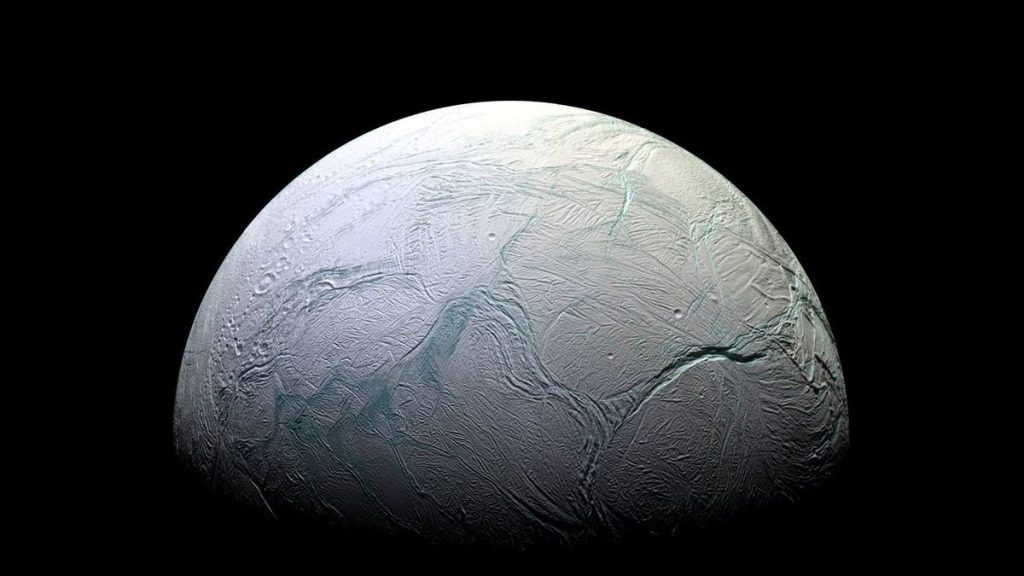
Then Cassini caught Enceladus doing something even more generous. In 2005 it photographed jets of water vapour and ice erupting from fractures near the moon’s south pole, and over the following decade the spacecraft simply flew through them, tasting an alien ocean without ever landing. The plume material held salts, silica grains that point to hot water reacting with rock, and molecular hydrogen — a plausible chemical energy source for microbes, if any microbes are down there. Nobody claims they are. Among all the extraterrestrial discoveries of the Cassini era, though, that one probably changed mission planning the most: you don’t have to drill through kilometres of ice if the moon keeps throwing its ocean at you.
The Ingredients Turned Up Almost Everywhere
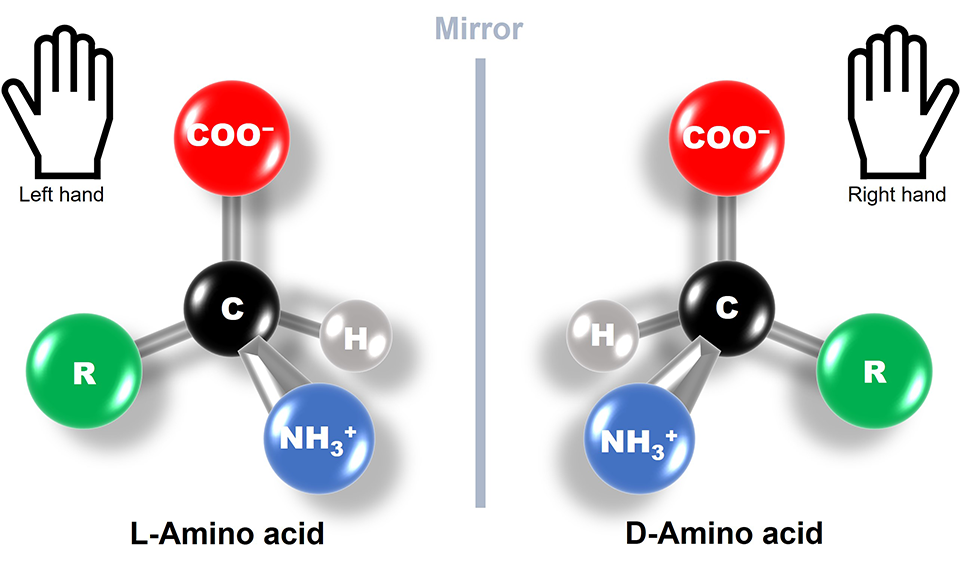
Organic chemistry is not a signature of biology, and this is the thing people most often get backwards. The Murchison meteorite that fell in Australia in 1969 has yielded dozens of amino acids, most of them not used by life on Earth at all. Comets, interstellar clouds and the cold outer Solar System are full of carbon compounds built by ordinary chemistry with no help from anything alive.
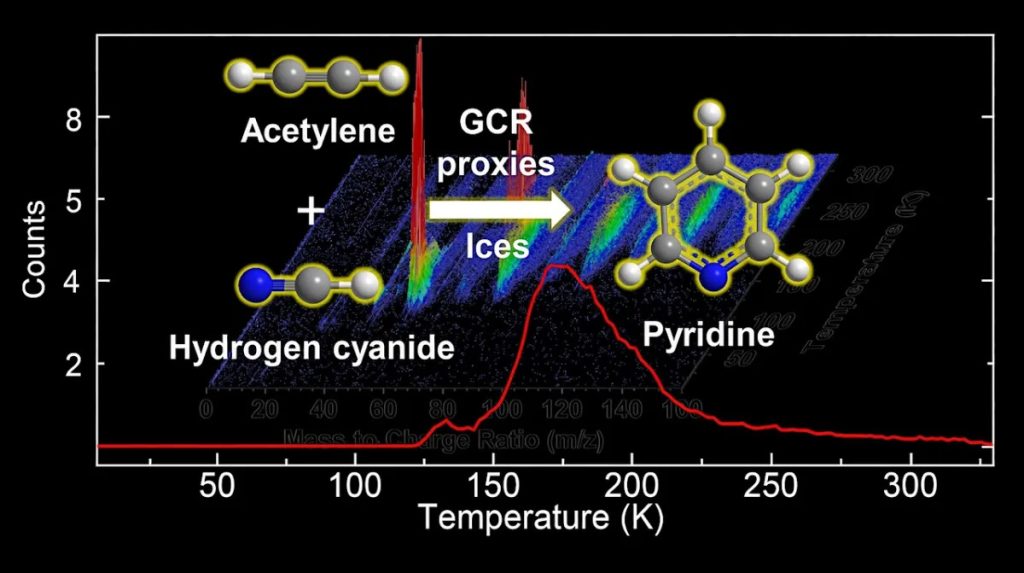
Sample return sharpened the picture considerably. Hayabusa2 brought pieces of the asteroid Ryugu back in December 2020, and OSIRIS-REx delivered material from Bennu in September 2023 — pristine stuff that had never sat in a museum drawer soaking up terrestrial dust. Both carry water-altered minerals and complex organics that predate the planets themselves. So the raw stock was there, distributed freely. The step nobody can yet explain is the one after that: how a mixture of organics becomes something that copies itself. That gap remains the largest single source of uncertainty in any estimate of how common life ought to be.
Then the Planet Count Exploded
Michel Mayor and Didier Queloz announced 51 Pegasi b in October 1995 — a Jupiter-mass planet whipping around its star every four days, a configuration none of the formation models had predicted. Kepler, launched in 2009, then stared at a single patch of sky spanning Cygnus and Lyra and watched roughly 150,000 stars for transit dips of a few hundredths of a percent. Thousands of confirmed planets later, the statistics are settled. Planets are ordinary, rocky ones are common, and our own system’s architecture is one option among many.
TRAPPIST-1, with seven Earth-sized worlds around an ultracool dwarf announced in 2017, became the field’s favourite test case. Proxima b, found in 2016, sits a little over four light years away and orbits inside its star’s temperate zone. Both arrive with a complication that turned out to matter enormously: small cool stars force temperate planets into tight orbits, and small cool stars flare. Proxima Centauri has been caught throwing off flares that would strip or sterilise an unprotected atmosphere. Habitability stopped being a matter of orbital distance and became a relationship between a planet, its star, and whatever magnetic and atmospheric defences the planet happens to have.
From Hunting Aliens to Testing Hypotheses
JWST can now read the composition of some exoplanet atmospheres by watching starlight filter through them during transit. That is the technical foundation for everything that comes next, and the K2-18b episode shows how hard the interpretation gets: a 2023 claim of a possible dimethyl sulphide signal, a molecule produced on Earth mostly by marine plankton, followed by years of argument over whether the feature is real, whether the planet is an ocean world or a gas-rich mini-Neptune, and whether ordinary chemistry could produce the same absorption. The dispute is not a failure of the method. It is the method.
The intelligence side of the search moved in parallel. Frank Drake pointed an 85-foot dish at Tau Ceti and Epsilon Eridani in 1960 for Project Ozma; the Wow! signal came and went in seventy-two seconds in 1977 and has never repeated; Breakthrough Listen’s BLC1 candidate, from the direction of Proxima Centauri, looked tantalising in 2020 and resolved into human-made interference. Radio remains the workhorse, but the field now talks about technosignatures more broadly — laser pulses, industrial pollutants in an atmosphere, waste heat glowing in the infrared. That widening matters because it stops requiring that anyone out there is deliberately calling us.
What Would Actually Change Everything
None of the extraterrestrial discoveries above is evidence of life. Every one of them is evidence about where life could be, which is a weaker claim and a more honest one. The next result could be categorically different. A confirmed biosignature inside a Martian sample core, or in plume material from Enceladus, would mean Earth is no longer the only inhabited world we know of. An atmospheric signal on a rocky exoplanet that survives a decade of adversarial scrutiny would mean biology happened twice, independently, in separate star systems. A verified technosignature would answer the older question in one stroke.
Until then the record reads as a long lesson in underestimating the universe. Vents in the dark, oceans under ice, amino acids in a meteorite, seven planets around one dim red star — each landed as a surprise on someone who felt confident about the boundaries. If you want to follow where the searching goes next, SETIworld tracks the missions, the arguments, and the claims that don’t survive contact with peer review, along with the handful still standing.