Posted by
 In 1994 a serious astronomer could still say, without embarrassment, that nobody knew whether planets existed around other stars. A year later Michel Mayor and Didier Queloz reported a Jupiter-mass object whipping around 51 Pegasi every 4.2 days, and the question stopped being whether and became how many. Nearly every one of the extraterrestrial discoveries since then has followed that same shape: not proof of life, but the removal of a reason to think Earth is special.
The list has grown long. Several thousand confirmed planets. Salt oceans under ice. Amino acids in asteroid dust. Ancient river deltas on a dead world. None of it is biology, and the gap between the two is where the whole field currently lives.
Planets turned out to be ordinary
Kepler settled the statistics. Launched in 2009, it stared at a single patch of sky between Cygnus and Lyra for four years, watching roughly 150,000 stars for the fractional dimming caused by a planet crossing in front — a drop of a few hundredths of a percent for an Earth-sized world. It found thousands, and more importantly it let astronomers estimate how many it must have missed. Small planets are common. Rocky planets in temperate orbits are common enough that the nearest one is probably within a few dozen light-years.
The diversity was the surprise. Hot Jupiters skimming their stars, super-Earths and sub-Neptunes in a size range the Solar System simply lacks, planets orbiting two suns. Our own system stopped looking like a template and started looking like one arrangement among many.
TRAPPIST-1 remains the most useful single system. Seven roughly Earth-sized planets around an ultracool dwarf about 40 light-years away, announced in 2017 after work with a small Chilean telescope and follow-up from Spitzer. Seven rocky worlds formed from the same disc around the same star, with different distances from it — a controlled experiment nature set up and left running.
Mars was habitable, and that is not the same as inhabited
Curiosity landed in Gale Crater in August 2012, and within a year had drilled mudstone at Yellowknife Bay that turned out to have formed in a lake of near-neutral, low-salinity water, with clay minerals and the chemical elements biology requires. The mission’s official conclusion was that ancient Mars had a habitable environment. Nobody claimed anything lived in it.
Perseverance has been working an ancient river delta in Jezero Crater since February 2021, caching cores for a return mission whose funding and schedule remain genuinely uncertain. Its most argued-over find is a rock nicknamed Cheyava Falls, whose millimetre-scale “leopard spots” contain iron phosphate and iron sulphide in a pattern that, on Earth, is often produced by microbes chewing through sediment. It can also be produced without them. Settling it requires the sample in a laboratory, which is exactly why sample return matters and exactly why the delay is frustrating.
Oceans in the wrong places
The single largest expansion of habitable real estate came from moons. Galileo’s magnetometer, orbiting Jupiter between 1996 and 2003, detected an induced magnetic field at Europa — the signature of a conducting layer, most plausibly a global salty ocean beneath the ice. That put liquid water hundreds of millions of kilometres outside the Sun’s habitable zone, heated by tidal flexing rather than sunlight.
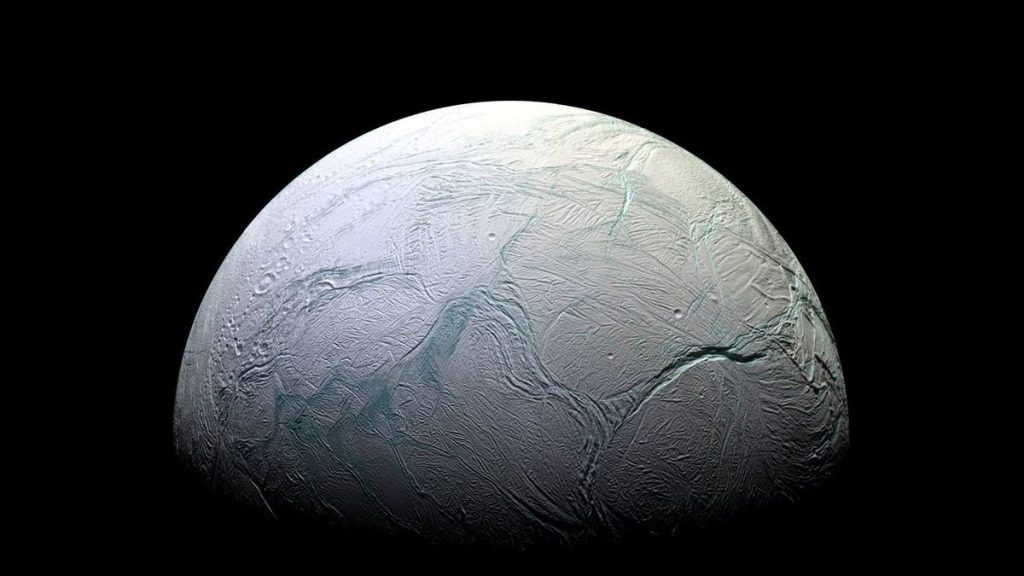
Enceladus went further and made its ocean reachable. Cassini flew directly through the plumes venting from fractures at the south pole, repeatedly, and sampled them: water, salts, organic molecules, silica nanoparticles pointing to hot water reacting with rock on a seafloor, molecular hydrogen that would serve as a usable energy source, and later phosphates, one of the elements whose scarcity was considered a possible obstacle. All of that from a spacecraft designed before anyone knew the plumes existed.
Europa Clipper launched in October 2024 and will spend the 2030s making dozens of close passes. It is explicitly not a life-detection mission. It is a habitability mission, which is the honest framing.
The chemistry is everywhere
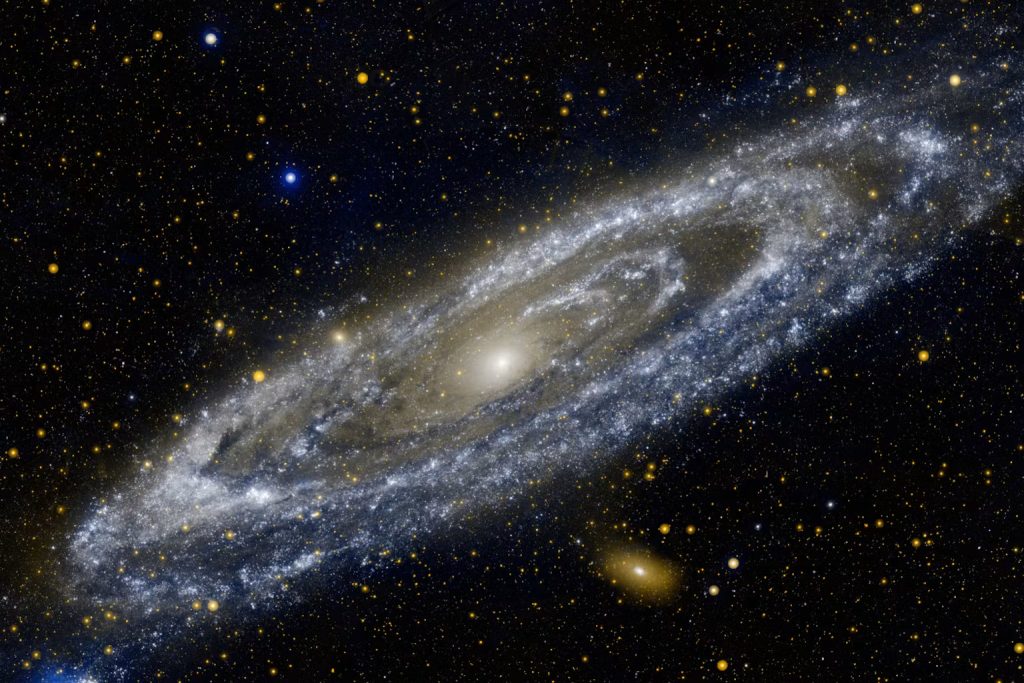
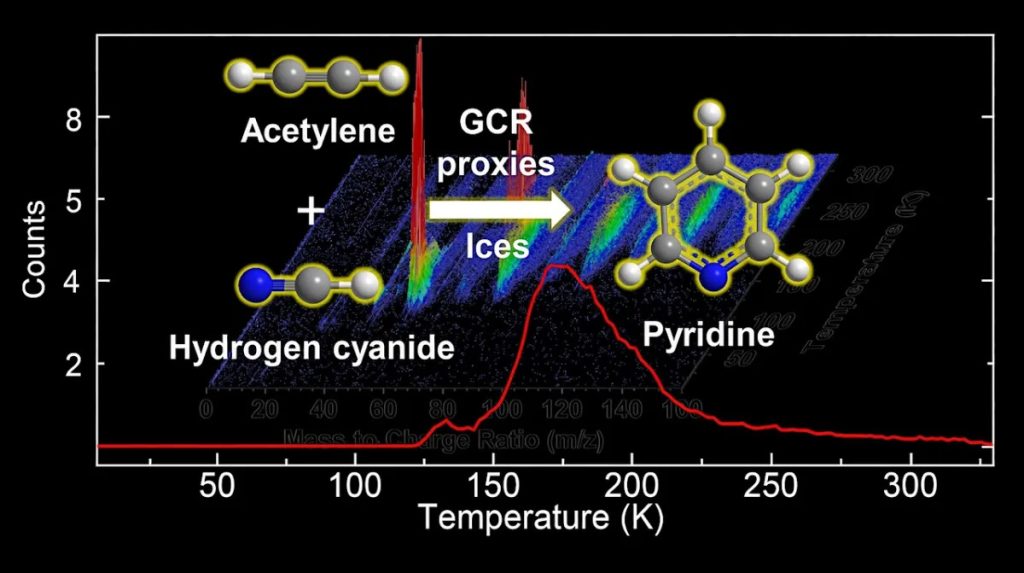
Organic molecules turned out to be a background feature of the galaxy rather than a terrestrial peculiarity. Radio observations find complex carbon compounds in cold molecular clouds. Rosetta’s instruments detected glycine, the simplest amino acid, in the coma of comet 67P. The Murchison meteorite has been yielding extraterrestrial organics since it fell in Australia in 1969.
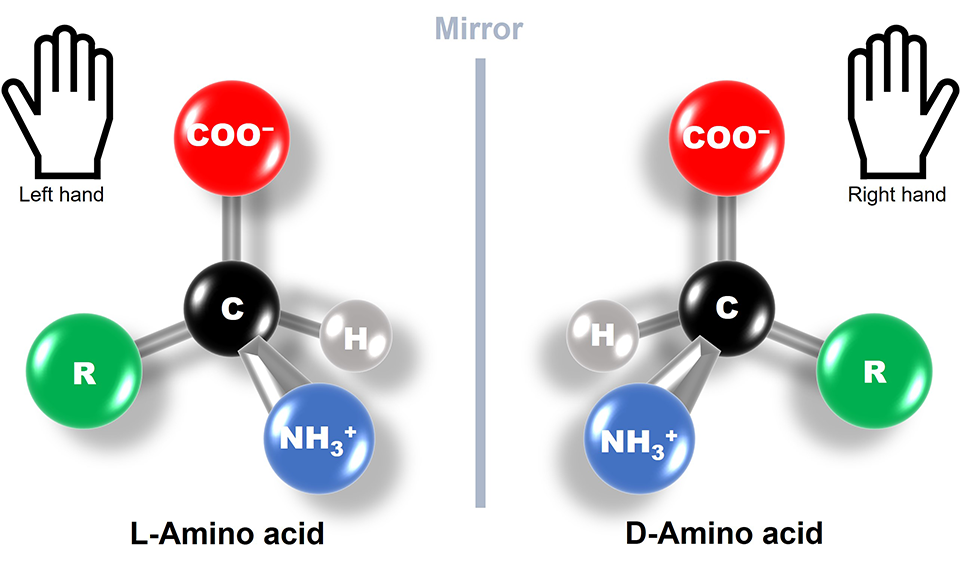
Bennu closed the contamination loophole. OSIRIS-REx returned about 122 grams of asteroid to Earth in September 2023, sealed and traceable, and analysis found 14 protein-building amino acids, all five nucleobases of DNA and RNA, ammonia, and a suite of evaporite salts recording brines that dried out on a long-vanished parent body. The amino acids came in equal left- and right-handed proportions, which is the signature of chemistry rather than biology and the best evidence that they are genuinely Bennu’s.
Water, meanwhile, is nearly unavoidable. Ice on Mars, in comets, in permanently shadowed lunar craters, oceans inside several moons, water vapour detected in exoplanet atmospheres. The interesting question shifted from where water exists to where it stays liquid long enough to matter.
Learning to read an atmosphere
Finding a planet was step one. Reading it is harder. When a world transits, a sliver of starlight filters through its atmosphere on the way to us, and the molecules there stamp their absorption lines onto the spectrum. JWST, operating since 2022, has enough infrared sensitivity to do this for planets far smaller than the hot giants that dominated the first two decades of the field.
The results have been sobering as often as encouraging. JWST’s measurements of TRAPPIST-1b are consistent with a bare rock holding little or no atmosphere, which raises an uncomfortable possibility: red dwarfs, the most abundant stars in the galaxy, may strip their close-in planets bare with flares and ultraviolet radiation. That would remove a large fraction of the worlds astrobiologists had been counting on.
Life on Earth kept moving the goalposts
Some of the most consequential extraterrestrial discoveries were made without leaving the planet. When Thomas Brock cultured heat-loving bacteria from Yellowstone’s springs in the 1960s, he expanded the temperature range of known biology. Hydrothermal vent communities found in 1977 showed entire ecosystems running on chemical energy with no sunlight in the food chain. The Lost City field, discovered in 2000, added alkaline vents driven by serpentinization — water reacting with mantle rock, a process that also plausibly runs inside Enceladus and Europa.
Add the deep subsurface biosphere, organisms living in rock kilometres down with metabolisms so slow that generations may take centuries, and the definition of a plausible habitat stops requiring a surface at all.
What none of it proves
Habitability is not habitation. A rocky planet at the right distance proves nothing. Water proves nothing. Organic molecules prove nothing, since they form readily without any biology involved. Even an odd atmospheric gas has to survive a search for photochemical and geological ways of making it, which is the argument currently playing out over dimethyl sulfide at K2-18b and, before that, over phosphine at Venus.
What the accumulated extraterrestrial discoveries have done is change the odds structure of the question. The ingredients are common, the environments are common, and the one thing still missing is any example of the transition from chemistry to biology happening twice. That is the gap the next generation of instruments is aimed at.
SETIworld follows these results as they arrive — the Mars cores, the Clipper flybys, the exoplanet spectra and the arguments that follow each one. Worth reading alongside the headlines, which tend to skip the part where the claim gets tested.