Posted by
 An extraterrestrial discovery would rank among the most consequential results in the history of science, which is exactly why the standard of proof for one is punishing. Carl Sagan’s formulation still gets quoted because it is still correct: extraordinary claims require extraordinary evidence. In practice that means a finding has to survive geology, chemistry, instrument error and terrestrial contamination before anyone is entitled to use the word life.
Nothing has cleared that bar yet. Several things have come close enough to generate headlines, and the way each of them fell apart is more instructive than any hypothetical.
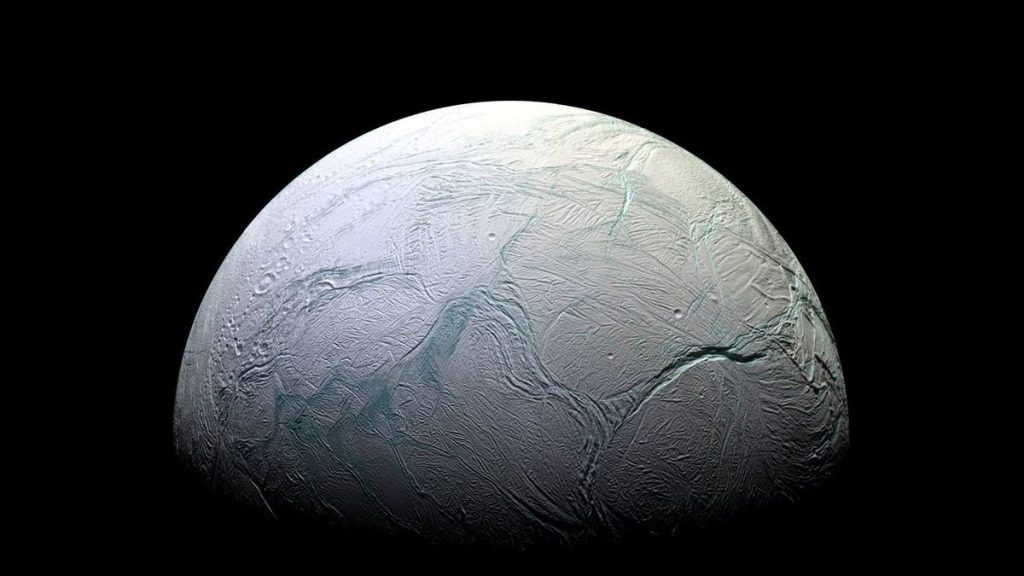
It helps to be clear about what would qualify. Nothing in the definition requires intelligence, spacecraft or a conversation. A colony of microbes under the Martian surface would do it. So would biological molecules with unmistakable structure in plume material from Enceladus, or an atmosphere on a distant planet held in a chemical state that only a biosphere could maintain. Each of those would be confirmed by completely different methods, on completely different timescales, and only one of them involves a telescope.
The Viking Result Nobody Ever Closed
In 1976 NASA landed two Viking spacecraft on Mars carrying a small biology laboratory. One instrument, the Labeled Release experiment designed by Gilbert Levin, fed radioactively tagged nutrients to a soil sample and watched for tagged gas coming back out. It came back out. Heating the sample first killed the response, which is what you would expect if microbes were doing the metabolising.
Then the gas chromatograph mass spectrometer on the same lander found no organic molecules in the soil at all, and the consensus swung to a chemical explanation — reactive compounds in the regolith oxidising the nutrients without any biology involved. Perchlorates found decades later by the Phoenix lander made that story more plausible still.
Levin maintained until his death that his experiment had detected life. Most researchers disagree. What is worth taking from the episode is that a positive result from a well-designed instrument, on the actual surface of another planet, was not enough — and that a genuine extraterrestrial discovery has to be more robust than a single clever assay.
Shapes Lie
The most intuitive evidence would be something that looks like a cell or a fossil. Morphology is also the least reliable line of evidence available, because mineral chemistry produces convincingly biological shapes without any help.
ALH 84001 is the standard example. In 1996 a NASA-led team announced that this Martian meteorite, recovered from Antarctic ice, contained fossilised microbes — carbonate globules, magnetite crystals of a kind bacteria make, and elongated structures tens of nanometres long. The claim reached the President’s podium.
Almost every element of it has since acquired a non-biological explanation. The structures were smaller than the minimum plausible size for a functioning cell. The magnetite could form by thermal decomposition. Nobody has demonstrated the original interpretation is impossible, but nobody defends it as proof anymore either, and it changed how the field talks about morphological evidence.
Chemistry Lies Too
A biosignature is meant to be a chemical state that biology sustains and geology cannot. The recurring difficulty is that almost every candidate has an abiotic route once somebody looks hard enough.
Methane is the classic case. On Earth most of it is biological; on Mars, serpentinisation of rock produces it without life, and the measurements themselves are contested, with Curiosity detecting seasonal traces at the surface that ESA’s Trace Gas Orbiter has struggled to confirm from above.
Two recent episodes made the same point in public. A phosphine detection in the clouds of Venus, announced in 2020, was challenged on data-processing grounds within months and remains unresolved. A hint of dimethyl sulfide in JWST spectra of K2-18b in 2023 produced enormous coverage, then a statistical argument between independent teams that has not settled. Neither was fraud or incompetence. Both were weak signals in hard data, reported honestly and then tested hard, which is the process working.
Isotopes offer a partial way around the ambiguity. Terrestrial organisms discriminate between carbon and sulfur isotopes when they metabolise, leaving ratios in the leftovers that are hard to produce inorganically, and the same logic could apply elsewhere. It is one of the few lines of chemical evidence that does not depend on identifying a specific molecule — though it still assumes an alien metabolism would fractionate isotopes at all, which is an assumption and not a fact.
The Contamination Problem
Anything searching for microbes inside the Solar System has to contend with the fact that the searchers are themselves covered in microbes. Spacecraft are built in cleanrooms and sterilised to standards set under international planetary protection rules, and it is still impossible to guarantee that no terrestrial organism or organic molecule hitched a ride.
Returned samples make this acute. The Bennu material delivered by OSIRIS-REx in September 2023 is handled in dedicated curation facilities with documented chains of custody, precisely so that any organic compound found in it can be argued to be indigenous rather than picked up in a laboratory. Mars Sample Return, whenever it happens, will need the same discipline plus containment.
There is a stranger wrinkle. Suppose a mission found DNA on Mars. If it closely resembled terrestrial DNA, the first hypothesis would be contamination — and the second would be that the two biospheres are related, because rocks blasted off Mars by impacts demonstrably reach Earth, and material could have travelled the other way as well.
A Second Genesis, or a Distant Cousin?
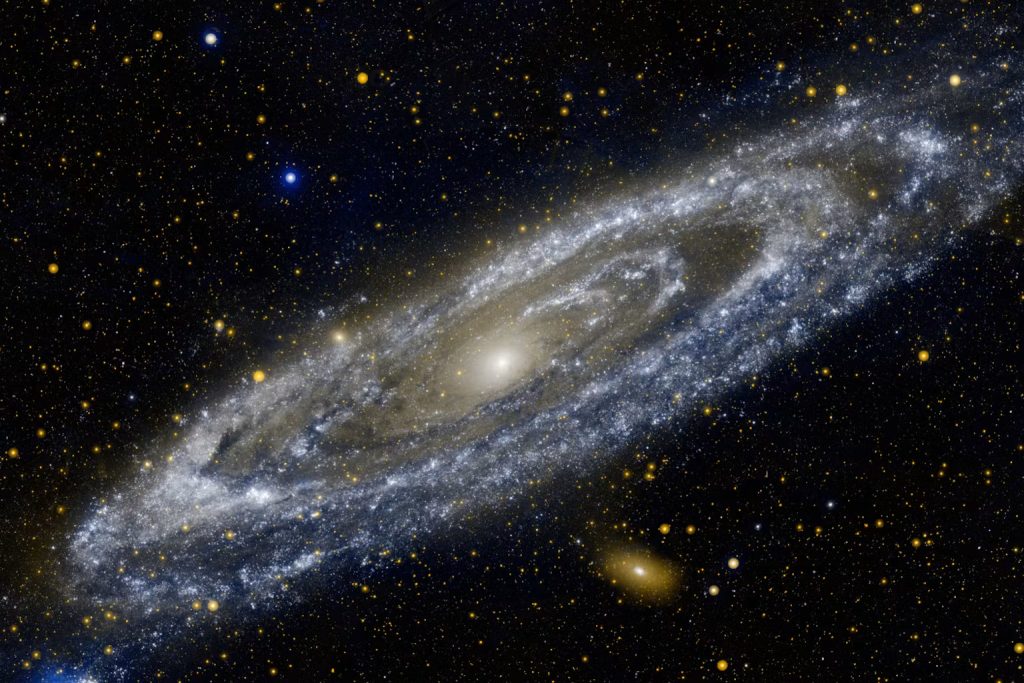
This is why astrobiologists care about the phrase second genesis. Finding life that began independently would give science a second data point on a question it currently cannot touch: whether the origin of life is a routine consequence of the right chemistry or a fluke so improbable that Earth may be the only case in the galaxy.
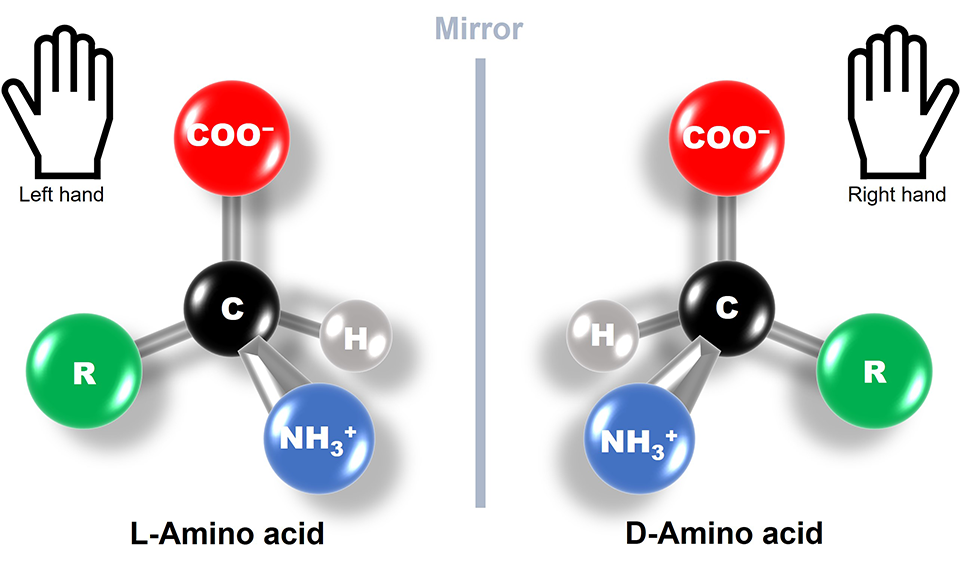
Finding a relative of terrestrial life on Mars would be an enormous discovery and would not answer that question at all. Distinguishing the two cases would take biochemistry — a different genetic polymer, different amino acids, a different handedness — not just the presence of something alive.
If a Signal Arrives Instead
SETI faces a different verification problem with the same structure. A candidate technosignature has to be shown not to be a satellite, a radar, a piece of the observatory’s own electronics or a natural astrophysical source, and the standard test is whether it repeats and whether it tracks with the telescope pointing at a specific patch of sky.
Both famous candidates failed that test in different ways. The Wow! signal, recorded at Ohio State’s Big Ear in August 1977, lasted 72 seconds and never came back; it is unexplained rather than explained. BLC1, flagged by Breakthrough Listen in 2020 from the direction of Proxima Centauri, survived months of scrutiny before being traced to human equipment.
The community has built machinery for the aftermath, too. A post-detection protocol drafted in the late 1980s sets out verification and disclosure steps, and the Rio Scale, introduced by Iván Almár and Jill Tarter around 2000 and revised since, exists to score how significant a candidate actually is — an attempt to give journalists a number instead of a vacuum.
How It Would Actually Look
The realistic version of an extraterrestrial discovery is slow and unsatisfying. A tentative signal in one dataset. A second instrument, months later, seeing something consistent. Independent groups reanalysing and disagreeing. Modellers testing every abiotic route anyone can think of. NASA has even proposed a formal confidence scale for life detection so that partial results can be communicated as partial rather than as a yes.
No single morning of announcements. More likely a few years during which the balance of expert opinion shifts, followed by a gradual acceptance that something has changed. SETIworld follows candidates through that whole arc, including the ones that quietly dissolve — which, so far, is all of them.