Posted by
 Every checklist for extraterrestrial life is written from a sample size of one. That is the awkward foundation of the whole discipline: Earth is the only inhabited world anyone has examined, so the requirements astrobiologists look for are, strictly speaking, the requirements for life like ours. Whether they are the requirements for life is unknown, and nobody in the field pretends otherwise.
Still, the list is not arbitrary. It comes from physics and chemistry as much as from biology — what a solvent has to do, what an energy gradient has to look like, how much time complex molecular systems seem to need. Four things keep appearing: a liquid, a usable set of elements, a source of chemical or radiant energy, and stability for long enough that something can happen.
Water does specific work
Water is not on the list because it is familiar. It is a small polar molecule that dissolves an enormous range of compounds, stays liquid across a wide temperature range at moderate pressures, carries heat efficiently, and expands when it freezes, so ice floats and insulates the liquid beneath it rather than sinking and freezing an ocean solid from the bottom up. Try to design a general-purpose biochemical solvent and you keep arriving back at something water-shaped.
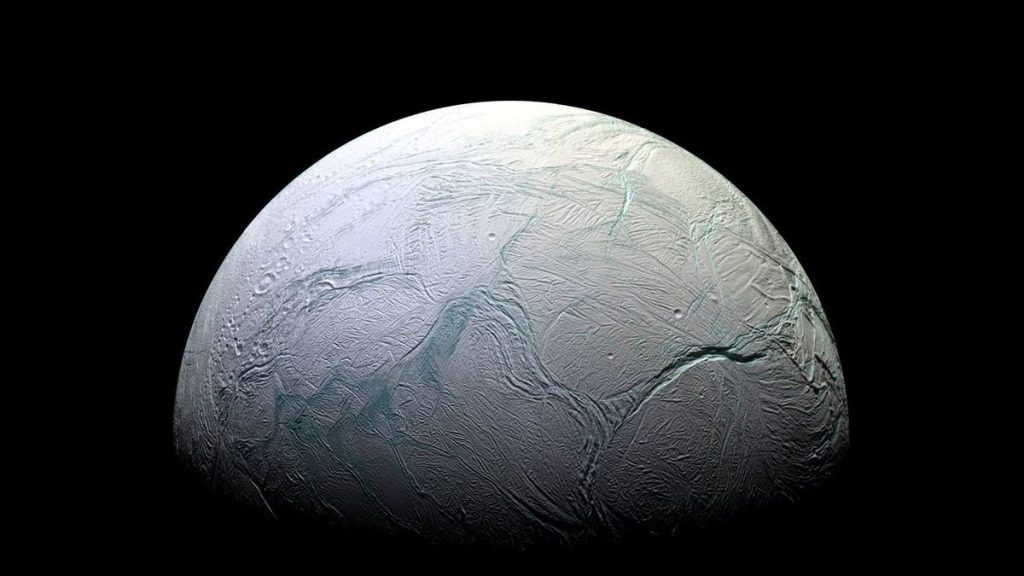
It does not have to be an ocean under an open sky. Brines in rock pores, a lake beneath a glacier, a saltwater layer sealed under fifteen kilometres of ice — each is a candidate habitat, and the Solar System has more of the buried kind than the exposed kind. Mars had rivers and standing lakes for a stretch of its early history. Europa and Enceladus have water now.
Six elements and a lot of carbon
Terrestrial biochemistry is built mostly from carbon, hydrogen, oxygen, nitrogen, phosphorus and sulphur, with a scattering of metals in enzyme active sites. Carbon carries the structural load because it forms four stable bonds, links readily to itself in chains and rings, and produces molecules complex enough to store information without being so reactive that they fall apart.
Silicon gets proposed as an alternative roughly once a decade. It sits below carbon in the periodic table and forms four bonds too, but silicon-silicon bonds are weaker, its oxide is a solid rather than a gas, and the resulting chemistry is far less versatile at the temperatures where liquids exist. Not impossible. Just much harder to make work.
Phosphorus is the element that worries people most, because it is comparatively rare and biology uses it constantly — in ATP, in cell membranes, in the backbone of DNA and RNA. Finding phosphates in the material Enceladus vents into space removed one specific objection to that moon being habitable.
Energy means a gradient, not sunlight
The Sun powers most of what is visible on Earth’s surface, and for a long time that made starlight seem like a prerequisite. Then in 1977 the submersible Alvin descended to the Galápagos Rift and found dense communities of tubeworms, clams and bacteria clustered around hydrothermal vents in permanent darkness, running on hydrogen sulphide from the planet’s interior rather than on photons.
What life actually needs is a chemical disequilibrium it can exploit — two substances that would react if allowed to, with an organism sitting in between taking a cut of the energy. The Lost City field in the mid-Atlantic, discovered in 2000, generates hydrogen and methane through serpentinization, water reacting with mantle rock, at moderate temperatures and high alkalinity. That process should also run inside icy moons where a saltwater ocean touches a silicate seafloor, which is a large part of why those moons are taken seriously.
Deep in South African gold mines, kilometres below the surface, bacteria live off hydrogen produced by radioactive decay splitting water. No sunlight, no organic input from above, generation times possibly measured in centuries.
Time, and the trouble with the habitable zone
Chemistry needs a while. Earth’s oldest widely accepted traces of life go back roughly 3.5 billion years, and the planet was assembled about 4.5 billion years ago, which suggests biology got started fairly quickly once conditions allowed. Complexity took vastly longer — free oxygen accumulated only around 2.4 billion years ago, and animals arrived far later still.
So habitability has to persist. This is where the circumstellar habitable zone, the orbital band where surface water could be liquid, shows its limits. It is a useful first cut and a bad final answer. Venus sits inside the Sun’s habitable zone by most definitions and runs a surface hot enough to melt lead, because a runaway greenhouse took hold and never let go. Mars sits near the outer edge and lost most of its atmosphere, so its water froze or escaped.
Atmosphere is the variable that decides. Pressure determines whether liquid water is stable at all; composition determines how much heat is retained; magnetic fields and stellar activity determine how much atmosphere survives over billions of years. Two planets at the same orbital distance can end up at opposite extremes.
What oxygen actually tells you
Oxygen is a common misconception in discussions of extraterrestrial life. It is not a requirement for biology; it is a product of one particular biological innovation. Earth’s early organisms evolved in an atmosphere with essentially no free oxygen, and enormous numbers of microbes today are poisoned by it.
Free oxygen is interesting to astronomers for a different reason: it is reactive, so it disappears from an atmosphere quickly unless something keeps making it. A world with persistent atmospheric oxygen has a source. On Earth that source is photosynthesis. Elsewhere it might be ultraviolet light splitting water vapour and hydrogen escaping to space, which is why an oxygen detection on an exoplanet starts an argument rather than ending one.
The part nobody can explain
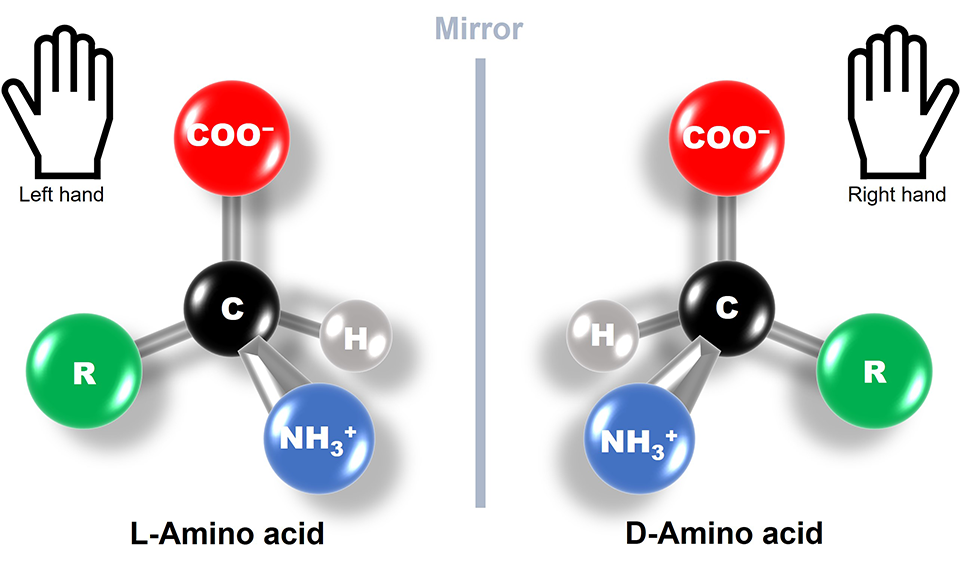
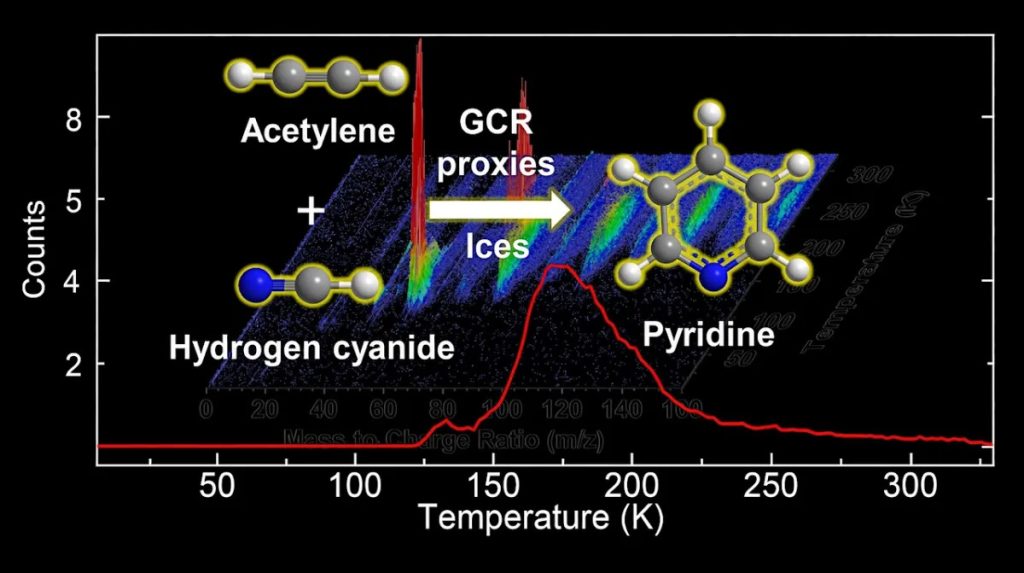
Here is the honest gap. Assemble every condition on the list — water, the right elements, an energy gradient, a few hundred million stable years — and there is still no known mechanism that reliably produces a living system. Miller and Urey made amino acids from simple gases and a spark in 1953. Seventy years of work since has produced nucleotides, membranes that form spontaneously, and RNA molecules that catalyse reactions, but not a demonstrated path from a warm chemical mixture to something that copies itself and evolves.
Competing hypotheses exist. An RNA world in which a single molecule handled both information and catalysis. Alkaline vents where natural proton gradients across mineral membranes prefigure the way cells make energy. Wet-dry cycling in shallow pools concentrating monomers into polymers. None has been carried end to end in a laboratory.
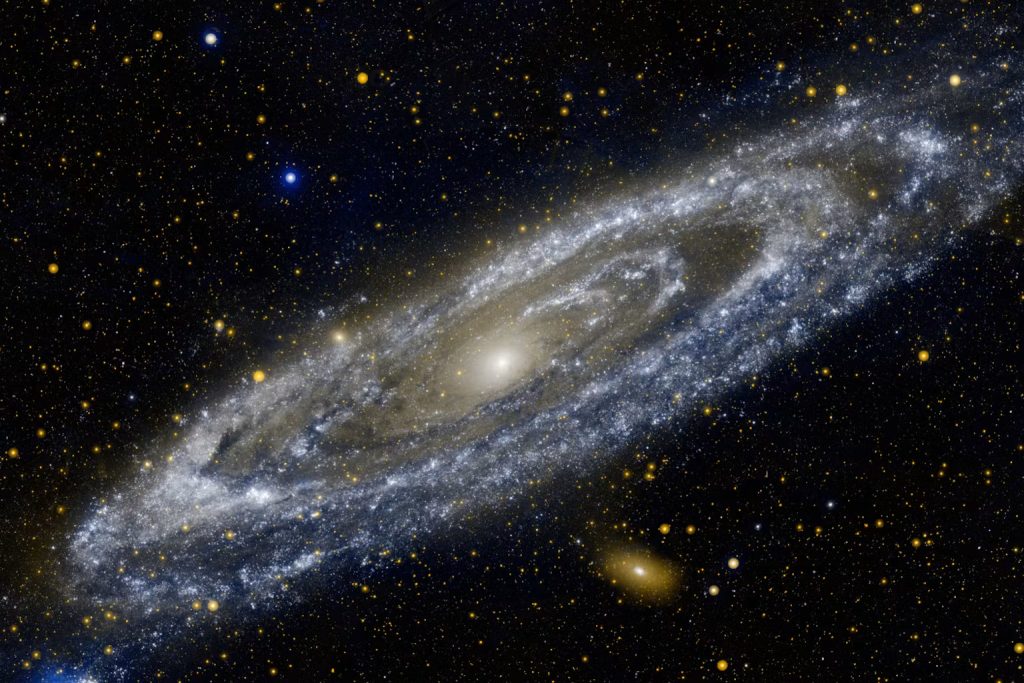
Which means the ingredient list, useful as it is for choosing targets, cannot tell anyone the probability of extraterrestrial life. If the transition from chemistry to biology is nearly automatic wherever the conditions hold, the galaxy should be full. If it required an improbable accident, Earth may be it, and every habitable world found so far would be sitting empty.
The only way to settle that is to find a second case. SETIworld follows the missions and results closing in on it — the plume samples, the Martian cores, the exoplanet spectra — for readers who want the search reported with its uncertainties intact.