Posted by
 There’s no such thing as an “astrobiologist” in the way there’s a chemist or a geologist. Astrobiology is less a single profession than a meeting point — a place where people from a dozen disciplines work on overlapping pieces of one question. Understanding how the search actually runs means understanding who’s in the room.
A Field Stitched Together From Others
Walk into an astrobiology research group and you won’t find a row of identical specialists. You’ll find a geochemist who studies hydrothermal systems, a microbiologist who grows organisms in extreme conditions, a planetary scientist who models atmospheres, an astronomer who reads exoplanet spectra, and an engineer designing the instrument that will eventually fly. They were trained in separate fields and speak partly different technical languages.
This is by design, and it’s the field’s defining feature. The question — does life exist elsewhere — can’t be answered from inside any one discipline. You need someone who understands how life starts, someone who understands where the right conditions occur, and someone who can build the tool to look. Astrobiology is the structure that forces those people to collaborate.
How a Search Actually Gets Structured
It rarely starts with “let’s go find aliens.” It starts with a narrower, answerable question. Could the subsurface of Mars preserve organic molecules for three billion years? What gas combinations would a telescope need to see to make a biosignature claim defensible? How does atmospheric oxygen behave around a red dwarf star?
Each of these is a research program in itself, often spanning years, usually with no charismatic payoff. The “search for life” is really the sum of hundreds of these smaller, technical efforts. Most researchers spend their careers on one slice — characterizing a class of extremophile, modeling a single planet type, calibrating one instrument. The dramatic version where someone spots an alien signal is almost entirely absent from the actual work.
The Lab Side
A surprising amount of astrobiology happens on Earth, in controlled conditions. Researchers build chambers that mimic the Martian surface or Europa’s ocean floor and test how organisms cope. They run chemistry experiments to see which “biosignatures” can be faked by geology — work that’s unglamorous but essential, because every false-positive pathway they map is one a future mission won’t be fooled by.
Field researchers go further afield, to Earth’s most alien-like environments: Antarctic dry valleys, acidic rivers, deep mines, hydrothermal vents. These places serve as analogs — stand-ins for the conditions a probe might encounter elsewhere — and as proof of just how stubborn life can be. When someone finds microbes thriving in a place that should be lethal, the habitable-environment list grows.
The Mission Side
Then there are the people who build and fly the hardware. Designing an instrument for a planetary mission is a brutal exercise in constraint: it has to be light, draw almost no power, survive launch and radiation, and work perfectly with no chance of repair. The Sample Analysis at Mars suite on the Curiosity rover took years to design and miniaturize. The teams behind these instruments work on timescales of a decade or more, often launching tools they conceived when they were much younger.
This is where patience stops being a virtue and becomes a job requirement. A planetary scientist might propose a mission, spend fifteen years getting it built and flown, and then wait years more for it to reach its target and return data. Careers are measured in missions, and many researchers see only a handful in a working lifetime.
How They Decide Where to Point
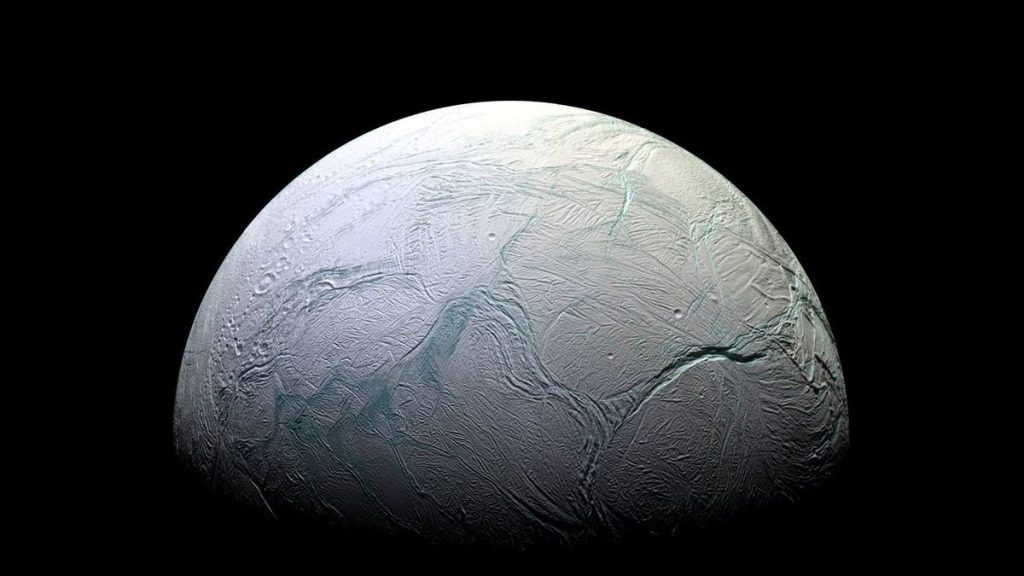
With limited budgets and a galaxy of options, prioritization is its own discipline. National academies and space agencies run lengthy review processes — the kind that produce thick strategy documents — to decide which targets and missions get funded. Should the next flagship go to Europa or Enceladus? Is Mars Sample Return worth its enormous cost? These debates are genuine, contentious, and consequential, because a wrong call can lock the field into a decade of effort aimed at the less promising target.
The Culture of Caution
If there’s one trait that defines the people in this field, it’s a trained reluctance to overclaim. They’ve inherited a history of premature announcements — the Viking results, the Martian meteorite, contested biosignature gases — that excited the public and then deflated under scrutiny. That history is institutional memory now.
So astrobiologists tend to be the ones tempering the headlines, adding the caveats, insisting on the alternative explanation. It can read as a lack of enthusiasm. It’s the opposite — it’s people who care enormously about the answer refusing to cheapen it with a weak claim. The work is slow because they’ve decided it has to be. When the discovery comes, they want it to last.
What the Work Actually Looks Like, Day to Day
Strip away the cosmic framing and the daily reality of astrobiology is often a person at a computer, staring at a noisy spectrum and trying to decide whether a faint bump is a molecule or an artifact. A researcher studying an exoplanet atmosphere might spend weeks modeling how the host star’s spots could mimic an atmospheric signal, just to rule that out. Someone working on Mars data cross-checks a possible organic detection against every way the instrument itself could have produced the same reading.
It’s painstaking, iterative, and mostly invisible to the public. Findings move slowly through drafts, internal review, and then the gauntlet of peer review, where other specialists try to find the flaw. A single result might take a year or more to go from “interesting signal” to published paper. The dramatic moments are rare; the substance is careful, repetitive verification. People drawn to the field for the romance of alien life usually stay for something quieter — the satisfaction of nailing down a measurement that will hold up.
The Money and the Politics
None of this happens without funding, and funding is where a lot of the field’s fate is actually decided. Major missions cost billions and compete for limited agency budgets. In the United States, priorities are set partly through “decadal surveys” — exhaustive community reviews that rank what should be built next. A mission can win scientific consensus and still be delayed or cancelled if the money isn’t there.
The Mars Sample Return program is the cautionary case of the moment: scientifically prized, with samples already waiting on Mars, yet under severe budget and schedule pressure, forcing NASA to seek cheaper designs. These decisions are genuinely consequential — choosing to fund a Europa lander over an Enceladus probe, or vice versa, can steer the search for a decade. Behind the elegant science sits a hard, unglamorous contest for resources, and researchers spend a surprising share of their time writing proposals and defending budgets rather than analyzing data.
A Field Built for the Long Haul
Astrobiology trains people for patience on an almost generational scale. Graduate programs dedicated to the field now exist at major universities, drawing students who know they may spend a career on a single slice of the puzzle. A scientist might propose a mission in their thirties and analyze its data in their sixties. International collaboration is the norm — NASA, ESA, JAXA, and others pool instruments, expertise, and cost across borders, because no single agency can do it all.
This long horizon shapes the culture. The people in the field are, by necessity, comfortable with not seeing the payoff themselves — building tools and gathering data that someone else may use to finally answer the question. It’s a discipline organized around a goal that may outlast everyone currently working toward it, and that, more than any single instrument, is what defines how astrobiologists look for life.
The Quiet Reward of an Unfinished Search
People often ask researchers how they cope with the possibility of working a whole career and never finding life. Most give a version of the same answer: the search itself produces real knowledge regardless of the outcome. Mapping the limits of extremophiles, characterizing exoplanet atmospheres, understanding how Mars lost its water — all of it is solid science that stands on its own, whether or not a single alien microbe ever turns up.
That framing keeps the field honest and sane. It means progress doesn’t depend on a jackpot. Every false-positive pathway ruled out, every habitability assessment completed, every instrument flown is a permanent addition to what we know, useful to whoever comes next. Astrobiologists, in this sense, are building a foundation more than chasing a prize. The discovery, if it comes, will rest on decades of unglamorous groundwork laid by people who understood that the search is valuable even when the answer is “not here, not yet.”
SETIworld follows the researchers and teams behind the search for life — the people doing the slow, careful work. Join the portal to follow their findings.
References
- Des Marais et al., The NASA Astrobiology Roadmap, Astrobiology 2008 astrobiology.nasa.gov
- NASA Astrobiology Program — Research Coordination Networks astrobiology.nasa.gov
- Domagal-Goldman et al., The Astrobiology Primer v2.0, Astrobiology 2016
- Horneck et al., AstRoMap European Astrobiology Roadmap, Astrobiology 2016
- National Academies, An Astrobiology Strategy for the Search for Life in the Universe, 2019
- SETI Institute — research staff and programs, seti.org seti.org