Posted by
 Astrobiology is a discipline that studies a subject — extraterrestrial life — for which we have, so far, exactly zero confirmed examples. This creates an interesting methodological situation. You’re building a science around something you haven’t found yet, using evidence from the only inhabited planet you have access to, and trying to make predictions about conditions you’ve never observed.
The field has grown substantially since NASA formalized it as a research area in the late 1990s. There are now dedicated journals, major funding programs, an astrobiology institute network, and an increasingly sophisticated set of research questions. None of it has produced confirmed evidence of life beyond Earth. All of it has produced a considerably better understanding of the problem.
What Astrobiology Actually Studies
The field covers three broad questions: how does life begin, how does it evolve, and where else in the universe might it exist? These aren’t separable — they inform each other. Understanding how life began on Earth constrains what chemical and environmental conditions might enable it elsewhere. Understanding extremophiles — organisms that survive in conditions once considered lethal — expands the range of environments considered potentially habitable.
Origin of life research examines the transition from chemistry to biology. The leading frameworks — RNA world hypothesis, hydrothermal vent synthesis, panspermia — have different implications for where life might emerge. If life requires specific conditions that only occur at deep-sea hydrothermal vents, then the set of habitable environments narrows. If life can begin in open-ocean chemistry or ice-water interfaces, the set broadens. The chemistry isn’t settled, which means the distribution of potential habitable environments isn’t settled either.
Extremophiles and What They Tell Us
The discovery of extremophile organisms over the past 50 years has repeatedly extended what “habitable” means. In 1977, the discovery of hydrothermal vent ecosystems in the Pacific Ocean demonstrated that complex life could exist in complete darkness, under enormous pressure, using chemosynthesis (hydrogen sulfide oxidation) rather than photosynthesis as an energy source. Before this, the assumption was that photosynthesis was the foundation of virtually all life on Earth. It’s not.
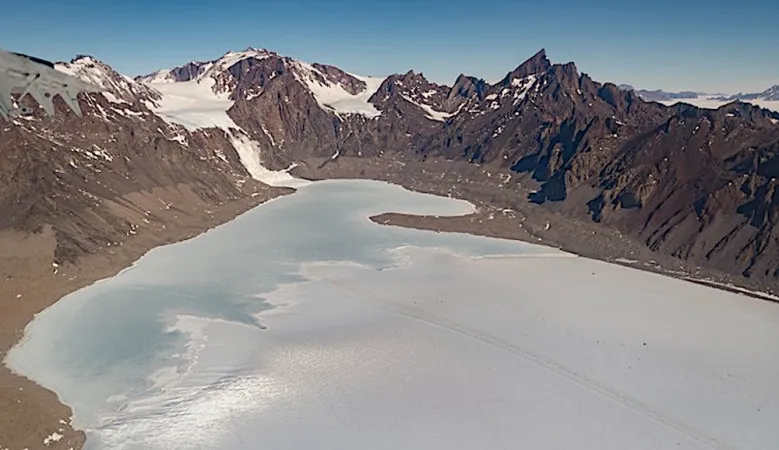
Subsequent discoveries found bacteria in Antarctic ice at -20°C. Microbes in acid mine drainage at pH 0 — essentially battery acid. Radiation-resistant bacteria (Deinococcus radiodurans) that survive 1.5 million rads of ionizing radiation — roughly 3,000 times the lethal dose for humans. Halophiles thriving in 35% salt concentration. Organisms living kilometers underground in rock pores, surviving on hydrogen from water-rock reactions.
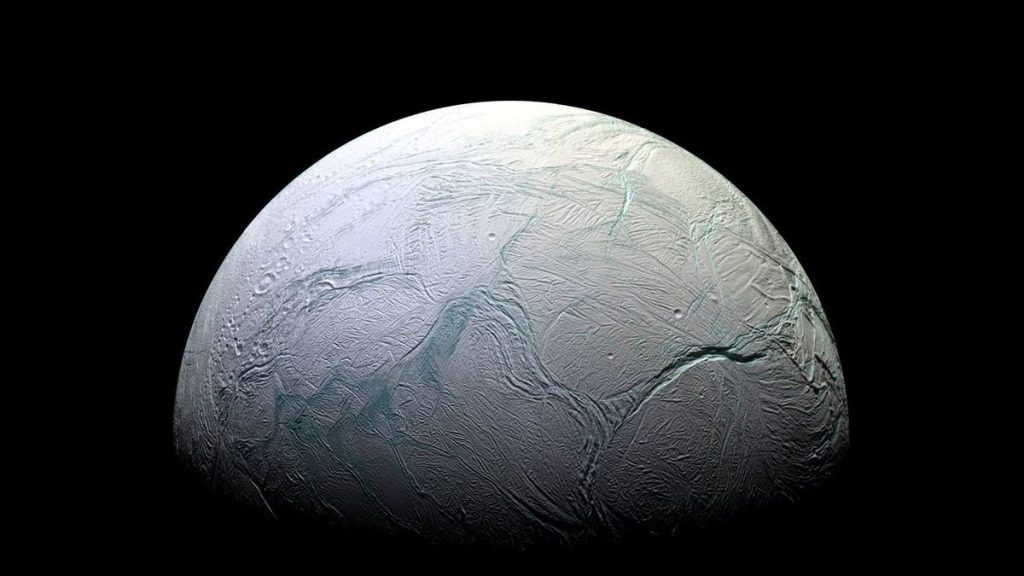
Each of these discoveries extended the envelope. Europa’s ice-covered ocean, once thought uninhabitable, looks considerably more interesting after hydrothermal vent discoveries. Mars’s subsurface, where liquid water brines may persist, is less easily dismissed as sterile. Enceladus’s subsurface ocean, where Cassini detected complex organic molecules and hydrogen gas (a potential energy source for chemosynthesis) venting from the surface, is now a significant target.
The Mars Question
Mars is the most studied astrobiological target beyond Earth, primarily because it’s accessible with current technology. Rovers and landers have characterized its surface chemistry, mineralogy, and weather. Perseverance, currently operating in Jezero Crater, is collecting rock and sediment samples for eventual return to Earth — the Mars Sample Return mission, though currently under budget review.
Mars had liquid water on its surface 3.5–4 billion years ago, when the solar system was young. This is established by sedimentary geology, river valley networks, and delta formations visible from orbit. If life emerged during that period — and Earth had life by 3.5 billion years ago, possibly earlier — Mars could have had it too. Whether any trace remains today depends on whether life survived the transition to cold, dry, high-radiation surface conditions. Underground, protected from UV by meters of rock, conditions may still permit microbial survival.
We haven’t found Martian life. We also haven’t sampled the most promising locations. The sample return mission, if it happens, would provide the first opportunity to look for chemical biosignatures in material analyzed with Earth-based laboratory equipment rather than rover instruments. That’s when the question gets answerable in a meaningful way.
Biosignatures: The Detection Framework
A biosignature is any measurable property — chemical, physical, or morphological — that indicates biological activity. Atmospheric biosignatures (detectable remotely) get the most attention in the exoplanet context: oxygen, methane, nitrous oxide, methylchloride. Surface biosignatures are less discussed but relevant: the “red edge” in Earth’s reflectance spectrum at ~700 nm results from chlorophyll and would be detectable in reflected light from a heavily vegetated planet.
Technosignatures are a special category: biosignatures produced by intelligent, technologically capable life. Radio emissions, atmospheric industrial pollutants, artificial illumination. These fall in the SETI domain but are scientifically continuous with astrobiology — they’re just biosignatures from a more complex kind of biology.
The challenge with any biosignature is false positives. Abiotic processes can produce oxygen (photolysis of CO₂). Abiotic processes can produce methane (serpentinization — water reacting with iron-bearing rocks). Any proposed biosignature needs context: is the abundance and combination consistent with a purely geological explanation, or does it require biological production to explain? This is where atmospheric modeling, planetary interior models, and stellar environment modeling all interact.
The Origin of Life Problem
Astrobiology’s central unresolved question is how the transition from chemistry to life occurs. We know life exists. We know it’s made of specific types of molecules. We know early Earth had the raw materials. What we don’t know is the specific pathway — the sequence of chemical reactions — that produced the first self-replicating, metabolism-having entities.
RNA world hypothesis proposes that RNA molecules, which can both store information and catalyze reactions (unlike DNA and proteins separately), were the first living molecules. Hydrothermal vent origin hypothesis, associated with Michael Russell and Nick Lane, proposes that the proton gradients and mineral catalysts at alkaline hydrothermal vents on the early ocean floor enabled the first metabolic reactions. Both have experimental support and unresolved gaps.
How rare the origin-of-life event was — whether it requires an extraordinary coincidence of conditions, or whether it’s an almost inevitable consequence of the right chemistry being present — is probably the most important unknown in the entire field. If life starts easily wherever the conditions are right, the universe is probably full of it. If it’s extraordinarily rare, Earth might be genuinely exceptional.
What Astrobiology Informs
The field directly shapes target selection for SETI research, mission priorities for planetary exploration, and instrument requirements for next-generation telescopes. When NASA asks “which worlds should we prioritize for biosignature detection,” the answer comes from astrobiology: Mars subsurface, Europa, Enceladus, TRAPPIST-1 planets, nearby M-dwarf habitable zone worlds. The science informs where to look and what to look for.
Astrobiology also informs what a detection would mean. If life is found on Mars — chemically similar to life on Earth — the question immediately becomes: did it originate independently, or was it transferred between planets by meteorite impact (panspermia)? If it’s chemically identical to Earth life, that doesn’t confirm independent origin. If it uses a fundamentally different biochemistry, it almost certainly does. These distinctions shape what any discovery would actually tell us about life’s universality.
Astrobiology in the Lab: Rebuilding Early Earth
Not all of astrobiology happens at telescopes or on Mars. A large part of it happens in laboratories trying to recreate the chemistry of a four-billion-year-old planet. The famous starting point is the Miller-Urey experiment of 1953, in which Stanley Miller, working under Harold Urey, sealed water, methane, ammonia, and hydrogen in a flask and ran sparks through it to simulate lightning. Within days the mixture had produced amino acids — the building blocks of proteins — from nothing but simple gases and energy. It was the first demonstration that the molecules of life can form through ordinary chemistry under plausible early-Earth conditions.
Modern prebiotic chemistry has moved well beyond that flask. Researchers like John Sutherland have shown laboratory routes that produce nucleotides — the building blocks of RNA — from simple precursors, addressing a gap the original experiments couldn’t bridge. Others run experiments in simulated hydrothermal-vent chemistry, building mineral gradients that mimic the early seafloor and watching whether metabolism-like reaction networks emerge on their own.
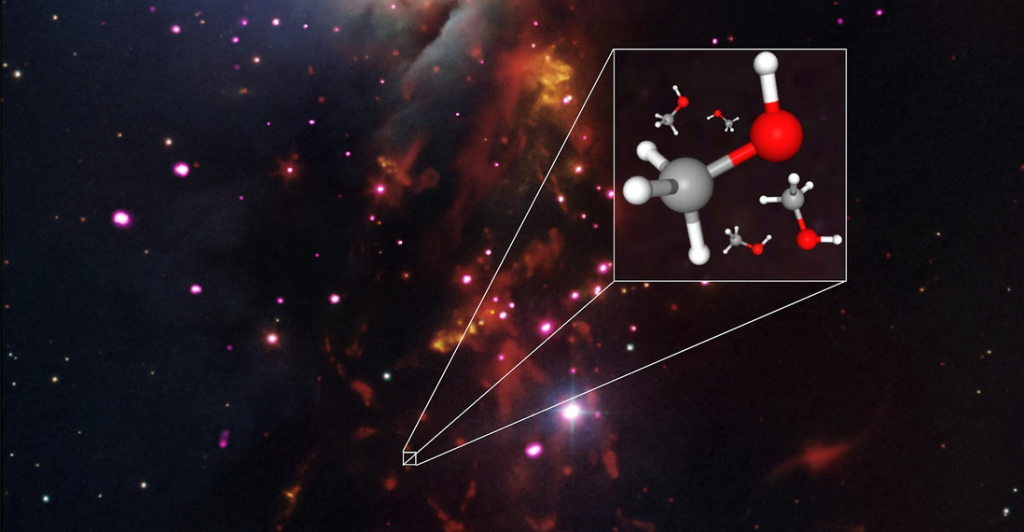
These experiments matter for the search because they map the conditions under which life’s chemistry can get started. If amino acids and nucleotides form readily across a wide range of conditions, that strengthens the case that life’s raw materials are common throughout the galaxy — a conclusion reinforced by the detection of amino acids in meteorites and complex organics in interstellar clouds. The lab work doesn’t tell us life is common, but it keeps removing reasons to think its ingredients are rare.
SETIworld follows astrobiology, biosignature research, and the search for life beyond Earth — join to follow new discoveries as they happen.
References
- NASA Astrobiology Program — astrobiology.nasa.gov astrobiology.nasa.gov
- Rothschild & Mancinelli, Life in extreme environments, Nature 2001
- Chyba & Hand, Astrobiology: The Study of the Living Universe, Annual Review of Astronomy and Astrophysics 2005
- Wachtershauser, Before enzymes and templates: theory of surface metabolism, Microbiological Reviews 1988
- Ward & Brownlee, Rare Earth: Why Complex Life Is Uncommon in the Universe, Copernicus Books 2000
- Schwieterman et al., Exoplanet Biosignatures: A Review of Remotely Detectable Signs of Life, Astrobiology 2018 doi.org/10.1089/ast.2017.1729