Posted by
 Type “astrobiology schools” into a search bar and you will get a tidy ranked list, which is the first misleading thing about this career. There is no single accredited pipeline that turns a teenager into someone who analyzes Martian sediment or models the atmosphere of a planet 120 light-years away. The people doing that work arrived as microbiologists, geochemists, radio astronomers, instrument engineers and statisticians who at some point pointed their existing training at a bigger question.
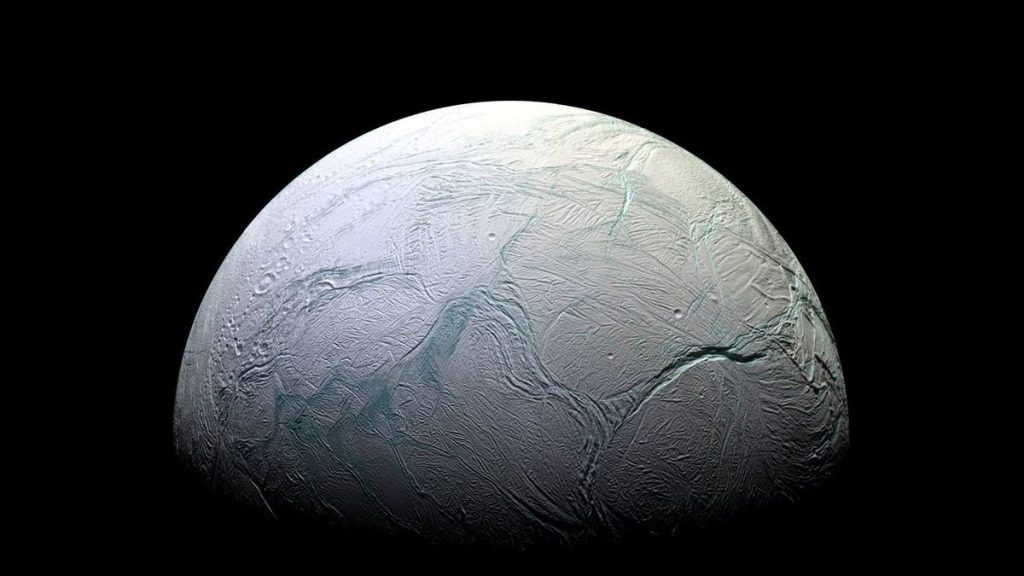
Astrobiology is the question, not the credential. How did chemistry become biology? Could anything be living under the ice of Europa or Enceladus right now? What would a biosphere look like from 40 parsecs away, filtered through a starlight spectrum? Answering any of those requires a specialist who also speaks enough of three neighboring languages to sit in a room with the other specialists.
The field has no front door
NASA ran an Astrobiology Institute from 1998 until 2019, and when it closed the program did not shrink — it reorganized into research coordination networks with names like NExSS for exoplanet systems, NfoLD for life detection and PCE3 for prebiotic chemistry. Those networks are worth reading precisely because they show how the work is actually parceled out. Somebody is culturing organisms from Rio Tinto’s acid river in Spain. Somebody else is writing retrieval code for JWST transit spectra. They both call themselves astrobiologists on conference badges.
So the useful version of the question is not which universities have the word in a degree title. It is which laboratories are working on the problem you cannot stop thinking about, and what training gets you into one of those rooms.
Pick a discipline that will still feed you
Most working researchers built on a conventional undergraduate foundation and specialized later. Biology suits anyone drawn to metabolism, evolution and the physical limits of cells. Astronomy and astrophysics lead toward exoplanet detection and atmospheric characterization. Geology and planetary science are the route to Mars sediments, icy moon interiors and the mineral record of ancient water. Chemistry owns the origin-of-life end of the problem, and computer science increasingly owns everything else, because nobody analyzes a spacecraft dataset by hand.
A handful of institutions do offer dedicated tracks — the University of Washington has run an interdisciplinary astrobiology graduate program since the late 1990s, and Penn State offers a dual-title doctorate — but those programs work by attaching astrobiology to a home department rather than replacing it. That model is the honest one. Evaluate astrobiology schools by who advises there and what hardware or data they have access to, not by the wording on the diploma.
The quantitative part is not optional
Statistics is where most astrobiology claims live or die. A tentative biosignature is a statistical statement about how likely a feature is to be noise, and the history of this field is largely a history of features that shrank when somebody added error bars properly. The 2020 phosphine claim about Venus and the ongoing argument over dimethyl sulfide at K2-18b both turned on retrieval assumptions and significance thresholds, not on whether the molecule is interesting.
Learn to program early. Python dominates astronomical and planetary work — astropy, numpy, the whole scientific stack — though a lab doing molecular dynamics or instrument firmware may want something else entirely. What matters is being able to write your own analysis instead of waiting for someone else’s tool to support the thing you want to test.
Get into a lab before you graduate
Coursework teaches results. Research teaches what happens when the result does not arrive: the contaminated sample, the calibration drift, the six weeks spent discovering the anomaly was a cable. That experience is the actual qualification, and it is available earlier than most students think. In the United States, NSF-funded REU programs place undergraduates in working groups for a summer; many universities run their own versions, and a polite email to a professor whose paper you read is a stranger and more effective move than it sounds.
A first project also tells you what you can stand. Some people love months of clean-room sample prep. Others discover they would rather be writing pipeline code at two in the morning. Both are useful. Finding out at nineteen is better than finding out in the third year of a doctorate.
Four routes people actually take
Planetary science is the most direct. Perseverance is currently caching cores in Jezero Crater with instruments — SHERLOC, PIXL — designed specifically to look for organic material and mineral textures associated with past habitability, and the people interpreting those data trained as geologists as often as biologists. Curiosity’s SAM oven has been doing related chemistry in Gale Crater since 2012.
Exoplanet astronomy is the second. It runs on physics, photometry and enormous patience: TESS finds candidates, ground-based spectrographs confirm masses, JWST occasionally gets a good enough transit to say something about an atmosphere. Extremely large telescopes now under construction should push that further.
Microbiology is the third, and the least glamorous-sounding one that has changed the field most. When Thomas Brock pulled heat-loving bacteria out of Yellowstone’s springs in the 1960s, he was not doing space science. He was quietly redrawing the map of where life is possible, and every argument about subsurface Mars or Enceladus’s vents descends from that kind of work. Deinococcus radiodurans shrugging off radiation doses that would sterilize a room is a data point about other planets whether or not it was collected for that purpose.
Then there is SETI and technosignature research, which pulls in radio astronomers, signal processing engineers and statisticians. Breakthrough Listen’s pipeline problem is finding the rare interesting thing inside petabytes of interference from satellites and phones. That is a data science problem wearing an astronomy hat.
Graduate school is a person, not a building
Doctoral study is where most astrobiology careers are actually made, and the single biggest variable is the adviser. Read their last five years of papers. Check whether their group publishes students as first authors. Ask current graduate students what the group is like when an experiment fails, because you will find out eventually anyway.
A department with one excellent researcher in your specific corner usually beats a broader program where nobody works on your question. Funding matters too — NASA’s Exobiology grants and its Postdoctoral Program support a large fraction of the field in the United States, and knowing which groups hold that money tells you where the projects are.
Communication is not a soft extra here. Nearly every result in this field comes from a team where the geochemist has to convince the astronomer that a mineral matters, and the person who cannot explain their work across that gap contributes less than their skill would suggest.
Start from the question rather than the job title. If ocean worlds keep you awake, geophysics and planetary science are your doors. If it is the moment chemistry became self-sustaining, go into chemistry or molecular biology. If it is the possibility of catching a transmitter around another star, go build the analysis skills. The field is young enough that the discoveries which will define it have probably not happened yet, and SETIworld follows the missions, the arguments and the astrobiology schools and research groups where the next generation is being trained — a reasonable place to keep an eye on where the openings are.