Posted by
 Anyone following the latest news about aliens over the past two years has watched something unusual happen: the field stopped producing suggestive hints and started producing specific, arguable, peer-reviewed claims about particular rocks and particular molecules. A named sample from a named Martian outcrop. Sugars identified in asteroid dust sitting in a Houston curation lab. Spectra from a planet 120 light-years off that three research groups cannot agree about.
None of it confirms life. All of it is more concrete than the field managed in the previous decade, and the arguments are worth understanding, because the arguments are where the science actually happens.
A Martian rock with a formal label attached
Perseverance drilled a core it called Sapphire Canyon out of a rock nicknamed Cheyava Falls, in Neretva Vallis — an ancient river valley that once fed water into Jezero Crater. The rock is fine-grained mudstone, the kind of sediment that on Earth preserves microbial traces better than almost anything else.
In September 2025 NASA reported that peer-reviewed analysis concluded the sample contains potential biosignatures. The rock carries organic carbon, sulphur and phosphorus, and millimetre-scale features — the team called them leopard spots — with reaction fronts containing vivianite, an iron phosphate, and greigite, an iron sulphide. On Earth, that pairing is often produced by microbes making a living from sediment chemistry.
The word doing the heavy lifting is “potential.” NASA’s own definition is precise: something that may have a biological origin but needs more evidence before anybody can say whether biology was involved. Abiotic routes to the same minerals exist, particularly at higher temperatures, and this rock does not appear to have been cooked. That is a point in favour, not a verdict.
Settling it means getting the tube back. Which means Mars Sample Return, a programme whose cost and architecture have been reworked more than once, and which is currently the single biggest bottleneck in the entire search.
Bennu keeps getting more interesting
The asteroid sample OSIRIS-REx delivered in September 2023 has been producing results steadily since. In January 2025 came the headline inventory: 14 of the 20 amino acids used to build terrestrial proteins, all five nucleobases of DNA and RNA, ammonia in high abundance, and a suite of evaporite salts recording brines that dried out on the parent body.
In December 2025 the list grew again with the detection of ribose and glucose — the first time glucose has been identified in an extraterrestrial sample. Ribose matters specifically because it forms the backbone of RNA, and its instability in water has been one of the standing objections to origin-of-life scenarios that need it.
So the running total is amino acids, nucleobases, sugars, ammonia, phosphates and water-altered minerals, all in a body that was never alive and never came close. That combination in one sealed sample is why Bennu has dominated the latest news about aliens without offering a single organism.
The ingredients may be common and the outcome rare
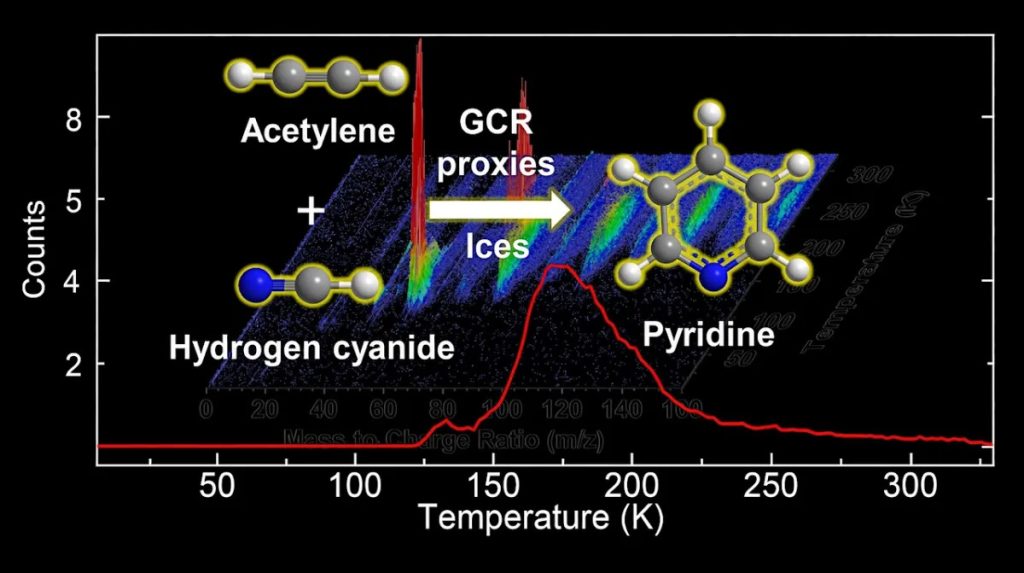
Which leads to the distinction the field keeps having to restate. Amino acids form readily in space. Sugars form on mineral surfaces in the presence of water. Nucleobases turn up in meteorites. None of it requires biology, which is the whole point — nature stocks the shelves without any help.
The transition from a stocked shelf to a self-maintaining, replicating, evolving system is where everything gets stuck. Seventy years after Miller and Urey, no laboratory has run that transition end to end. Competing hypotheses exist: an RNA world where one molecule does both jobs, alkaline hydrothermal vents where mineral membranes supply natural proton gradients, wet-dry cycling in shallow pools that drives polymerization. None has been demonstrated completely.
That gap is not a detail. It is the reason nobody can put a number on how much life the galaxy contains, however many ingredients turn up.
Reading atmospheres, and the arguments that follow
Thousands of exoplanets are known. What changed recently is the ability to say something about their air. JWST watches a planet transit and reads the absorption lines that its atmosphere stamps onto the starlight passing through.
K2-18b is the cautionary case. A sub-Neptune whose spectra were reported in 2023, and more strongly in 2025, as containing possible dimethyl sulfide — a molecule made on Earth almost entirely by marine plankton. Independent teams reanalyzed the same observations, varied the assumptions inside the retrieval models, and found the signal could largely disappear. That is not a scandal. It is what a two-sigma feature in a hard measurement does when other people get their hands on it.
The results from TRAPPIST-1 have been sobering in a different way. JWST’s measurements of the innermost planet are consistent with bare rock and little or no atmosphere, which raises a serious question about whether planets orbiting small, flare-prone red dwarfs can hold onto air at all. Since those stars are the most common in the galaxy, the answer matters enormously.
The oceans nobody expected
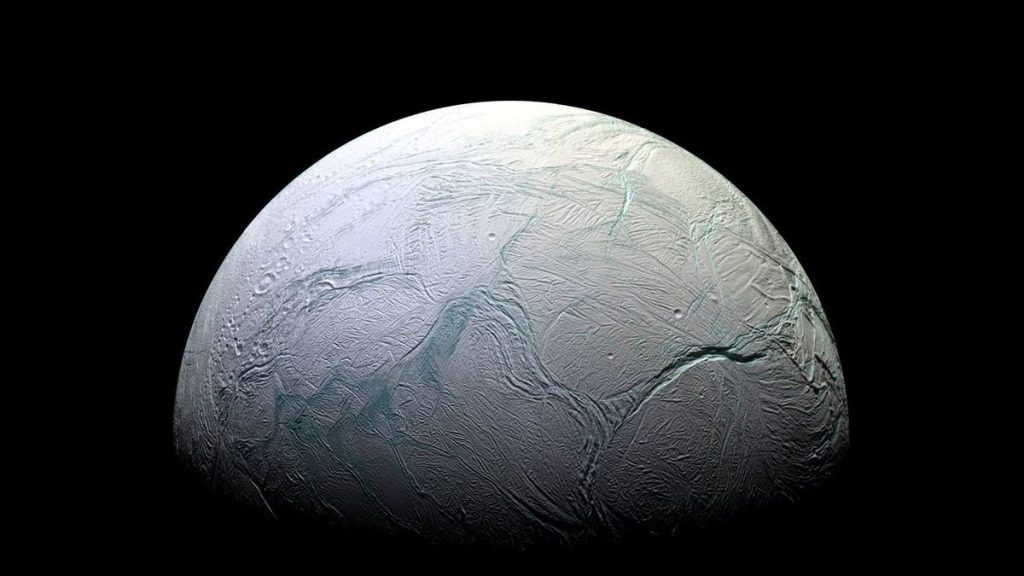
Away from exoplanets, the most promising habitats in the Solar System sit under ice. Cassini flew repeatedly through the plumes venting from Enceladus and found salts, organic compounds, silica grains implying hot water reacting with rock, molecular hydrogen usable as an energy source, and later phosphates. A moon 500 kilometres across is spraying samples of its own ocean into space, and Cassini collected all of it with instruments designed years before anyone suspected the plumes existed. A spacecraft built deliberately for the job, flying slowly enough not to shatter large molecules on impact, could do far better — and no such mission is funded.
Europa holds roughly twice the water of all Earth’s oceans beneath its shell, and Europa Clipper, launched in October 2024, reaches Jupiter in 2030 to characterize it. The mission is explicitly about habitability rather than life detection, which is the honest framing and worth repeating whenever coverage blurs the two.
Interstellar visitors and the technosignature side
The other half of the search moved too. 3I/ATLAS, spotted in July 2025, became only the third object confirmed to have arrived from outside the Solar System, and several observatories pointed radio receivers at it despite its entirely cometary behaviour. The SETI Institute logged hours of Allen Telescope Array time; Breakthrough Listen brought in Green Bank and MeerKAT. Nothing artificial was found, and the campaigns produced quantitative limits plus proof that the community can mobilize onto a fast-moving target within weeks.
Which is the pattern across the whole field right now. Negative results, carefully bounded, arriving faster than before.
Why context beats any single molecule
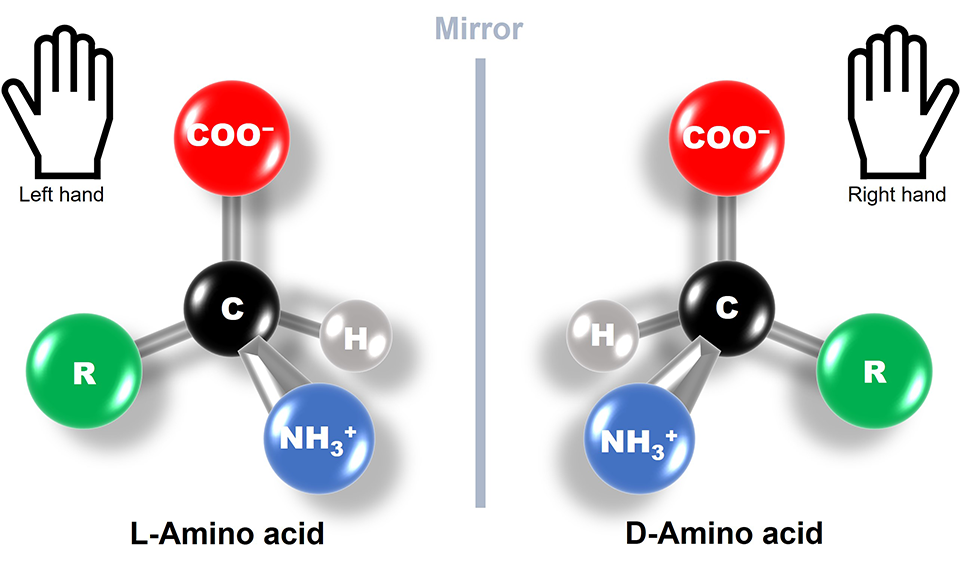
The methodological shift running underneath all of this is a refusal to treat one detection as an answer. Methane on Mars comes and goes and can be made by rock-water chemistry with no organisms involved. Oxygen can accumulate photochemically on a lifeless world. Vivianite and greigite have abiotic pathways. Even an amino acid’s handedness is a stronger clue than its presence.
What would convince the field is convergence: several independent measurements, a well-characterized environment, and a set of non-biological explanations that have been tested and have failed. That standard is why the phosphine claim at Venus and the DMS claim at K2-18b are still open questions rather than settled results years later.
It is also why the latest news about aliens rewards patience over headlines. SETIworld tracks these results as they develop, including the reanalyses that quietly undo them, which is usually where the interesting part turns out to be.