Posted by
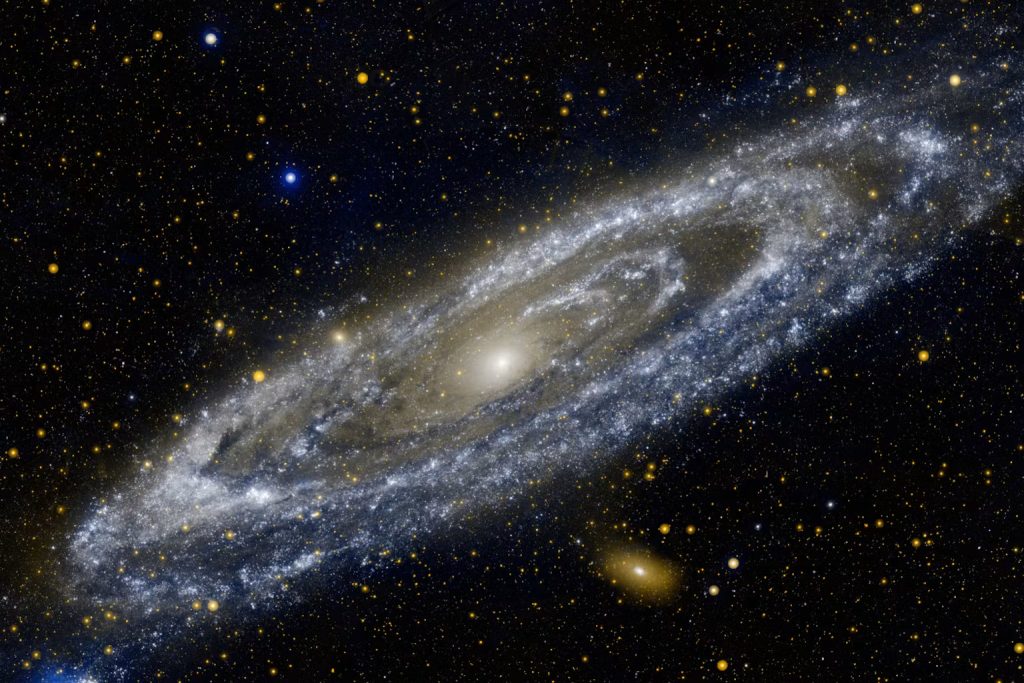
 In the summer of 1950, over lunch at Los Alamos, Enrico Fermi interrupted a conversation about flying saucers with a question that has never quite gone away: where is everybody? He was not asking whether aliens exist. He was doing back-of-the-envelope arithmetic, the way physicists do, and the numbers bothered him. A galaxy with that many stars, that much time, and apparently nobody home. Seventy-odd years later, the question of how much life in the universe there really is still comes down to the same uncomfortable arithmetic, except that some of the numbers have been filled in and the gaps have become easier to see.
So this is not a piece about where life might hide. It is about the odds, and about why nobody can calculate them yet.
A Meeting Agenda Disguised as a Formula
When Frank Drake gathered a small group at Green Bank in 1961, he wrote a line of terms on the board to organise the discussion. How fast does the galaxy make stars? What fraction of them have planets? How many of those planets are suitable? On how many does life actually start, then turn intelligent, then build something that leaks signals into space? And how long does such a civilisation last? Multiply it all together and you get the number of civilisations we could hear right now.
The trick is that the first few terms are astronomy and the last few are biology and history. Astronomy has since done its homework. Star formation in the Milky Way is reasonably well measured. The fraction of stars with planets, a pure guess in 1961, turned out to be close to one; surveys by Kepler and TESS suggest that planets are the rule, not the exception. Even the share of planets that are small and sit at a temperate distance from their star now has estimates, rough ones that disagree with each other by a wide margin, but estimates.
Then you reach the term for life actually getting started. Nobody has a figure for it. Not a rough figure, not an order of magnitude. Every term after it inherits that ignorance.
That is the honest state of play.
What Earth’s Calendar Seems to Say
With no second example to compare, researchers have squeezed the one they have for clues, and the most interesting clue is timing. Earth formed about 4.5 billion years ago. For its first few hundred million years the surface was hammered by impacts and probably hostile. Yet layered microbial structures called stromatolites appear in rocks from the Pilbara region of Western Australia that are close to 3.5 billion years old, and some researchers argue for chemical traces of life even earlier. Life, in other words, seems to have turned up almost as soon as the planet could tolerate it.
The tempting conclusion is that starting life must be easy. If it happened that fast here, the reasoning goes, it should happen readily wherever conditions allow, and life in the universe should be common, at least in its simplest form. Charles Lineweaver and Tamara Davis made a version of that argument in 2002.
It sounds tidier than it is. In 2012 David Spiegel and Edwin Turner pointed out a selection effect hiding inside the reasoning. We could only exist on a planet where life began early enough for evolution to reach us before the Sun brightens and the oceans boil away, so an early start is exactly what we would expect to see whether the odds are good or terrible. One early start, observed by its own descendants, proves less than it appears to.
The Long Wait for Complexity
If the start was quick, almost everything afterwards was slow. For roughly two billion years Earth belonged to single-celled microbes. Oxygen began to accumulate in the atmosphere about 2.4 billion years ago, in what geologists call the Great Oxidation Event, and complex cells with nuclei, the eukaryotes, show up in the record somewhere after that, probably only once. The merger that gave those cells their mitochondria, one microbe swallowing another and keeping it, may be the single most improbable event in the history of life here. Or it may not be. We cannot rerun the tape.
Animals large enough to see arrive in the last 600 million years or so, with the Cambrian burst of body plans around 540 million years ago. Tool-using, radio-building intelligence is a matter of the last few thousand years, a sliver at the very end of a four-billion-year story.
In 1983 the physicist Brandon Carter turned this pattern into an argument. If evolution had to pass through several hard, improbable steps, and if the time available is limited by the lifetime of the star, then the steps would tend to be spread out across the whole available window, with intelligence arriving late. That is roughly what Earth shows. On this reading, microbes could be widespread while minds are vanishingly rare. Peter Ward and Donald Brownlee pushed a related case in their 2000 book Rare Earth, arguing that complex animals depend on a long list of lucky planetary circumstances.
Critics reply that we have no idea which steps were genuinely hard and which merely look hard because they happened once on the one planet we can study. Both camps are reading the same rocks. Neither can prove its case.
Fermi’s Question, Revisited
All of this feeds back into the lunch-table puzzle. If intelligent life in the universe were common and long-lived, the argument runs, someone should have spread across the galaxy by now, or at least made enough noise to notice. The proposed answers fill whole books. Civilisations might be short-lived. Interstellar travel might be impractical even for patient engineers. Signals might be faint, brief, or in forms we do not search for. Or the hard steps really are hard, and we are early, or alone, in our neighbourhood.
The search so far does not discriminate between these. Radio surveys have covered a tiny fraction of the possible combinations of direction, frequency, timing and signal type, and silence from a fraction is not the same as silence from everything. Some people find that frustrating. Others find it the most interesting fact in science.
Why a Second Genesis Would Change Everything
The single most useful discovery would not need to involve intelligence at all. It would be a second, independent origin of life, anywhere, even in our own backyard. Find microbes on another world that clearly did not descend from Earth’s, and the probability that life starts when conditions allow jumps from unknown to likely, because two independent starts in one small planetary system would be a strange coincidence if the process were rare.
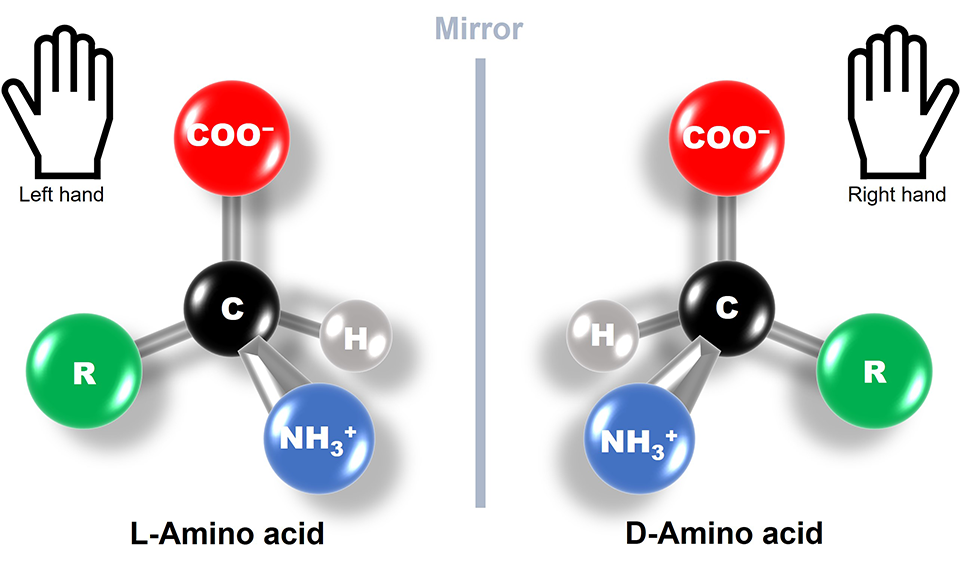
That word independent is doing a lot of work. Rocks are blasted off planets by impacts and some of them land elsewhere; hundreds of meteorites found on Earth came from Mars. If Mars ever had life, it might be a cousin of ours rather than a separate experiment, and a shared biochemistry would leave the big question unanswered. Researchers hoping to settle it look first for differences: an unfamiliar set of amino acids, opposite molecular handedness, a genetic system that is not DNA.
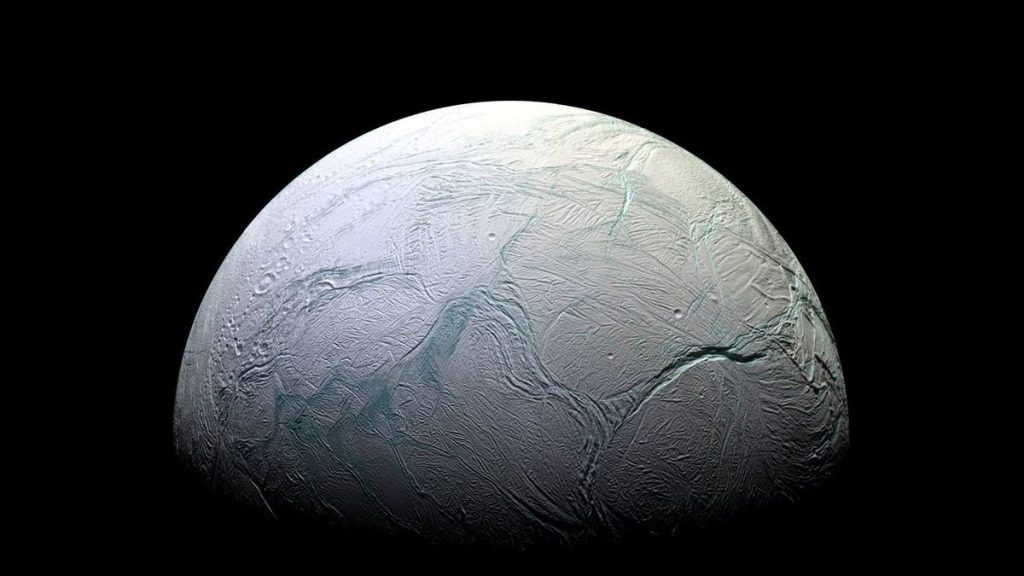
The outer Solar System is attractive partly for this reason. Europa’s ocean lies far from Earth and under a thick shell of ice, a hard place for stray Earth microbes to reach. NASA’s Europa Clipper, launched in October 2024, and ESA’s JUICE, launched in 2023, will spend the early 2030s studying Jupiter’s icy moons, though neither can detect life directly. What they can do is tell us whether Europa’s ocean has the chemistry and energy that biology would need.
Living With an Open Number
There is a temptation, in articles like this, to land on a confident verdict either way. The data do not allow it. What can be said is narrower and more interesting: the astronomical part of the question has been answered, and planets turned out to be everywhere. The biological part has barely been touched. Every claim that life in the universe must be abundant, and every claim that we must be alone, is quietly assuming a value for a term nobody has measured.
That will change one way or another as missions return data and telescopes collect spectra. Possibly slowly. Possibly with a result nobody predicted.
If you want to watch those blank terms get filled in as it happens, along with the arguments every new result sets off, SETIworld covers the search with that kind of patience, and readers who enjoy the open questions as much as the answers will feel at home there.