Posted by
 No working astrobiologist will hand you a number for how common life in the universe is. You get a list of conditions instead, followed by a warning that the list is almost certainly incomplete. That is not evasion. Habitability is a chemistry problem wearing an astronomy costume, and chemistry is fussy in ways orbital diagrams never show: it cares about temperature ranges, about which solvent does the dissolving, about whether a few specific elements sit in the same place long enough to matter.
Earth remains the only worked example. One data point. Everything we currently say about life in the universe is an extrapolation from a single planet, which is why so much of the field consists of taking that planet apart to see which of its features are load-bearing and which are just decoration.
The Zone That Isn’t Really a Zone
The phrase “habitable zone” entered wide use after a 1993 paper by James Kasting, Daniel Whitmire and Ray Reynolds, and it means something much narrower than most people assume. It is the band of orbits where a rocky planet, wrapped in an atmosphere of carbon dioxide, nitrogen and water vapour, could in principle hold liquid water on its surface. Read that definition again and notice how much it assumes before it starts. An atmosphere. A rocky body. Surface water specifically. Change any of those inputs and the boundaries slide.
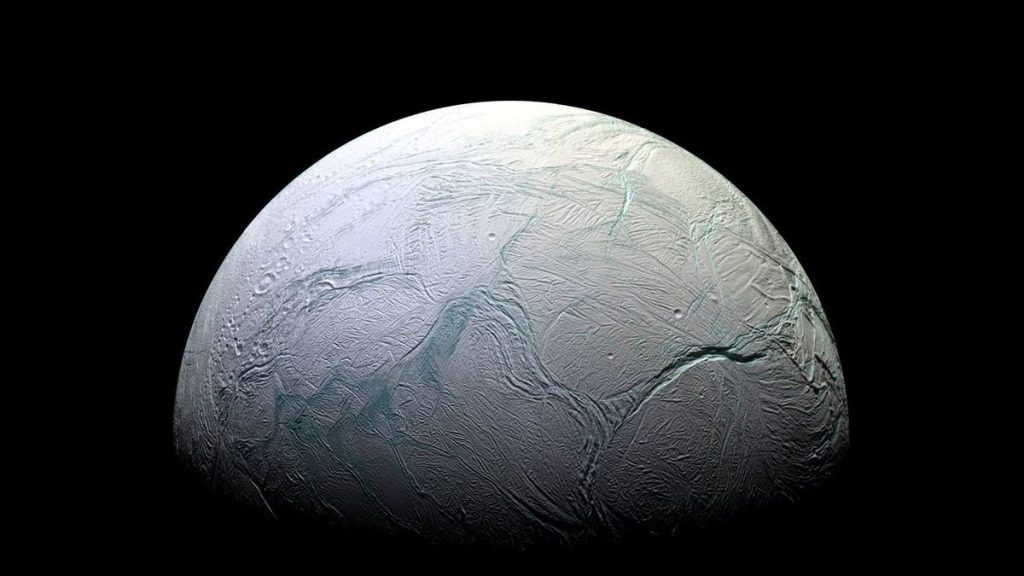
Our own system makes the point without any help from theory. Venus sits close to the inner edge and cooked itself into a 460-degree furnace under clouds of sulphuric acid. Mars sits comfortably inside the optimistic outer edge and is a frozen desert with an atmosphere thin enough to be nearly a vacuum. Two planets, both technically in the neighbourhood, both uninhabitable at the surface. Meanwhile Europa and Enceladus orbit far outside any version of the zone and between them probably hold more liquid water than every ocean on Earth combined, kept warm by tidal flexing rather than sunlight. Cassini flew straight through the plumes venting from Enceladus’s south pole and came back with silica grains and molecular hydrogen, the chemical fingerprints of hot water meeting rock on a seafloor nobody has seen.
So the habitable zone measures starlight. Nothing more. It is a first filter, useful for deciding where to point a telescope, and it was never meant to be a verdict.
Why Everything Alive Here Is Made of Carbon
Carbon does something no other common element does as well. It forms four stable bonds, it bonds happily to itself, and it will build chains, branches and rings of essentially unlimited length. Just as important, those bonds sit in a useful energy window: strong enough to hold a molecule together at the temperature of a warm pond, weak enough that an enzyme can break one without a furnace.
Silicon is the usual candidate for an alternative, and it disappoints on inspection. It has the same four bonds, but silicon-silicon links are considerably weaker and fall apart in water. The deeper problem is waste. When you oxidise carbon you get carbon dioxide, a gas that dissolves in oceans, rides through atmospheres and cycles back into rock. Oxidise silicon and you get quartz, which is sand. An organism that breathed out sand would have a disposal problem it could not solve.
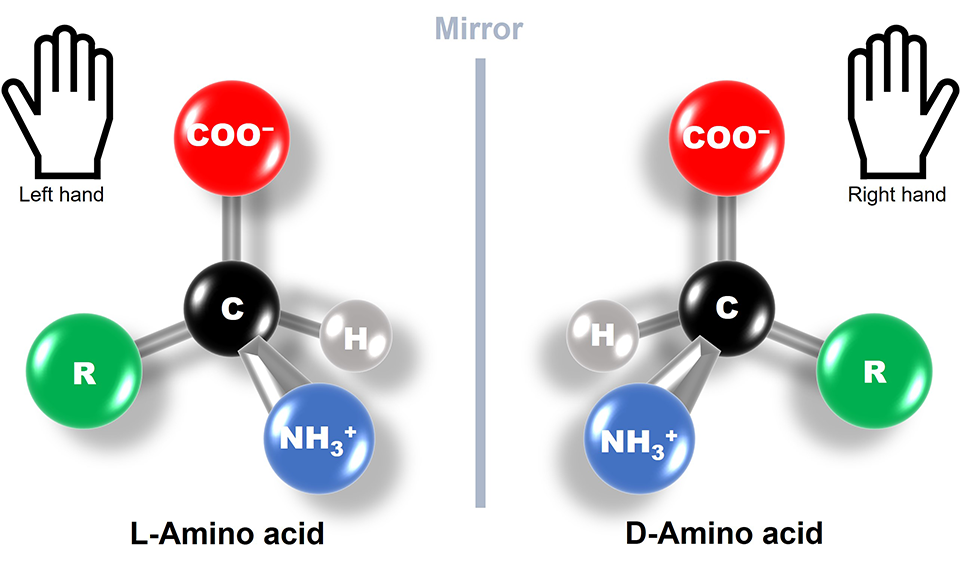
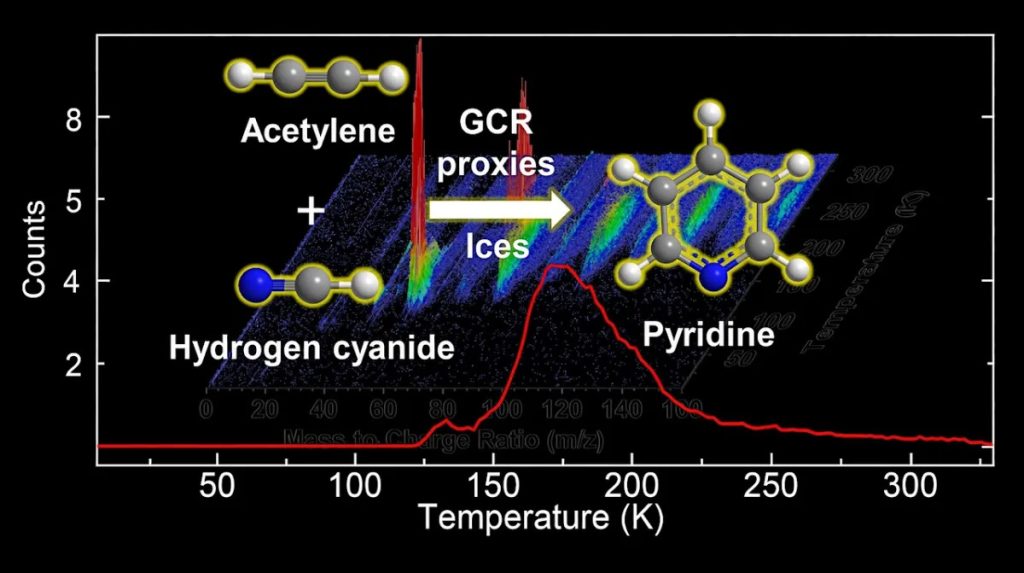
What makes this less parochial than it sounds is where carbon chemistry keeps turning up. The Murchison meteorite, which fell in Australia in 1969, carried dozens of amino acids, many of them unknown in terrestrial biology. When OSIRIS-REx dropped its capsule of asteroid Bennu into the Utah desert in September 2023, analysis of those pristine grains found amino acids and all five of the nucleobases used by DNA and RNA. The building blocks assemble themselves in cold, dark, unremarkable places, and they arrive on young planets by the tonne.
The honest caveat is that our reasoning is circular. We rank carbon first because carbon is what we are made of, and we would not recognise an alternative biochemistry if it were sitting in a sample tray.
Water Does Things Other Liquids Do Not
Water is not merely wet. It is a polar molecule, which lets it dissolve salts and organic compounds that other solvents ignore, and its hydrogen bonds give it a stack of properties that look almost suspiciously convenient. It stays liquid across a hundred-degree range at Earth’s surface pressure. And it expands when it freezes, which is why ice floats. Lakes and seas ice over from the top and insulate what is underneath instead of freezing solid from the bottom up and killing everything in them.
Ammonia works as a solvent at colder temperatures, but its liquid range is narrower and frozen ammonia sinks. Titan has genuine rivers and seas of liquid methane and ethane, mapped by Cassini’s radar and sampled directly when Huygens landed on the surface in January 2005. Whether complex chemistry can happen in a solvent that cold, with no water involved at all, is unknown. NASA’s Dragonfly rotorcraft is being built to go and look.
The Boundaries Keep Moving
For most of the twentieth century, textbooks drew the limits of life around conditions a laboratory technician would find comfortable. Then people started looking in places nobody had bothered to sample.
Archaea grow and divide at hydrothermal vents at temperatures above the boiling point of water at sea level, held liquid by the pressure of two kilometres of ocean. Deinococcus radiodurans shrugs off radiation doses thousands of times what would kill a person, reassembling its own shredded chromosome within hours. There are microbes thriving in the Rio Tinto in southern Spain, a river the colour of rust with the acidity of stomach fluid, and others in Antarctic brines so salty they never freeze. Kilometres down in South African gold mines, entire communities live in fracture water sealed off from the surface for millions of years, running their metabolism on hydrogen produced by radioactive decay splitting water molecules. No sunlight reaches them. No oxygen. Some of them may divide once a century.
Every one of those discoveries widened the target. Rock a few kilometres down, running on a radioactive power supply, is no longer an absurd place to look on Mars.
There is a catch, and it deserves stating plainly. Extremophiles are not primitive. They are the descendants of ordinary organisms that adapted, over billions of years, to conditions their ancestors could not have survived. Tolerating an environment and originating in it are different questions. The chemistry that first assembled a self-replicating system may well have needed mild, boring conditions that most of these organisms would now find lethal. Nobody knows.
The Star Gets a Vote
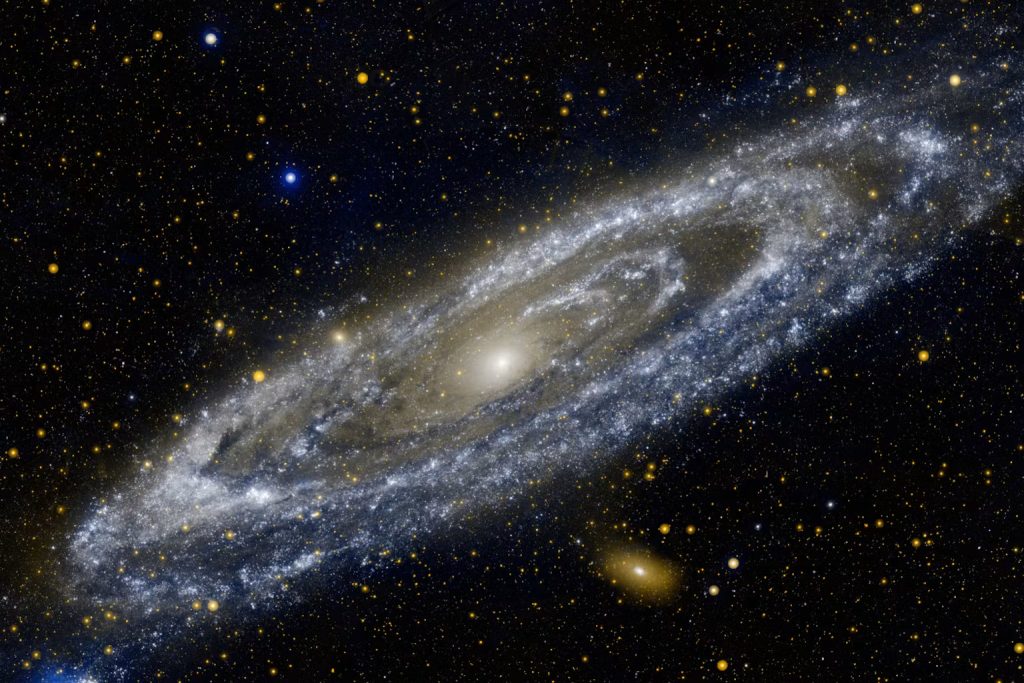
Roughly three quarters of the stars in the Milky Way are red dwarfs, small and dim and extraordinarily long-lived, and they dominate the catalogue of potentially habitable planets simply because small stars are easier to survey. Kepler-186f, announced in 2014, was the first Earth-sized planet found in the habitable zone of one. TRAPPIST-1, forty light-years away, turned out in 2017 to hold seven Earth-sized worlds around an ultracool dwarf. Proxima b, found in 2016, orbits the nearest star to the Sun at four and a bit light-years.
All of which comes with complications. A dim star’s habitable zone is drawn in tight, close enough that planets are likely tidally locked, with one hemisphere in permanent day and the other in permanent night. Red dwarfs also flare viciously, and they spend hundreds of millions of years as bright, unstable objects before settling down, which means any atmosphere present early on gets hit with extreme ultraviolet radiation for longer than the atmosphere may survive. Proxima Centauri has been caught throwing off flares that briefly brightened it by orders of magnitude. Whether a planet can hold onto air and water through that is one of the sharpest open arguments in the field.
What We Can Actually Measure
Detecting any of this is another matter. When a planet crosses in front of its star, a thin sliver of starlight filters through its atmosphere on the way to us, and the molecules there subtract specific wavelengths. JWST reads those subtractions. It is a fantastically small signal pulled out of a star billions of times brighter, and the arguments over it get correspondingly sharp.
K2-18b is the current example. Reported detections of dimethyl sulphide, a gas produced on Earth mainly by marine plankton, have been contested by other teams reanalysing the same data and finding the statistical case far weaker than claimed. The same pattern has played out repeatedly. Phosphine in the clouds of Venus in 2020, still disputed. Methane spikes measured by Curiosity in Gale crater that ESA’s Trace Gas Orbiter, watching from above, could not confirm. Possible fossil structures in the Martian meteorite ALH 84001, argued over since 1996 and never settled.
This is not failure. It is what a young science looks like when it starts detecting things at the edge of its instruments. Any single molecule can be produced by geology, and the case for biology will have to rest on chemical disequilibrium, on combinations of gases that should destroy each other and somehow do not.
The conditions for life in the universe are not a checklist we finished writing. They are a moving argument between chemistry, geology and stellar physics, and each new spectrum shifts it. If that is the kind of argument you want to follow while it is still unresolved, SETIworld is where we cover it, question by question, as the data comes in.