Posted by
 Nobody serious is looking for cities. The modern search for life on Mars is a search for microbes that may have existed three or four billion years ago, and for whatever chemical residue they might have left in rock — a much narrower question than the one Percival Lowell thought he was answering when he mapped canals across the planet at the turn of the twentieth century. Narrower, and for the first time actually testable.
Two rovers are on the surface right now doing exactly this work. Their findings so far are genuinely interesting and stubbornly ambiguous, which is more or less what everyone expected.
Why Mars At All
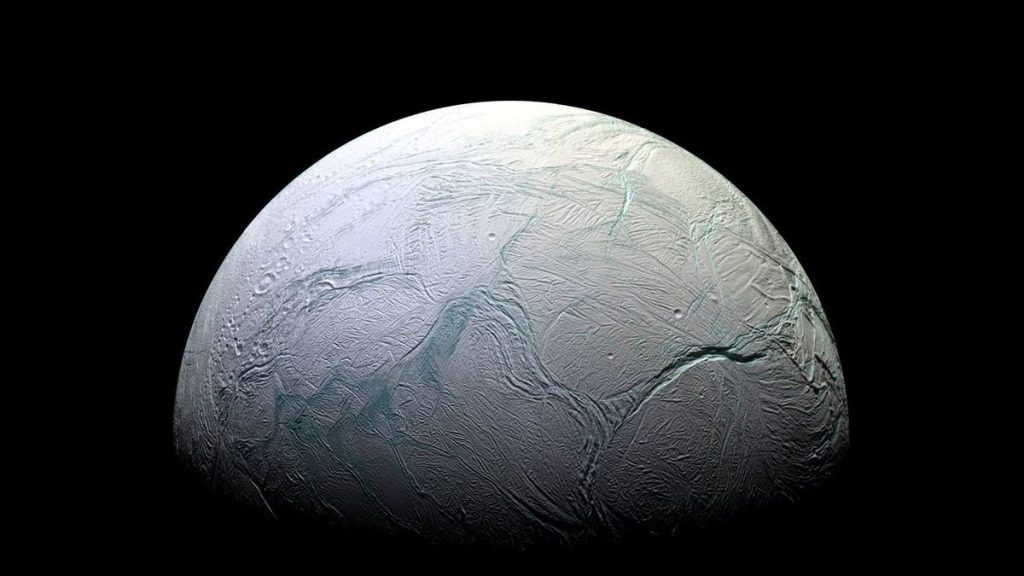
Because you can touch it. Europa and Enceladus may be better bets on the merits, but Mars is the only place beyond Earth where hardware routinely lands, drives around and drills into rock. Everything else is inference from a distance.
And ancient Mars was a different planet. Orbiters have mapped branching valley networks, river deltas, lake basins and clay minerals that only form in standing water. Somewhere between three and four billion years ago the surface had rivers, an atmosphere thick enough to keep them liquid, and lakes that lasted long enough to lay down layered sediment. Then it lost most of its air, and what remains is cold, dry and bombarded with radiation the surface has no ozone to stop.
Jezero Crater and a Rack of Sealed Tubes
Perseverance landed in February 2021 on the floor of Jezero Crater, chosen because a river once emptied into it and built a delta. Deltas are good places to look for two reasons: fine sediment settles out and buries things quickly, and the water carried material in from a wide catchment.
In July 2024 the rover examined a rock nicknamed Cheyava Falls in a nearby valley. It carried organic compounds, and it was covered in millimetre-scale pale spots ringed by dark rims — a pattern that, in terrestrial mudstone, can be produced by microbes driving chemical reactions between iron and phosphate. The team said clearly that non-biological chemistry can also make features like this, and that resolving it requires laboratory work no rover carries.
Which is the whole design logic of the mission. Perseverance is not built to prove anything. It is built to identify the right rocks, seal cores of them into titanium tubes, and leave them somewhere retrievable for a mission that has not yet been built.
Gale Crater, More Than a Decade In
Curiosity has been working Gale Crater since August 2012 and has spent most of that time driving up through the sedimentary layers of Mount Sharp, reading the record of an ancient lake bed as it climbs. Its early result — that Gale once held a habitable freshwater environment with the right chemistry and energy gradients for microbes — remains one of the clearest statements about ancient Martian habitability anyone has made.
Its chemistry lab has kept producing. In 2025 researchers reported long-chain hydrocarbon molecules with ten to twelve carbon atoms in a mudstone sample the rover had drilled years earlier, the largest organic molecules yet identified on Mars. They could be fragments of fatty acids, which on Earth come mainly from cell membranes. They could also be entirely abiotic.
Note the pattern. Every result of this kind arrives with the same caveat attached, and the caveat is not politeness — it is the actual state of the evidence.
There is one more thing the rovers are quietly establishing, and it matters as much as any single rock: how long the water lasted. A flash flood and a lake that stood for a million years are not equivalent settings for chemistry. Reading the thickness, grain size and mineralogy of layered deposits is how you tell the difference, and it is slow, unglamorous fieldwork carried out by remote control with a twenty-minute round-trip signal delay.
The Methane Argument
Curiosity has repeatedly measured tiny quantities of methane at the Gale surface, varying with the seasons and occasionally spiking. Methane should not last long in the Martian atmosphere, so something must be releasing it. On Earth, most methane is biological.
Except that ESA’s Trace Gas Orbiter, designed for exactly this measurement and far more sensitive, has struggled to detect any methane at all from above. Both results are hard to dismiss, and the leading explanations involve gas seeping out near the surface and being destroyed locally, or something subtle about how the rover’s instrument samples the air. Serpentinisation — water reacting with olivine-rich rock — produces methane geologically, without a single organism involved.
Everything Wants to Go Underground
The modern surface is a poor place to preserve anything delicate. Ultraviolet light reaches the ground unfiltered, cosmic rays penetrate the thin air, and the soil contains perchlorates, first identified by the Phoenix lander in 2008, which turn destructive when irradiated. Organic molecules near the surface get broken down over geological time.
A couple of metres down, the picture improves considerably. That is why ESA’s Rosalind Franklin rover carries a two-metre drill, deeper than anything sent before, and why it is aimed at ancient clay-bearing terrain. The mission lost its ride when the European-Russian partnership collapsed and is now being rebuilt for launch later this decade.
Deeper still, there may be liquid water. Radar sounding from Mars Express produced bright reflections beneath the south polar ice cap, reported in 2018 and interpreted by some as briny lakes; later work has argued that clay layers or frozen materials could produce the same signal. Unresolved, and the sort of claim that will stay unresolved until something goes and looks.
Whether anything is alive down there now is a separate question from whether anything ever was, and the honest position is that nobody knows. Terrestrial microbes live kilometres inside rock, drawing energy from chemical reactions rather than sunlight, at population densities so low that individual cells may divide once a century. An equivalent Martian community would be almost undetectable from the surface, and no mission currently planned could reach it.
Why the Samples Have to Come Home
A rover’s laboratory is constrained by mass, power and the fact that it was designed a decade before launch. An Earth laboratory can run isotope ratios, electron microscopy and a dozen independent techniques on the same grain, and can re-run them when somebody objects.
For a claim as large as life on Mars, that capacity is not a luxury. Distinguishing a biological carbon isotope signature from a geochemical one, or a microfossil from a mineral artefact, has defeated remote instruments before — the ALH 84001 meteorite argument of 1996 ran for years in well-equipped terrestrial labs and still did not close.
Getting Perseverance’s tubes back is therefore the central problem in the field, and it is a hard one. Mars Sample Return has been through cost and schedule reviews that put the original plan in doubt, and NASA has been evaluating cheaper architectures. The samples are sitting on Mars either way.
What Would Actually Settle It
Probably not a single measurement. More likely a returned sample showing several independent things at once: organic molecules with a distribution no known chemistry produces, isotope ratios shifted the way metabolism shifts them, structures at the right scale, all inside a rock whose depositional environment is understood in detail.
Even then the argument would run for years, and it should. The search for life on Mars has produced enough premature announcements to have earned its caution — Viking’s Labeled Release result in 1976, the meteorite in 1996, and a steady trickle since. What has changed is that the evidence is now good enough to argue about properly. SETIworld follows the rover results and the sample-return politics together, because at this point the two are the same story.