Posted by
 The first machines built to look for life on Mars touched down within six weeks of each other in the summer of 1976, and half a century later scientists still argue about what they measured. That is not a failure of the missions. It is a fair measure of how hard the question is. Mars today is cold, thin-aired and scoured by ultraviolet light, yet the rock record says the same planet once carried rivers, held lakes and offered a chemistry that would have suited microbes perfectly well. Whether anything took the opportunity is still open.
No mission has found biology. Every honest account starts there, and then gets complicated.
Viking, and the Answer Nobody Could Agree On
Viking 1 landed on Chryse Planitia on 20 July 1976. Viking 2 followed on 3 September, far to the northeast on Utopia Planitia. Each carried three biology experiments and a gas chromatograph mass spectrometer, and between them they represent the only time anyone has run a direct metabolic test on Martian soil.
The Labeled Release experiment, designed by Gilbert Levin, fed a scoop of soil a nutrient solution tagged with radioactive carbon and watched for tagged gas coming back out. Gas came back out. When a duplicate sample was heated first, to a temperature that would sterilise anything terrestrial, the response vanished. That is precisely the pattern a microbiologist would predict from a living sample and a dead control.
Then the mass spectrometer looked for organic molecules in the same dirt and found none, down to parts per billion. Soil with metabolising cells in it should have been full of carbon compounds. Two instruments on one lander pointed in opposite directions, and the community went with chemistry: some strong oxidant in the regolith was chewing up the nutrient broth without help from biology.
The story turned in 2008, when NASA’s Phoenix lander scooped arctic Martian soil and detected perchlorate salts. Perchlorate is exactly the oxidant that would mimic a metabolic signal, and when heated in an oven alongside organic material it burns that material to ash. Viking’s ovens ran hot. The instrument sent to find organics may well have destroyed them on the way to measuring them. Levin argued for a biological reading until his death in 2021 and almost nobody joined him, but the case was never closed so much as set aside.
The Rock That Reached the White House
ALH 84001 was picked off the Allan Hills ice in Antarctica in December 1984 and misfiled for years as an ordinary asteroid fragment. It is not. It is a piece of Mars, blasted off by an impact and roughly four billion years old, a sample of exactly the era when the planet was wet.
In August 1996 a team led by David McKay published a paper in Science describing carbonate globules inside it, polycyclic aromatic hydrocarbons, magnetite crystals shaped like the ones certain Earth bacteria make, and segmented tubular structures tens of nanometres long. President Clinton spoke about it on the South Lawn. For a few weeks the search for life on Mars looked as though it had ended.
The rebuttals came fast and they were good ones. The tubes were smaller than any known cell, too small to hold the machinery a cell requires. Magnetite of that shape forms when carbonate is heated, no biology needed. Aromatic hydrocarbons are common in meteorites generally, and Antarctic meltwater carries terrestrial carbon into anything sitting in it for thirteen thousand years.
What survived was a lesson rather than a discovery. A shape is not evidence. A mineral is not evidence. Every claim about Martian biology since 1996 has been read in the shadow of that meteorite.
Methane That Comes and Goes
Methane should not last on Mars. Sunlight breaks it apart over a few centuries, which is nothing geologically, so any methane in the air today has to be arriving today.
Curiosity’s tunable laser spectrometer has measured a background of roughly half a part per billion inside Gale Crater, rising and falling with the seasons, punctuated by occasional spikes several times higher. The trouble arrived with the ExoMars Trace Gas Orbiter, which reached Mars in 2016 carrying spectrometers far more sensitive than the rover’s, and which has seen essentially nothing in the atmosphere above.
Two well-built instruments, run by serious teams, disagreeing about whether a gas exists. The favoured reconciliation is that methane seeps from the ground at night, pools in the cold surface layer where the rover can smell it, and is destroyed before it reaches the altitudes the orbiter samples. Nobody has proved that.
Even a confirmed seep would not settle much. On Earth most atmospheric methane comes from living things, but water reacting with olivine-rich rock makes it too, in a process that runs happily in sterile laboratories. Methane is a reason to go and look at a particular patch of ground. It is not an answer.
What Curiosity Found in a Dry Lakebed
Curiosity landed in Gale Crater on 6 August 2012 with a narrower mandate than most people realised. It was not sent to detect life. It was sent to find out whether an environment capable of supporting life had ever existed there, and it answered that within a year.
The drill hole at Yellowknife Bay, in a mudstone the team named John Klein, came up grey rather than rust-red, and the analysis showed a former lakebed with near-neutral chemistry, low salinity, clay minerals, and carbon, nitrogen, oxygen, phosphorus and sulfur in usable forms, alongside redox pairs an organism could have drawn energy from. A microbe from Earth dropped into that lake three billion years ago would have found nothing to complain about.
Organics followed, slowly. Chlorobenzene first, then sulfur-bearing thiophenes, and in 2025 a set of long-chain alkanes running up to twelve carbon atoms, pulled from a mudstone sample called Cumberland that the rover had carried since 2013. Those are the largest molecules yet identified on Mars, and they can all be made without biology. The researchers who reported them said so plainly.
The genuinely important part is quieter. Fragile carbon chains sat in Martian rock for three billion years and were still there to be measured. Preservation was never guaranteed, and now it is demonstrated.
Leopard Spots in Jezero
Perseverance came down in Jezero Crater on 18 February 2021, on the floor of a basin that once held a lake fed by a river that built a delta at its western rim. Deltas trap fine mud, which is where a biosignature would sit if there is one.
In July 2024 the rover worked its way along Neretva Vallis and reached an outcrop of the Bright Angel formation, where it examined a pale slab of mudstone the team called Cheyava Falls. The rock carried millimetre-scale bleached spots ringed by dark haloes, informally described as leopard spots, associated with iron phosphate and iron sulfide minerals, and its SHERLOC instrument registered organic carbon in the same material. On Earth, spots of that kind form where microbes pull electrons from iron in wet sediment.
They can also form through low-temperature chemistry with no organisms involved, which is why the Nature paper in September 2025 used the phrase potential biosignature and stopped there. The sample sits in a sealed titanium tube named Sapphire Canyon, on Mars, waiting.
The Part That Is Stuck
Perseverance has filled and cached a couple of dozen tubes on the assumption that something would come to collect them. Mars Sample Return, the mission meant to do the collecting, ran so far past its projected cost and schedule that NASA spent 2024 and 2025 tearing up the architecture and asking industry for cheaper ways to fly it. No return date is firm.
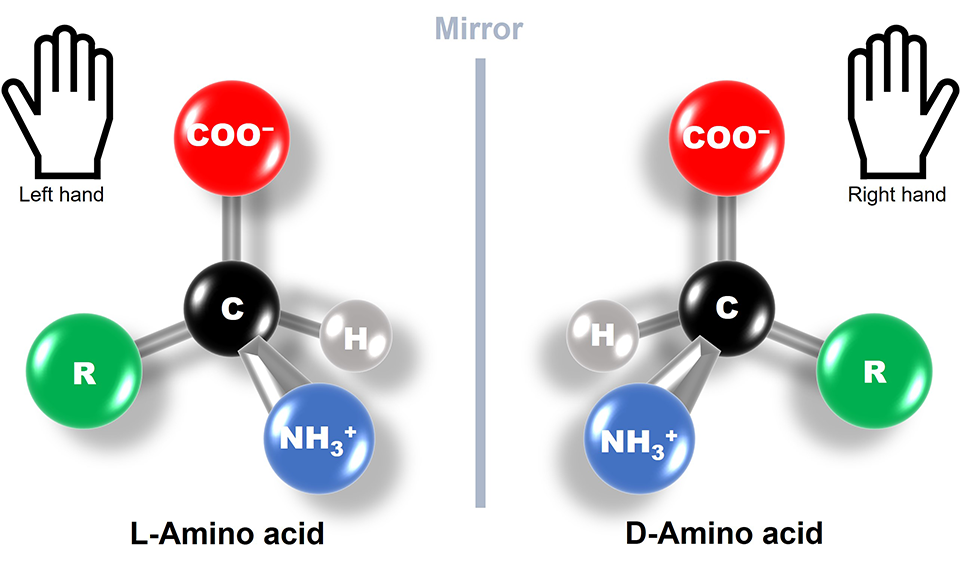
That matters more than it sounds. A rover carries whatever fits on a rover, and the instruments that could resolve the question weigh tonnes and live in basements. Isotope ratios of carbon and sulfur measured to a fraction of a per mil, the handedness of amino acids, molecular patterns checked against deliberately contaminated controls, all of it repeated by rival laboratories that would enjoy proving each other wrong. That is the machinery a claim about life on Mars has to survive, and none of it exists on the surface of another planet.
The most interesting ground is out of reach for a second reason. Cosmic rays and ultraviolet light work over the top metre or two of Martian soil, and Curiosity’s radiation detector has been measuring that dose since 2012. Anything alive today would be deeper. ESA’s Rosalind Franklin rover carries a drill built to reach two metres, and after losing its Russian landing platform it is being refitted with American hardware.
Where That Leaves the Question
Fifty years of instruments have moved the subject a long way without answering it. In 1976 nobody knew whether Mars had ever been habitable. Now the wet, chemically hospitable early Mars is barely in dispute, the organics are confirmed, the preservation is confirmed, and the sample sitting in Jezero is the most interesting rock anyone has set aside. What has not changed is the standard of proof. A candidate biosignature is a reason to keep working, not a headline, and the researchers closest to the data are usually the ones saying so loudest.
If you follow this kind of thing, the arguments are worth reading in full rather than in summary. SETIworld covers the missions, the disputes and the papers behind them, and the conversation is open to anyone who wants to think seriously about what would count as an answer. Come and read, and bring your objections.