Posted by
 Planetary science news usually reaches the public as a headline about another Earth-like world, and the phrase does a lot of quiet work. Nothing found so far is Earth-like in any sense a biologist would accept. What astronomers actually measure is a handful of numbers — a radius, sometimes a mass, an orbital period, the temperature and activity of the host star — and from those they build an argument about whether liquid water could sit on a surface for a long time. The argument is reasonable. It is also thinner than the headlines suggest, and understanding where it gets thin is the most useful thing a reader can take away.
The habitable zone, and what it does not tell you
The standard first filter is the region around a star where a planet with a modest atmosphere could hold liquid water at its surface. James Kasting and colleagues formalized the calculation in 1993, and their boundaries are still the reference: too close and a runaway greenhouse boils the oceans away, too far and carbon dioxide condenses out and the planet freezes.
The zone shifts depending on assumptions about clouds, atmospheric composition and how much the star’s output has changed over billions of years, so published boundaries come in conservative and optimistic versions that differ substantially. Venus and Mars both sit near the edges of the Sun’s, and neither is habitable.
Being in the zone means only that surface water is not immediately ruled out. It says nothing about whether the planet has water, an atmosphere, or a surface at all.
Numbers that come from actual measurements
Two techniques carry most of the load. A transit measures how much starlight a planet blocks, which gives its radius; Kepler stared at one patch of sky near Cygnus from 2009, watching roughly 150,000 stars for dips of a few hundredths of a percent, and TESS has been doing a shallower version across nearly the whole sky since 2018. Radial velocity measures the star’s wobble, which gives a mass; instruments like HARPS and ESPRESSO can detect stellar motions of well under a metre per second.
Get both and you get density, which is where the argument about composition starts. A planet the size of Earth with Earth’s density is probably rock and metal. The same radius at half that density has to be carrying a thick envelope of light gas.
One of the more interesting results of the past decade came out of exactly that analysis. Benjamin Fulton and colleagues showed in 2017 that planets between roughly 1.5 and 2 Earth radii are unusually rare — a gap in the distribution, most likely because planets in that range either kept a hydrogen envelope and became small gas worlds or lost it to stellar radiation and ended up as bare rock. That gap tells you something real about how atmospheres survive.
The star matters as much as the planet
Most planets found in habitable zones orbit red dwarfs, for the boring reason that small dim stars are easy targets: the planet blocks proportionally more light and tugs the star harder. Those systems also come with problems.
A planet in the habitable zone of an M dwarf orbits close in, which usually means tidal locking, with one hemisphere in permanent day. The stars flare violently, sometimes brightening by large factors in minutes, and they emit extreme ultraviolet radiation for far longer during their youth than the Sun did. Proxima Centauri, which hosts a planet in the right temperature range, was caught in 2019 producing a flare of exceptional strength.
Whether an atmosphere can survive several hundred million years of that is one of the central open questions in the field, and it is being tested rather than argued. JWST’s thermal measurements of the innermost TRAPPIST-1 planets in 2023 found no evidence of a substantial atmosphere on either, which is a real result and not an encouraging one.
Reading air from forty light-years away
When a planet crosses its star, a thin ring of starlight passes through its atmosphere and picks up absorption features on the way. The signal is minute — parts in ten thousand of the star’s brightness — and extracting it takes many transits and a great deal of care about instrument systematics.
This is how the field has moved from counting planets to characterizing them. JWST has measured carbon dioxide, water and sulfur dioxide in the atmospheres of hot giant planets with fairly high confidence. The contested case is K2-18b, a sub-Neptune where one team read a possible dimethyl sulfide feature, a molecule made on Earth mostly by marine plankton, and other groups re-analysing the same observations found the evidence far weaker while chemists proposed non-biological routes to the same compound.
The dispute is not a failure. It is what the process looks like from inside, and any real detection will have to survive several rounds of it.
Why oxygen is not a smoking gun
The obvious biosignature is free oxygen, since it is reactive and would vanish from an atmosphere in geological moments without something replenishing it. The complication is that a planet close to an active red dwarf can build up oxygen abiotically, when ultraviolet radiation splits water and the light hydrogen escapes, leaving the heavy oxygen behind. Rory Barnes and Rodrigo Luger worked through that scenario in 2015 and it has been part of every serious discussion since.
The workaround is to look for combinations that should not coexist — oxygen alongside methane, for instance, since the two react quickly and their simultaneous presence implies continuous resupply. Even then, the interpretation depends on knowing the planet’s geology and its star’s history, neither of which we can measure directly at these distances.
Ocean worlds broke the framework
The habitable zone concept assumes sunlight sets the temperature. That assumption fails badly in our own Solar System, where the best candidates for present-day habitability orbit a planet five times further from the Sun than Earth.
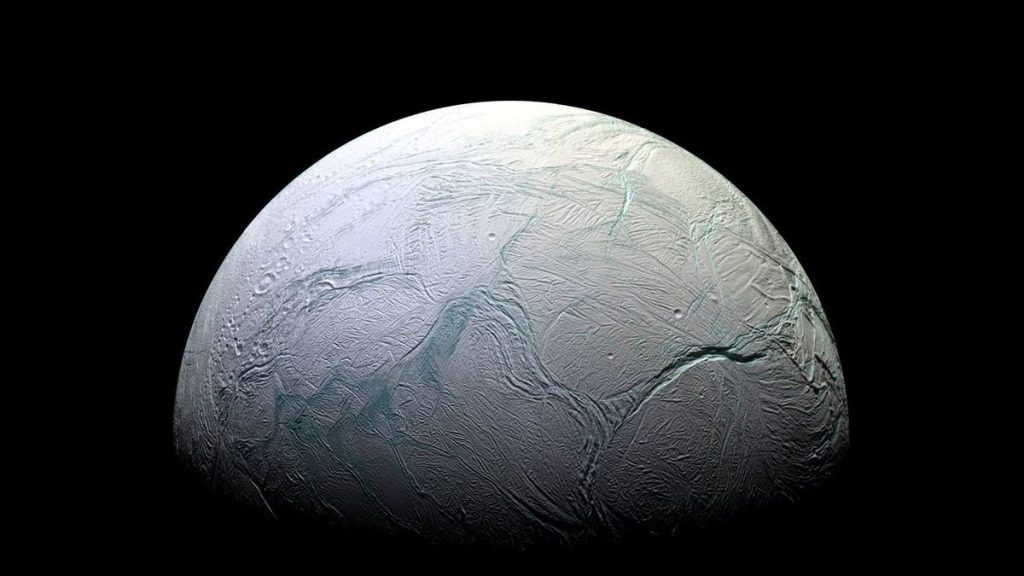
Europa gives itself away through magnetism: Galileo detected a field induced in the moon by Jupiter’s, which requires a conducting layer close to the surface, most plausibly salty water. Enceladus was caught differently — Cassini measured a slight wobble in its rotation that only works if the icy shell is decoupled from the core by a global ocean, and then flew through the plumes and sampled them directly.
Tidal heating powers both. It has nothing to do with a star’s warmth, which means planetary science news about habitable zones is describing only one of at least two ways a world can stay wet.
Ground truth, and where it comes from
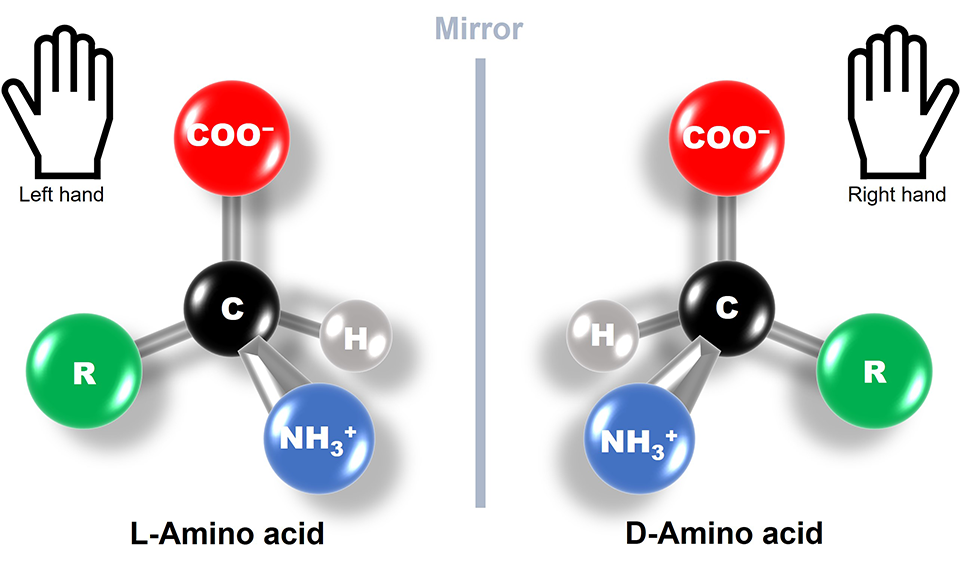
Everything above is remote sensing. The calibration comes from places we can touch: Martian rovers drilling into old lake sediment, meteorites like Murchison that carry amino acids formed in space, and returned samples. OSIRIS-REx delivered material from the asteroid Bennu in September 2023, and analysis has since turned up amino acids and nucleobases in that pristine material, which strengthens the case that biology’s raw ingredients are distributed widely rather than assembled locally.
The instruments arriving next will sharpen the remote half. The Extremely Large Telescope’s 39-metre mirror should be able to attempt direct spectroscopy of rocky planets around nearby stars, and PLATO and Ariel will expand the census and the atmospheric survey.
None of that will produce a clean announcement. It will produce candidates, arguments and slow convergence, which is how this field has always worked. SETIworld keeps track of the results worth taking seriously and the ones that quietly deflate a year later.