Posted by
 The list of planets that have life is, as of today, exactly one entry long. Earth is the only world where living things have been confirmed, and the only place anyone has ever seen a biosphere up close. What has grown dramatically is the shortlist of places worth checking. Some sit in our own Solar System and can be visited by spacecraft. Others orbit stars dozens or hundreds of light-years away and can only be studied through the faint light that reaches our telescopes. Here are the ones researchers argue about most, and the reasons each is both promising and frustrating.
Venus, the surprising candidate
Venus looks like the last place to search. The surface is around 460 °C under a crushing carbon dioxide atmosphere. But about 50 kilometres up, in the cloud layers, the temperature and pressure are not far from those on Earth’s surface. As far back as 1967, Carl Sagan and Harold Morowitz suggested that microbes might float there.
The idea came roaring back in September 2020, when a team led by Jane Greaves reported phosphine in Venus’s clouds. The detection has been contested ever since, over calibration, over whether sulphur dioxide could be mistaken for it, and over how much phosphine, if any, is really there. Even if it is present, unknown chemistry could make it. Venus stays on the list mostly as a reminder that we understand our nearest neighbour less well than we think.
Mars and the icy moons
Mars is the most explored candidate. Its ancient river deltas and lakebeds show that it was wetter and probably warmer more than three billion years ago, and rovers have confirmed that some of those places were habitable by Earth standards. If Mars ever had life, the best bet is that it was microbial and long ago, with a slim chance of survivors deep underground where water may still be liquid.
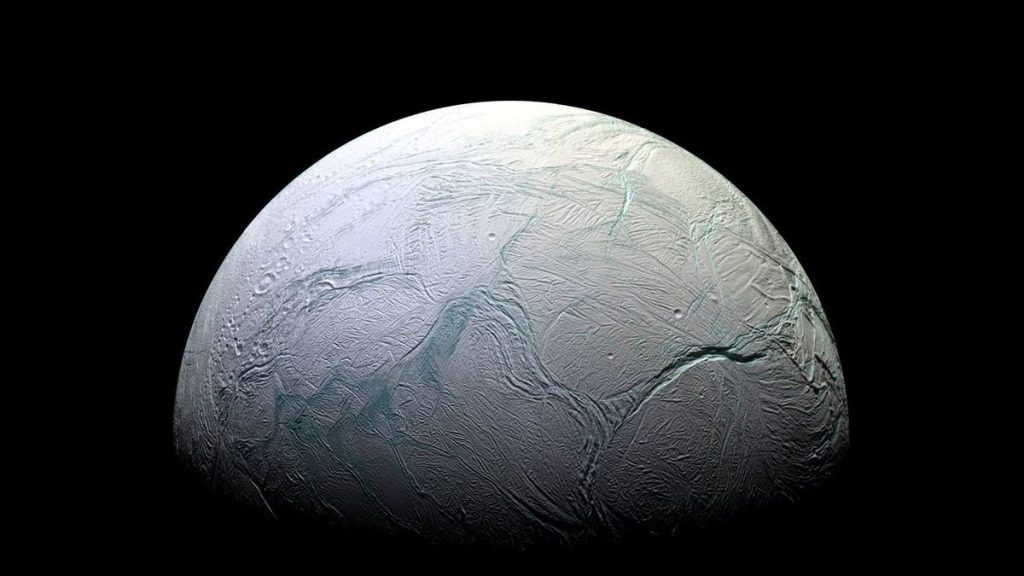
The moons are a different proposition. Jupiter’s Europa and Saturn’s Enceladus both hide salty oceans beneath their ice, in contact with rocky floors. Saturn’s Titan has rivers and lakes of liquid methane on the surface and probably a water ocean deep inside. Enceladus is the easiest to sample, because it sprays its ocean into space through cracks near its south pole, so a spacecraft can taste it simply by flying through the plume. None of these is a planet, strictly speaking. They may still be better bets than most planets.
The first Earth-sized worlds in the zone
Beyond the Solar System, the story starts in 1995, when Michel Mayor and Didier Queloz found 51 Pegasi b, a giant planet hugging its star in a four-day orbit. It was nothing like a home for life. For the next two decades, the hunt was for something smaller and cooler.
Kepler-186f, announced in 2014, was the first Earth-sized planet found in the habitable zone of its star, a red dwarf about 500 light-years away. A year later came Kepler-452b, nicknamed Earth’s cousin, orbiting a Sun-like star once every 385 days. It is roughly one and a half times Earth’s width, which is right on the line where planets may stop being rocky and start becoming small gas worlds. Both are too far and too faint for detailed follow-up with today’s telescopes.
That is the frustrating part of the Kepler era. It proved that small temperate planets are common, then left most of the specific ones it found out of reach.
Proxima b and TRAPPIST-1
The nearest exoplanet of all, Proxima Centauri b, was announced in August 2016 after a campaign called Pale Red Dot. It orbits the closest star to the Sun, about 4.2 light-years away, every 11 days, inside the habitable zone. It has at least roughly Earth’s mass. Proxima, however, is a flare star, regularly blasting its planets with ultraviolet light and X-rays. Whether b has kept any atmosphere is unknown, and it does not transit its star from our point of view, which makes its air very hard to study.
TRAPPIST-1, about 40 light-years away, became famous in February 2017 when astronomers announced seven roughly Earth-sized planets around a tiny, cool star, with several of them in or near the habitable zone. Because all seven transit, they are ideal targets for JWST. The early results are sobering. Measurements of the two innermost planets suggest they have no thick atmospheres, and the habitable-zone planets are still being observed. The whole system may have been stripped by its star, or not. Nobody knows yet.
K2-18b and the DMS argument
The most heated debate concerns K2-18b, a planet about eight to nine times Earth’s mass orbiting a red dwarf some 124 light-years away. In 2023 a team led by Nikku Madhusudhan reported that JWST had detected methane and carbon dioxide in its atmosphere, and tentatively dimethyl sulphide, a gas that on Earth is made mainly by marine plankton. They argued it could be a “hycean” world, with a hydrogen-rich atmosphere over a global ocean.
In 2025 the same group reported a stronger hint of DMS or a related molecule. Other researchers re-examined the data and found the evidence much weaker, or explainable by other molecules and different modelling choices. Some argue the planet may not have a liquid ocean at all and could be closer to a small gas giant. At the time of writing, there is no consensus that DMS is there. The episode is a live example of why one molecule in a noisy spectrum is not enough.
LHS 1140 b, a denser planet orbiting another red dwarf about 49 light-years away, has also drawn attention after JWST data in 2024 hinted it might have a nitrogen atmosphere and possibly an ocean. Hinted is the operative word.
What makes the shortlist
Any serious list of candidate planets that have life starts from the same checklist. A world earns its place for a few reasons: liquid water now or in the past, a source of energy, the right chemical ingredients, and enough stability for those conditions to last. Distance from a star is only the first filter. Venus, Earth and Mars all formed in roughly the same neighbourhood of the Solar System and ended up radically different, because of size, atmosphere and geological history.
There is also a practical filter. Some planets that have life, if any exist, will be impossible to detect with any instrument we can imagine building this century. The shortlist is partly a list of places where life could be, and partly a list of places where, if it were there, we might actually notice.
Why the list is still one entry long
Remote detection of life on a small rocky planet requires measuring tiny changes in starlight with extraordinary precision, often over dozens of transits. JWST can do this for a few nearby systems around small stars, and even there the data take years to collect. Directly imaging an Earth twin around a Sun-like star will need a dedicated mission like NASA’s planned Habitable Worlds Observatory.
So for now the honest answer to which planets have life is: one that we know of, and a growing set of worlds where the question can finally be asked properly.
We follow every one of these worlds on SETIworld, from Venus’s clouds to the latest JWST spectra, and you will find plenty more on the portal if you want to keep watching the shortlist change.