Posted by
 Why does the search for life beyond Earth focus so heavily on water, carbon, and energy? It’s not arbitrary, and it’s not just lack of imagination. There are physical and chemical reasons these keep coming up — though the field is honest about the fact that they’re educated bets, not certainties.
Strip away the spacecraft and the telescopes, and the search rests on a handful of scientific principles. Here’s what they are and why they hold.
Why Water Keeps Coming Up
Liquid water does something most other liquids do poorly: it dissolves an enormous range of substances without destroying them, letting complex chemistry happen in a stable medium. It stays liquid across a usefully wide temperature range. It even has the odd property of being less dense as a solid, so ice floats and insulates the liquid beneath rather than freezing a body of water solid from the bottom up. That last detail is why an ocean can survive under an ice cap — on Europa, say.
None of this proves water is mandatory for life. Researchers have seriously discussed alternative solvents — liquid methane on Titan, ammonia, supercritical fluids. Each has problems. Methane stays liquid only at brutal cold, where chemistry slows to a crawl. The honest position is that water is the solvent we understand and the one life uses here, so it’s where the search concentrates — while a minority of researchers keeps the alternatives on the table.
The Carbon Argument
Carbon forms four stable bonds and links into long chains, rings, and branched structures more readily than any other element. The sheer variety of stable molecules carbon can build is what makes the intricate machinery of biology possible. Silicon, the usual proposed alternative, sits below carbon on the periodic table and bonds similarly in principle — but its bonds are weaker, its chains less stable, and it doesn’t form a convenient gaseous waste product the way carbon does as CO2.
So carbon isn’t favored out of habit. It’s favored because, as far as anyone has been able to determine, nothing else combines the same versatility and stability. It’s possible life elsewhere found another route. Based on the chemistry we can actually test, carbon remains the strong default.
Energy: The Requirement People Forget
Life is a process that runs against the natural drift toward disorder, and running against that drift costs energy — constantly. No energy source, no life. This is the requirement that gets less attention than water but is just as fundamental.
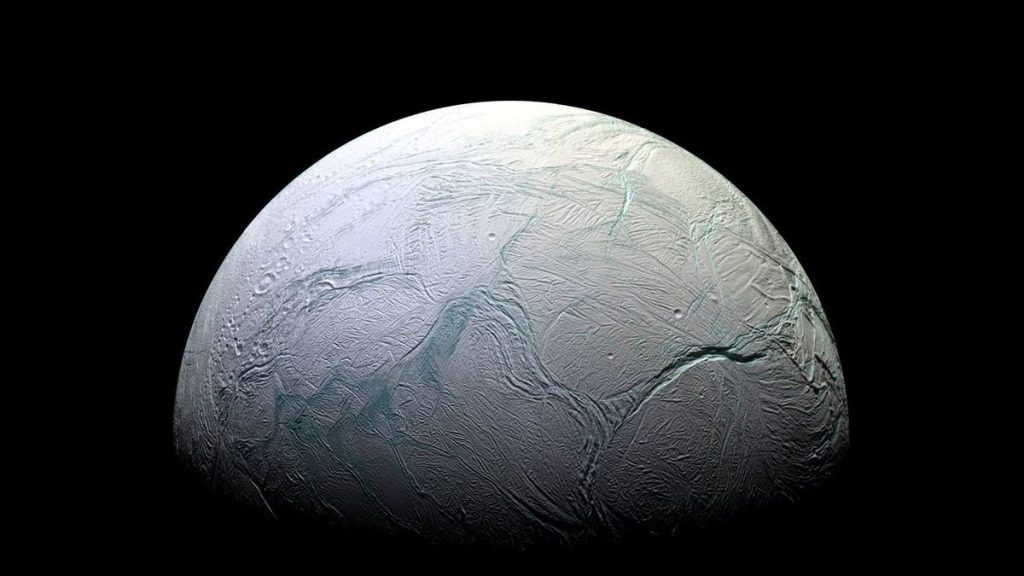
On Earth’s surface, the dominant source is sunlight, captured through photosynthesis. But the hydrothermal vent discovery showed that’s not the only option. Whole ecosystems run on chemosynthesis — extracting energy from chemical gradients, like the reaction between hydrogen-rich vent fluid and seawater. This matters enormously for the search, because it means a world doesn’t need sunlight to be habitable. It needs a chemical disequilibrium that life can tap. Europa’s ocean floor, Enceladus’s vents, the Martian subsurface — all are interesting precisely because they might offer that.
The Goldilocks Logic, and Its Limits
The habitable zone — the orbital band where a planet could hold liquid surface water — is the first filter applied to any candidate world. It’s a useful starting point. It’s also frequently overstated.
Mars sits inside the Sun’s habitable zone and is a frozen near-vacuum. Venus straddles the inner edge and is hot enough to melt lead. Both are “in the zone.” The zone tells you where surface water is geometrically possible given the right atmosphere — it says nothing about whether the atmosphere exists, whether the planet has a magnetic field to hold it, or whether the world is geologically alive. The concept is a screening tool, not a verdict, and treating it as a verdict is one of the more common errors in popular coverage.
What Extremophiles Taught Us
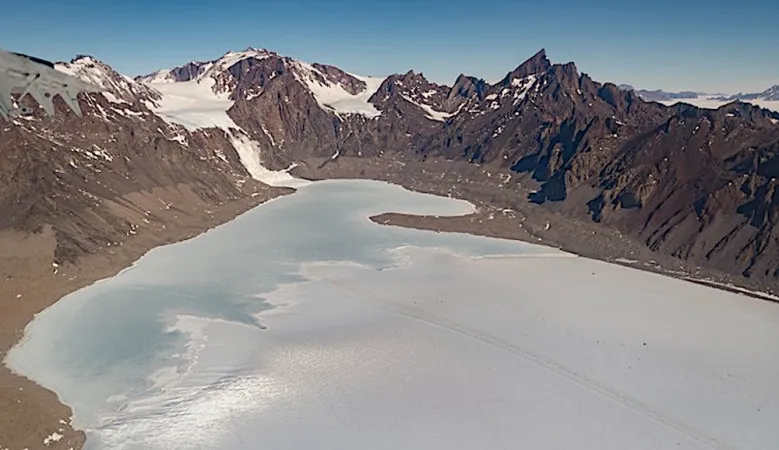
Every assumption about the limits of life has been pushed outward by organisms found in places that should, by older reasoning, be sterile. Microbes living in acid at pH near zero. Bacteria surviving radiation doses thousands of times past the human lethal limit. Life kilometers underground in solid rock, metabolizing hydrogen from water-rock reactions, isolated from the surface for possibly millions of years.
These extremophiles don’t just expand the catalog of weird biology. They widen the set of environments astrobiologists are willing to call potentially habitable. Each discovery is a small correction to our sense of how fragile or how stubborn life actually is — and the trend has consistently been toward stubborn.
The Honest Uncertainty
The whole framework — water, carbon, energy, the habitable zone — rests on a sample size of one. We know how life works in exactly one place. Building a universal science from a single example is methodologically dangerous, and the better researchers say so openly.
The response isn’t to abandon the framework but to hold it loosely. Search where the chemistry we understand says life is plausible, because that’s where we can actually recognize it — and stay alert for the anomaly that doesn’t fit any of our assumptions. The science behind the search is strong. It just isn’t finished, and pretending otherwise would be the least scientific thing about it.
Time: The Ingredient Nobody Lists
Water, carbon, energy — the usual three get all the attention. But there’s a fourth requirement that’s easy to overlook: time, and lots of it. Life on Earth appeared relatively quickly, within a few hundred million years of conditions becoming survivable. Complex life took far longer — roughly three billion years passed between the first microbes and the first animals. Whatever the universe’s habit, getting from simple cells to anything elaborate seems to demand stretches of stability measured in billions of years.
This makes a star’s lifespan a hidden factor in habitability. Massive, bright stars burn through their fuel in mere tens or hundreds of millions of years — likely too fast for complex life to develop on any planet around them. Sun-like stars offer a comfortable several billion years. Red dwarfs are the extreme case: dim and stingy, they can burn steadily for hundreds of billions or even trillions of years, far longer than the current age of the universe. If life needs time above all, red dwarfs offer it in almost unlimited supply — assuming their flares don’t sterilize their planets first. The clock, set by the star, may matter as much as the chemistry.
The Ingredients Are Already Scattered Across Space
One quietly encouraging fact underpins the whole search: the raw materials of life are not rare or Earth-specific. They’re everywhere. Amino acids — the building blocks of proteins — have been found inside meteorites that fell to Earth, formed in space before our planet existed. The Murchison meteorite, which landed in Australia in 1969, contains dozens of amino acids, including some not used by terrestrial life.
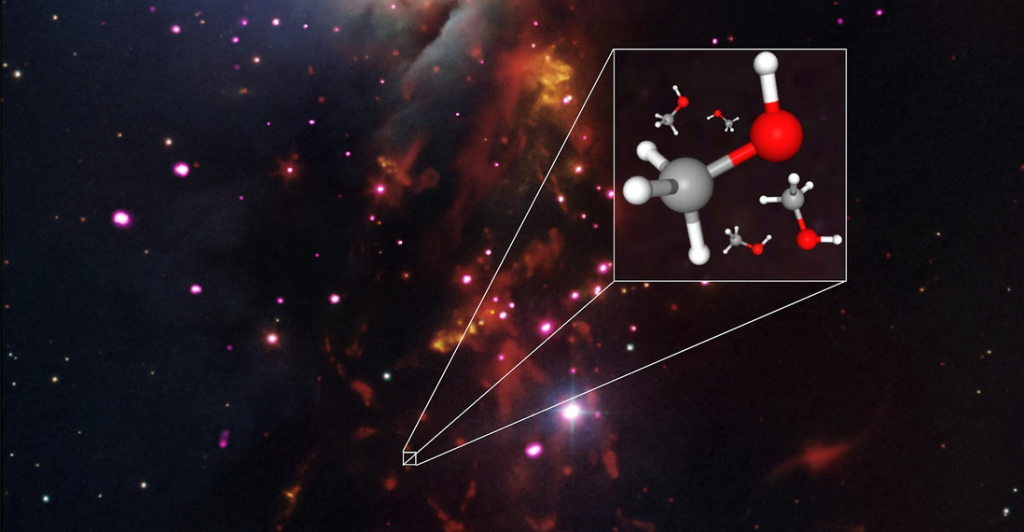
Radio telescopes have detected complex organic molecules drifting in interstellar gas clouds — alcohols, sugars, and the precursors of more elaborate chemistry, floating in the cold spaces between stars. Comets carry water and organics. Saturn’s moon Enceladus vents organic-laden water into space. The picture that emerges is of a universe already stocked with life’s chemical vocabulary, manufactured by ordinary processes wherever the conditions allow. This doesn’t mean life is common — assembling the ingredients into something living is the hard part nobody has explained. But it does mean the search isn’t hoping to find rare materials in unlikely places. The materials are the easy part. They’re already out there.
One Planet Is a Dangerous Sample Size
It’s worth stating the deepest caveat as plainly as possible: every principle in this article is generalized from a single example. Earth is the only living world we have ever studied, which means every rule we’ve drawn — water, carbon, energy, time — could be a peculiarity of our one case rather than a law of the universe. A second independent example of life, anywhere, would do more to put this science on solid ground than any number of refinements to a one-planet theory. Until then, the framework is the best educated guess available, held by researchers who mostly know, and admit, exactly how provisional it is.
Searching Where We Can Recognize the Answer
The practical upshot of all this uncertainty is a deliberate strategy: look hardest where life resembling ours could survive and be recognized, while staying alert for anything that breaks the pattern. It’s not that researchers believe alien life must use water and carbon — it’s that those are the signals we know how to read. Searching for the familiar isn’t a failure of imagination; it’s an honest acknowledgment that you can only confirm what you can identify. The strange possibilities stay on the table. They’re just harder to test, and the field goes first where its instruments can actually deliver a verdict.
SETIworld breaks down the science behind the search for life — the chemistry, the conditions, the evidence. Join the portal to keep up with the research.
References
- Schulze-Makuch & Irwin, Life in the Universe: Expectations and Constraints, Springer 2008
- Kasting, How to Find a Habitable Planet, Princeton University Press 2010
- Hoehler, An Energy Balance Concept for Habitability, Astrobiology 2007
- Benner et al., Is there a common chemical model for life in the universe?, Current Opinion in Chemical Biology 2004
- Rothschild & Mancinelli, Life in extreme environments, Nature 2001
- NASA Astrobiology — Building Blocks of Life resources astrobiology.nasa.gov