Posted by
 A New Era in the Search for Intelligent Life
SETI Forward represents a modern evolution in the Search for Extraterrestrial Intelligence, combining advanced astronomy, artificial intelligence, and next-generation observational technologies to improve humanity’s chances of detecting intelligent civilizations beyond Earth. As scientific capabilities expand, researchers are no longer limited to narrow radio observations but instead employ a wide range of detection strategies across multiple wavelengths and data sources.
The search for extraterrestrial intelligence has transitioned from a small-scale scientific effort into a global, data-intensive discipline. Modern SETI Forward strategies focus on efficiency, scalability, and precision, enabling scientists to analyze vast regions of the universe with unprecedented depth.
These new approaches significantly increase the probability of identifying technosignatures that may indicate the presence of advanced civilizations.
Expanding Beyond Traditional Radio Searches
For decades, SETI primarily focused on detecting artificial radio signals. While this remains an important method, SETI Forward expands the search into new domains.
Scientists now examine optical, infrared, and even gravitational data for anomalies that may suggest intelligent activity. Laser communications, unusual energy patterns, and large-scale astroengineering structures are among the phenomena being studied.
This multi-channel approach allows researchers to identify signals that traditional radio-based systems might miss. By broadening the search spectrum, SETI Forward greatly increases observational coverage and scientific sensitivity.
The Role of Artificial Intelligence
Artificial intelligence plays a central role in modern SETI Forward strategies.
Telescopes and observatories generate enormous amounts of data every day, making manual analysis impossible. Machine learning algorithms are now used to classify signals, detect anomalies, and eliminate interference caused by human technology or natural astrophysical sources.
AI systems can identify subtle patterns in data that may indicate non-random or artificial origins. Over time, these systems improve through continuous learning, making them more effective at detecting potential extraterrestrial technosignatures.
Future SETI systems may rely almost entirely on autonomous AI to monitor the sky in real time and flag unusual signals for human verification.
Next-Generation Telescopes and Instruments
Advanced observational instruments are at the heart of SETI Forward.
New radio telescope arrays, such as large interferometric networks, provide dramatically improved sensitivity and resolution. These systems allow scientists to scan vast regions of the sky simultaneously while detecting extremely faint signals from distant star systems.
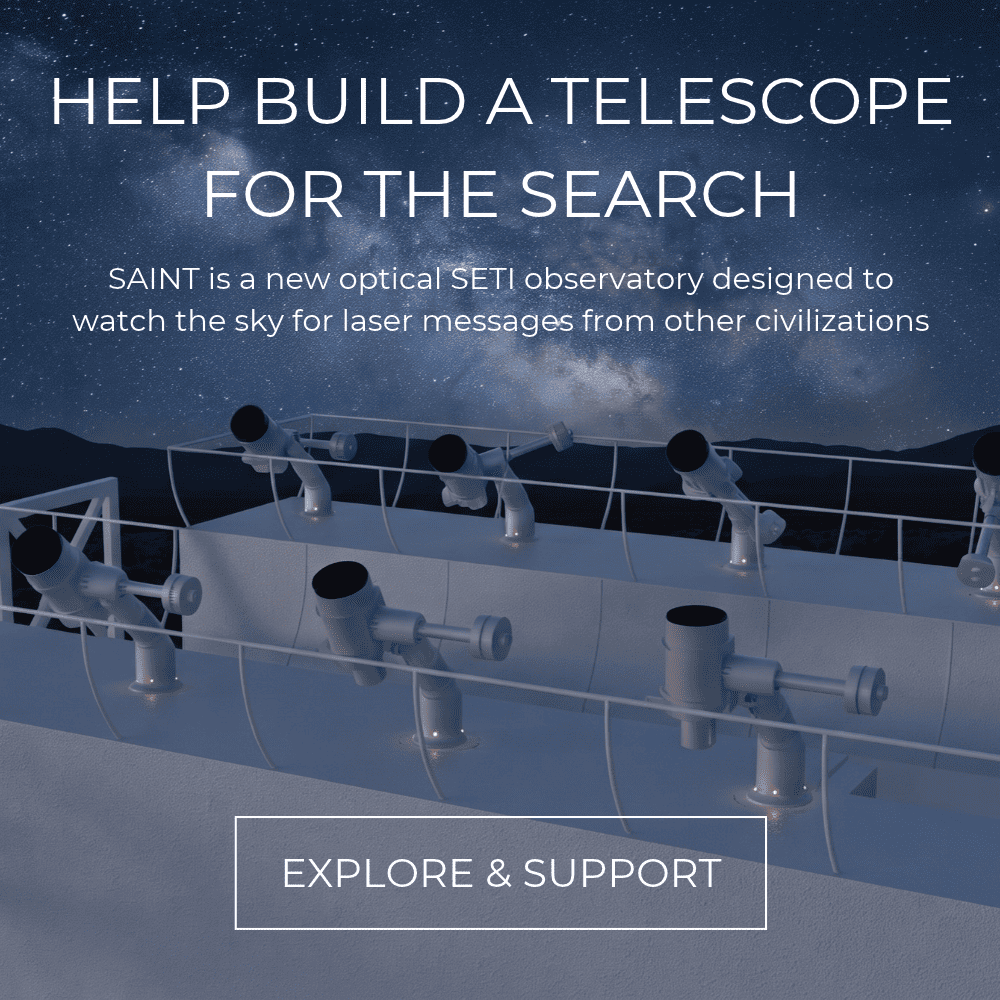
Optical and infrared telescopes also contribute by searching for laser emissions, thermal anomalies, and planetary signatures that may indicate technological activity.
Space-based observatories are expected to play an increasingly important role, free from Earth’s atmospheric interference and capable of observing a broader range of wavelengths.
Together, these instruments create a comprehensive system for detecting potential alien civilizations.
Searching for Technosignatures
SETI Forward places strong emphasis on the search for technosignatures—observable evidence of advanced technology.
These may include artificial radio signals, laser pulses, atmospheric pollution, industrial heat signatures, or megastructures that alter the light of stars.
By focusing on technosignatures rather than biological life alone, researchers can detect civilizations regardless of their biological form or communication methods.
This broadens the scope of SETI significantly and increases the likelihood of meaningful discoveries.
Big Data and Global Collaboration
Modern SETI research depends heavily on big data processing and international cooperation.
Observatories across the world contribute continuous streams of data, which are stored and analyzed using cloud-based computing systems. This global infrastructure allows scientists to cross-check observations and reduce false positives caused by local interference.
Open data sharing ensures that research teams from different countries can independently verify potential signals.
This collaborative model enhances scientific transparency and strengthens the credibility of any future detection.
Challenges in Detecting Alien Civilizations
Despite technological advances, SETI Forward faces significant challenges.
Space is extremely vast, and signals weaken over long distances. Intelligent civilizations may use communication methods unknown to humanity or may not transmit detectable signals at all.
Another challenge is distinguishing artificial signals from natural cosmic phenomena. Pulsars, quasars, and other astronomical objects can produce complex radio patterns that may resemble engineered signals.
Additionally, Earth-based interference from satellites, radar systems, and communication networks continues to complicate data analysis.
Overcoming these challenges requires continuous technological improvement and refined analytical methods.
The Future of SETI Forward
The future of SETI Forward is closely tied to advancements in computing, telescope technology, and space exploration.
Upcoming observatories will provide greater sensitivity and broader sky coverage than ever before. Artificial intelligence systems will become more autonomous and capable of analyzing data in real time.
As more exoplanets are discovered in habitable zones, SETI will be able to target specific systems with higher probability of hosting intelligent life.
In the coming decades, the combination of advanced instruments and intelligent data processing may finally enable humanity to detect a confirmed extraterrestrial civilization.
Conclusion
SETI Forward represents a significant step forward in humanity’s search for intelligent life beyond Earth. By combining multi-wavelength astronomy, artificial intelligence, global data networks, and advanced signal detection techniques, researchers are building a powerful framework for discovering extraterrestrial civilizations.
While the universe remains silent for now, the tools and strategies of SETI Forward bring us closer than ever to answering one of humanity’s most profound questions.
Register on the portal to explore SETI Forward research, technosignature discoveries, exoplanet science, and the latest breakthroughs in the search for extraterrestrial intelligence.