Posted by
 In July 1969, the morning Apollo 11 lifted off, the civil rights leader Ralph Abernathy led a group of poor families and a couple of mules to the gates of Cape Canaveral. His point was simple: a country that could reach the Moon could feed its own people. NASA’s administrator, Thomas Paine, came out to meet him, and by most accounts the two men talked for a while and parted with something like mutual respect. Half a century later the argument has not really moved. Space exploration funding is still weighed against hospitals, schools and roads, and the people asking the question are not being foolish. The useful answer is not that space is wonderful. It is about what kind of work only public money tends to pay for.
Why the state ended up holding the bill
Governments got into space for reasons that had little to do with science. Sputnik went up in October 1957, and within a year the United States had created NASA. The Apollo program was a Cold War project first. At its peak in the mid-1960s, NASA took roughly four percent of the entire federal budget, a share no civilian agency has come near since. Today it is well under half a percent.
What the Cold War left behind, though, was a habit of funding things with no customer. A probe to the rings of Saturn has no revenue model. Nobody pays a subscription for the magnetic field of Ganymede. Basic research tends to pay off late, unevenly and to everyone at once, which is precisely the kind of return that private investors are bad at capturing and governments exist to underwrite. Economists call that a public good. Lighthouses are the textbook example. Space telescopes fit the same mould.
The satellites nobody thinks about
Ask most people what space programs give back and they reach for Moon rocks or Mars rovers. The bigger return is pointing the other way.
The first weather satellite, TIROS-1, went up in 1960 and sent back crude television pictures of cloud. Today forecasts several days ahead depend heavily on satellite data. Landsat has been photographing the Earth’s surface continuously since 1972, building the longest record of its kind. When the US Geological Survey made the whole archive free in 2008, use of the images exploded, from crop insurance to tracking deforestation to mapping the spread of cities. The twin GRACE satellites, launched in 2002, measured tiny changes in gravity as water moved around, and showed groundwater draining from aquifers in places like northern India and California’s Central Valley faster than anyone had confirmed on the ground.
GPS is the strangest case. It was built by the US military and is still run as a defence system, yet it now underpins navigation, farming, banking time stamps and phone maps around the world, all of it free at the point of use. No company would have built it on spec.
Where commercial space fits
The last fifteen years have changed the picture, and not in the direction many people expected. Commercial launch companies now fly much of what used to be government work. But look at how that happened. NASA’s Commercial Orbital Transportation Services program, started in 2006, paid private firms to develop cargo ships for the International Space Station. SpaceX’s Dragon delivered its first cargo to the station in 2012. In May 2020 the Demo-2 mission carried two NASA astronauts to orbit from Florida, the first crewed launch from American soil since the shuttle retired in 2011.
Government did not step aside there. It acted as the anchor customer and paid for the development, then bought rides. That model works well where there is a market at the end of it, such as launch, communications or imaging. It works poorly for a Uranus orbiter. When the National Academies published their planetary science priorities for the coming decade in 2022, their top new flagship recommendation was a Uranus orbiter and probe. No company is going to fund that on its own, and nobody seriously expects one to.
The case against, taken seriously
The critics have a point, and sometimes they have numbers on their side. NASA’s own inspector general estimated in 2022 that each early launch of the Space Launch System with its Orion capsule would cost around four billion dollars, a figure the inspector general described as unsustainable. Big programs run late, change scope and pick up political constituencies that keep them alive past their usefulness. The International Space Station, built by the United States, Russia, Europe, Japan and Canada, has cost well over a hundred billion dollars over its life. It has produced a great deal of research on biology and materials in microgravity. Whether it produced a hundred billion dollars’ worth is a question reasonable people answer differently.
Opportunity cost is real. Money spent on one thing is not spent on another. There is also the question of fairness that Abernathy raised, which no spreadsheet settles.
None of that is an argument for zero. It is an argument for oversight, clear goals and the willingness to cancel.
Other ways to spend it
It is worth looking abroad, because space exploration funding does not have to mean American-scale budgets. India put Chandrayaan-3 down near the Moon’s south pole in August 2023 for a reported cost well under a hundred million dollars, cheaper than some Hollywood films about space. Its Mars Orbiter Mission in 2014 was similarly lean. China’s Chang’e 6 returned the first samples from the far side of the Moon in June 2024. Europe pools money across member states through ESA, and Japan’s agency has built a reputation on small, clever asteroid missions.
Different countries make different choices about how much to spend, and on what. That variety is useful: it shows that ambitious science does not always require the most expensive possible design.
Shared risks, shared costs
Some problems are close to the textbook definition of a job for governments. Asteroid defence is one. An impact large enough to damage a city is rare, the warning time could be short, and no individual or company has a reason to watch the sky for it. NASA set up a planetary defence office in 2016 and is building an infrared survey telescope, NEO Surveyor, to hunt for hazardous objects. In April 2029 the asteroid Apophis will pass closer to Earth than many communication satellites, safely, and several space agencies plan to watch it closely.
International partnership spreads such costs further. It also adds friction. The space station showed both sides of that over its long life.
How public money should be judged
Here is a more productive way to frame the argument than yes or no. For any mission, ask whether it answers a question that matters, whether it can only be done in space, whether the budget is believable, and whether the technology is ready. The decadal surveys exist to make exactly those calls in the open, and they have killed or reshaped projects that could not pass.
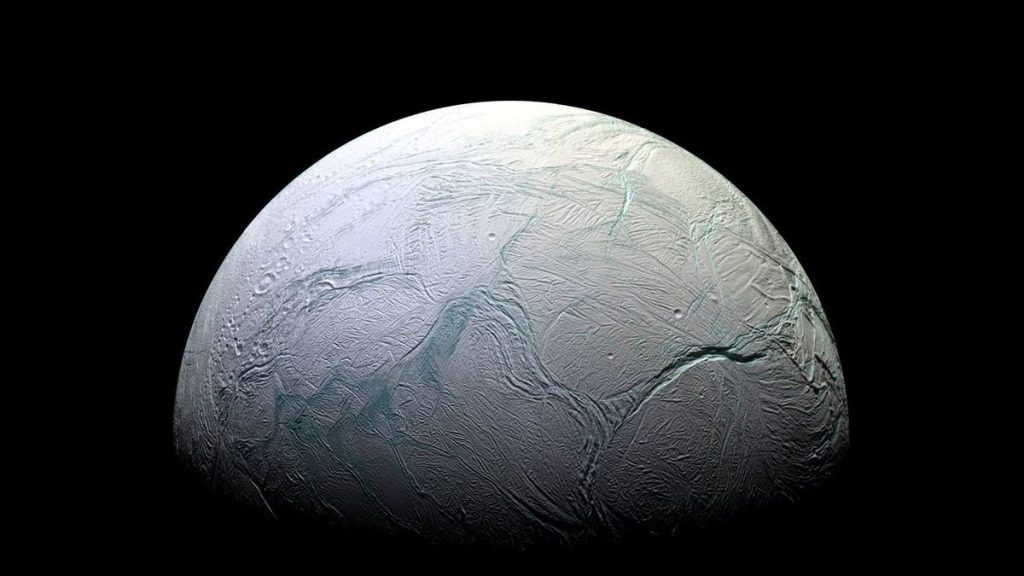
Science can describe what space exploration funding has produced: Earth data, planetary knowledge, trained engineers and a working commercial launch industry. It cannot decide how much a society should value finding out whether Enceladus is alive. That part is politics, which is as it should be.
For more on the missions public money is paying for right now, and the arguments around them, SETIworld follows planetary science, budgets and the search for life, and the discussion on the portal is open to anyone with an opinion.