Posted by
 Astrobiology is the science of life in the universe — where it comes from, how it survives, and whether any of it exists beyond Earth. That sounds like a single tidy question. It isn’t. To go after it you end up pulling in astronomy, biology, chemistry, geology and planetary science all at once, which is exactly why the field feels so alive right now. Ask what astrobiology is and why it is important, and you’re really asking the oldest question people have: are we the only ones here?
For most of history that question belonged to philosophers and poets. What changed is that we finally built instruments good enough to test it. Telescopes that can weigh a planet 40 light-years away. Spectrographs that read the chemistry of an atmosphere we will never visit. The question moved out of the imagination and into the lab, and that shift is what astrobiology is, at heart.
Where the field came from
Astrobiology as a named discipline is fairly young — it took shape in the late twentieth century, though its roots run back much further. People had been arguing about the origin of life on Earth and about life on other worlds long before anyone gave the study a formal name. Early planetary missions gave it real weight. When the Viking landers scooped Martian soil in the 1970s and ran experiments looking for metabolism, the results were famously ambiguous, and that ambiguity taught the field an early, humbling lesson: detecting life at a distance is genuinely hard.
Today the work is spread across telescopes, spacecraft, and benchtop chemistry. Some of the most important astrobiology happens in Antarctic lakes and deep-sea vents, not in orbit.
Life in places it has no business being
Part of why the search stays open is that Earth keeps moving the goalposts on us. We used to assume life needed mild conditions — sunlight, moderate temperatures, fresh water. Then biologists found extremophiles: microbes thriving in boiling volcanic springs, in acid, in the crushing dark miles beneath the seafloor, in the brine of Antarctica. Nothing about them is exotic to them; that’s just home.
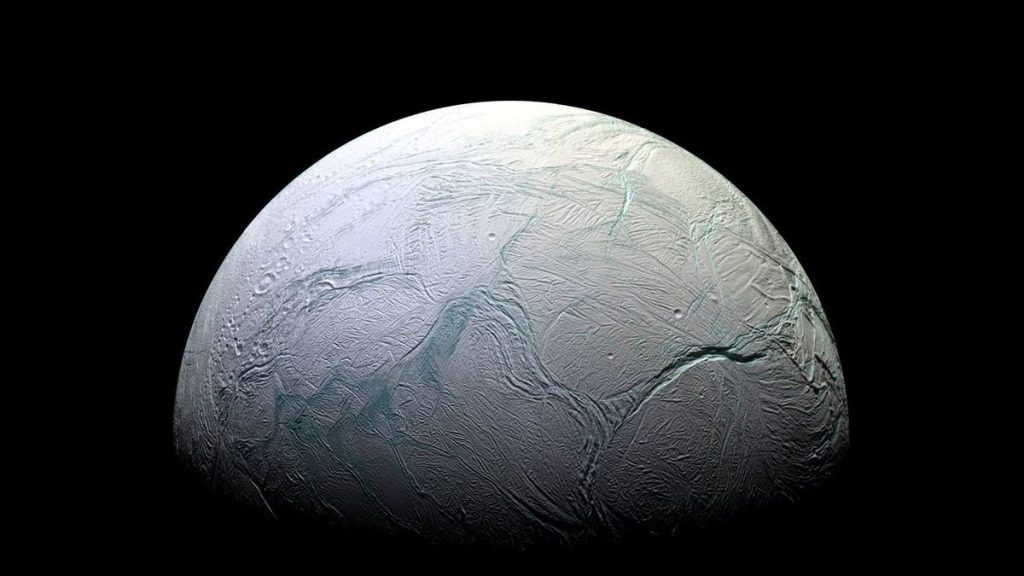
The lesson lands hard on the rest of astrobiology. If life clings on in the nastiest corners of our own planet, then the moons and worlds we used to write off aren’t so easy to dismiss. The subsurface ocean under Europa’s ice. The hydrocarbon lakes of Titan. The plumes venting off Enceladus, which carry water and organic molecules straight up into space where a spacecraft could, in principle, fly through and sample them. None of that is proof of anything. It’s a widening of where “suitable for life” might mean something.
Reading the light of other worlds
Here’s the thing about looking for life around another star: you almost never see the planet directly. You watch its star, and you infer.
The transit method — the trick behind Kepler and now TESS — catches the tiny, regular dip in a star’s brightness when a planet crosses in front of it. Kepler alone confirmed thousands of exoplanets and showed us that small rocky worlds are common across the galaxy. The radial-velocity method reads a star’s subtle wobble as an unseen planet tugs it back and forth; that’s how Proxima Centauri b, orbiting the nearest star to the Sun, was found. Different techniques, same goal: build a census of worlds and figure out which ones sit in the habitable zone, the band around a star where liquid water could survive on a surface.
Some of those worlds have become household names inside the field. The seven planets of TRAPPIST-1, several of them rocky and temperate, packed around a small cool star. Kepler-452b, an Earth-sized world in a Sun-like star’s habitable zone. TOI-700 d. And K2-18b, a larger world whose atmosphere has drawn intense study and heated debate over what its chemistry actually means. That word — debate — matters. It’s the normal state of the field, not a failure of it.
Biosignatures, and why they’re slippery
A biosignature is a chemical fingerprint that hints at biology. Oxygen, methane, carbon dioxide, water vapor — the sort of gases that life on Earth produces in bulk. The way you look for them is elegant: when a planet transits its star, a sliver of starlight filters through the planet’s atmosphere on its way to us, and different molecules stamp their signatures into that light. Split the light into a spectrum and you can, sometimes, read what the air is made of. The James Webb Space Telescope was built partly to do exactly this, and it has already pulled molecular detail out of exoplanet atmospheres that was impossible a decade ago.
The catch is that chemistry lies. Oxygen can build up without life. Methane pours out of volcanoes as readily as it does out of microbes. Phosphine — a gas that made headlines when a team reported it in the clouds of Venus — set off years of argument over whether the detection was even real, let alone whether it meant anything biological. That saga is a good illustration of the whole problem: a single molecule almost never settles the case. You want several signals that don’t have an easy geological explanation, seen together, on a world where they shouldn’t just sit there quietly. We are not there yet.
Listening for the neighbors
Then there’s the other branch — the search for technosignatures, evidence not of pond scum but of technology. Radio telescopes have swept the sky for decades looking for a narrow-band signal, the kind of tidy structured broadcast that nature doesn’t tend to produce on its own. Other ideas are on the table too: industrial pollutants in an atmosphere, waste heat, light where there shouldn’t be any. This is the strand of astrobiology that overlaps directly with SETI research, and it runs straight into the Fermi paradox — if the galaxy is old and vast and full of planets, where is everybody? No confirmed technosignature has ever turned up. The searching goes on regardless, because a single real detection would be the most consequential discovery in history.
Why any of this is worth the trouble
You could ask whether all this deserves the money and the telescope time, and it’s a fair question. The payoff isn’t only the dramatic one. Yes, finding even a single microbe elsewhere would upend biology, philosophy, and how we think about our own place in things — it would tell us life is not a fluke that happened once. But the quiet result matters too. Survey a hundred promising worlds and find them all dead, and you’ve still learned something real about how rare, or how fragile, living planets are.
And the tools cut both ways. The instruments and methods built to study other planets keep circling back to teach us about this one — its climate, its chemistry, the long strange story of how life got started here in the first place. Machine learning now sifts through the flood of data these missions produce, flagging the faint transit signals and odd spectral lines a human might scroll right past. It doesn’t replace the scientist. It just makes the haystack searchable.
The honest answer to “are we alone” is that we still don’t know. What’s different now is that it’s finally a question we can chip away at — one atmosphere, one spectrum, one strange quiet world at a time. Bigger eyes are coming: the Extremely Large Telescope on the ground, the Square Kilometre Array tuning in on the radio side. If you want to follow where the search goes next, SETIworld is a good place to keep watching.