Posted by
 On Christmas Eve 1968, Bill Anders pointed a Hasselblad out of the window of Apollo 8 and caught Earth rising over the grey edge of the Moon. Nobody had planned that picture. The crew had been sent to scout landing sites, and the photograph that came home ended up doing more for how people thought about their own planet than most of the mission’s formal science. That accident is a decent place to start when asking why we need space exploration. The obvious answers are about other worlds, but a surprising share of what we learn out there ends up being about us.
Rocks older than the Earth
The Solar System kept records, just not on the planets. Earth recycles its crust through plate tectonics and weathering, so almost nothing from its first few hundred million years survives intact. Asteroids are different. Many of them are leftovers that never grew into anything bigger, and they still hold material from the era when the planets were assembling.
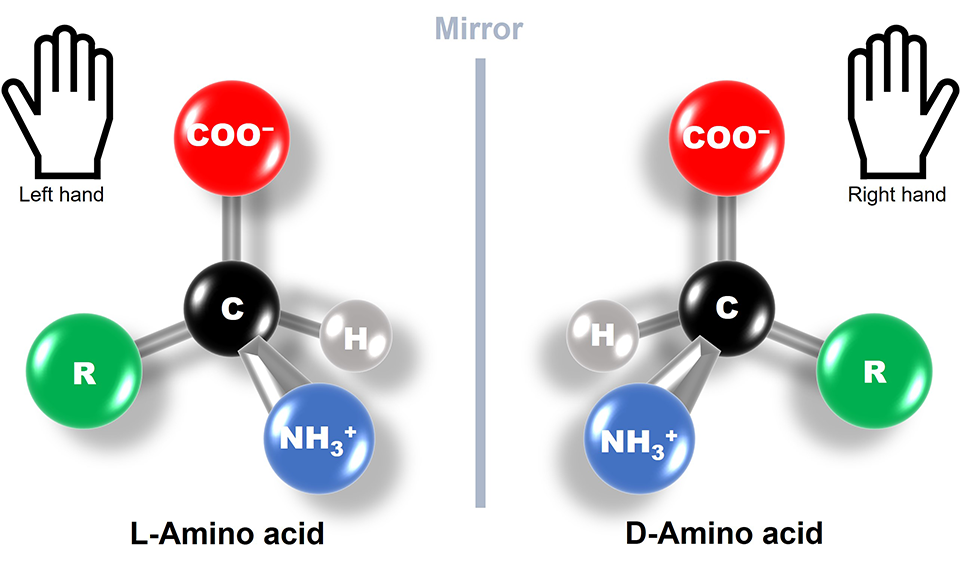
That is why NASA spent seven years and roughly a billion dollars on OSIRIS-REx. The spacecraft touched the asteroid Bennu in October 2020, grabbed a sample, and dropped a capsule into the Utah desert in September 2023. Analyses published in early 2025 reported amino acids, including 14 of the 20 that life on Earth uses to build proteins, along with all five nucleobases found in DNA and RNA. None of that means Bennu was alive. It does mean the raw ingredients of biology were floating around the early Solar System, probably long before Earth had oceans, and that is a question you simply cannot settle with a telescope. Japan’s Hayabusa2, which brought back grains from the asteroid Ryugu in 2020, told a similar story.
Following the water
The search for extraterrestrial life is the reason most people give, and it deserves the attention. Scientists do not know whether anything has ever lived beyond Earth. What they can do is go to the places where it might have, and look.
Mars is first on that list because its surface is a museum of a wetter past. Curiosity has been driving through the sediments of Gale crater since 2012, reading layer after layer of an ancient lake. Perseverance landed in Jezero crater in February 2021, right beside a fossil river delta, and has been sealing rock cores into tubes. One of those rocks, nicknamed Cheyava Falls, carries small spotted textures that on Earth are often associated with microbial chemistry. NASA has called them a potential biosignature. That phrasing matters. Non-biological reactions can produce similar patterns, and the honest answer is that nobody will be confident until samples reach a laboratory on Earth, which keeps getting pushed back because of the cost of the Mars Sample Return plan.
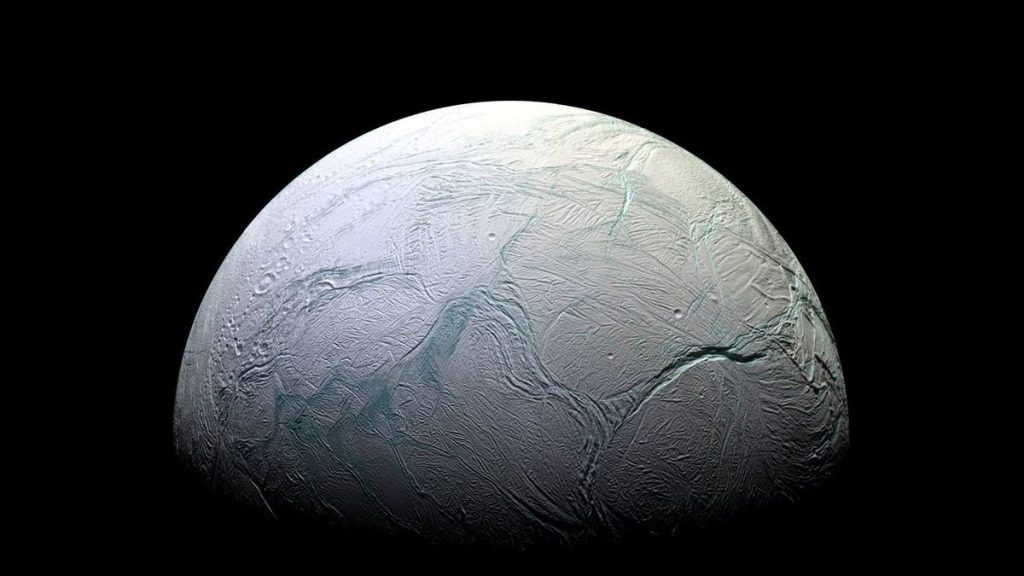
Then there are the moons. When Cassini flew through the plumes erupting from the south pole of Enceladus, it tasted salty water, silica grains and organic molecules venting from an ocean under the ice. Europa, at Jupiter, very likely hides a deep ocean of its own. NASA launched Europa Clipper in October 2024 to look at it properly, and ESA’s JUICE mission is on its way to Ganymede and Europa as well. Neither carries a life detector. They are reconnaissance missions, which is how this kind of science usually works: you map before you dig.
Further out still, there are exoplanets. In 1995 Michel Mayor and Didier Queloz found 51 Pegasi b, a giant planet circling its star in about four days. Today the confirmed count runs into the thousands, and JWST is pulling apart the light filtering through some of their atmospheres. The disputed hints of dimethyl sulfide on K2-18b show both the promise and the trap here. One faint signal, read optimistically, sounds like biology. Read carefully, it might be noise.
A mirror for our own planet
This is the part of the case for why we need space exploration that gets underplayed. Venus and Earth are nearly twins in size, yet the surface of Venus sits at about 465 degrees Celsius under an atmosphere roughly ninety times thicker than ours. Somewhere along the way, a planet of the same rough size and makeup tipped into a runaway greenhouse. Mars went the other direction, losing most of its air and nearly all of its surface water.
Comparing the three is not idle curiosity. It is how climate scientists test whether their physics holds up outside the one planet they normally study. Some of the most important work on atmospheres came from people who started by asking what went wrong next door. Exploration gives us control experiments that no laboratory could build.
Even close to home, the view from orbit changed things. Satellite measurements confirmed the scale of the Antarctic ozone hole in the 1980s, and orbiting instruments now track sea level, ice sheets and groundwater in ways that ground stations cannot.
The rock with our name on it
In February 2013 a meteor about the size of a house exploded over Chelyabinsk in Russia. Nobody saw it coming. The shock wave blew out windows across the city and around 1,500 people needed medical help, mostly for cuts from flying glass.
That is a small event by cosmic standards. In September 2022 NASA tried something new: it flew the DART spacecraft straight into Dimorphos, a small moonlet orbiting the asteroid Didymos. The impact shortened the moonlet’s orbit by about 32 minutes, far more than the minimum the team had hoped for. It was a test, not a rescue, and the target posed no danger. Still, it proved that a well-aimed spacecraft can nudge an asteroid, provided someone finds the threat early enough. Finding it early is mostly a job for telescopes, including the dedicated survey missions now being built.
Hardware that comes home
A spacecraft has to work for years with no repair crew, through radiation, extreme temperatures and communication delays of many minutes. Engineering to that standard pushes sensors, materials, software and robotics in directions industry would not bother with on its own. The CMOS image sensor in most phone cameras grew out of work at NASA’s Jet Propulsion Laboratory in the 1990s, aimed at making smaller, cheaper cameras for spacecraft. Weather forecasting and satellite navigation are so woven into ordinary life that hardly anyone thinks of them as space technology anymore.
Spin-offs are a weak argument when used alone, though. You could fund almost any hard engineering problem and get by-products. The stronger claim is that space science asks questions nothing else can answer, and the hardware follows from taking those questions seriously.
Robots, people and everyone else
Robots do most of the exploring, and do it well. Voyager, Cassini, the Mars rovers and JWST have returned more science per dollar than any crewed program. Humans bring something different: judgment on the spot, the ability to notice an odd rock and change plans in minutes. Apollo geologists did more fieldwork in a few days than early rovers managed in months. The two approaches were never really rivals.
Big missions are also rarely national affairs anymore. JWST was built by NASA with the European and Canadian space agencies, and launched on an Ariane 5 in December 2021. Instruments on Mars orbiters come from a mix of countries. Shared questions travel well across borders.
Questions still open
How common are habitable environments? Did life ever start anywhere else in the Solar System? Is Earth a lucky outlier or a typical outcome? These are no longer purely philosophical questions, which is the whole point. They can be tested with samples, spectra and patience, and each mission tends to raise two new questions for every one it answers. That is why we need space exploration over decades, not single headline missions.
If you want to keep following the rovers, the icy moons and the ongoing argument over K2-18b, the community at SETIworld tracks new results as they appear, and there is plenty more on the portal to read and discuss.