Posted by
 Every February 11 the calendar makes room for something that used to go unmentioned. Women Science Day — properly, the International Day of Women and Girls in Science — was created by the UN General Assembly at the end of 2015 and first marked the following winter. It is an awkward thing to celebrate, because the honest version is not a parade of firsts. It is a long record of exacting work done from chairs with no title, no salary line and frequently no credit. Astronomy holds more of those stories than most fields, and many run straight through the search for life beyond Earth.
Nine years of listening, and nothing
When Congress killed NASA’s microwave survey in 1993, about a year after it switched on, the search did not end. It moved onto private money and came back as Project Phoenix, which ran from 1995 to 2004 under Jill Tarter at the SETI Institute. Phoenix was targeted rather than a sky sweep: several hundred nearby Sun-like stars, nearly all within a couple of hundred light-years, worked through one at a time at a resolution fine enough to isolate a signal one hertz wide. It begged time on the Parkes dish in Australia, then the 140-foot at Green Bank, then Arecibo — with the Lovell Telescope at Jodrell Bank watching the same star from another continent, so interference could be ruled out in minutes rather than months.
It found nothing.
Tarter has never dressed that up. A null result over a few hundred stars, in one narrow slice of the radio spectrum, says almost nothing about a galaxy of a few hundred billion — one glass of water drawn from an ocean, in the comparison she used most. She also spent those decades raising money, the less romantic half of the job, and the Allen Telescope Array in northern California exists largely because she kept asking. Most people who know her know her sideways: Carl Sagan built Ellie Arroway partly out of her.
Arecibo, the dish that carried much of Phoenix, buckled and collapsed in December 2020. Nothing has replaced its collecting area.
A bit of scruff on the chart paper
In 1967 a graduate student named Jocelyn Bell was helping wire up an odd radio telescope in a Cambridge field — four and a half acres of poles and cable, more than two thousand dipoles, built partly with her own sledgehammer. Its output was ink on a moving roll of chart paper, and she read about ninety-six feet of it a day by eye.
Something kept showing up in the same patch of sky, which she described in the least dramatic phrase in the history of astrophysics as a bit of scruff. Faster recording showed a train of pulses arriving every 1.337 seconds, steadier than a clock. The team labelled the source LGM-1, for little green men — half a joke, half because nobody could name a natural process that regular. Then she found a second one elsewhere in the sky, and the alien hypothesis quietly died — two unrelated civilizations beaming at Cambridge was harder to swallow than a new class of star. What she had found were neutron stars, sweeping a magnetic beam past Earth.
The 1974 Nobel went to her supervisor and to Martin Ryle. Bell Burnell’s public position has stayed consistent and unbothered — students are supposed to be the ones staring at the data, and that is where discoveries live. When she won a Breakthrough Prize in 2018 she gave the entire three million dollars away to fund physics scholarships for under-represented students.
The women who measured the cosmos by hand
Women Science Day tends to get illustrated with portraits, which flattens what happened at Harvard College Observatory from the 1880s on. Edward Pickering hired women in numbers to process glass plates at something like thirty cents an hour, roughly half a man’s rate. They were called computers, because computing is what they did. Williamina Fleming arrived as Pickering’s housekeeper and left having catalogued more than ten thousand stars. Annie Jump Cannon classified near 350,000 and produced the OBAFGKM sequence every astronomy student still memorizes.
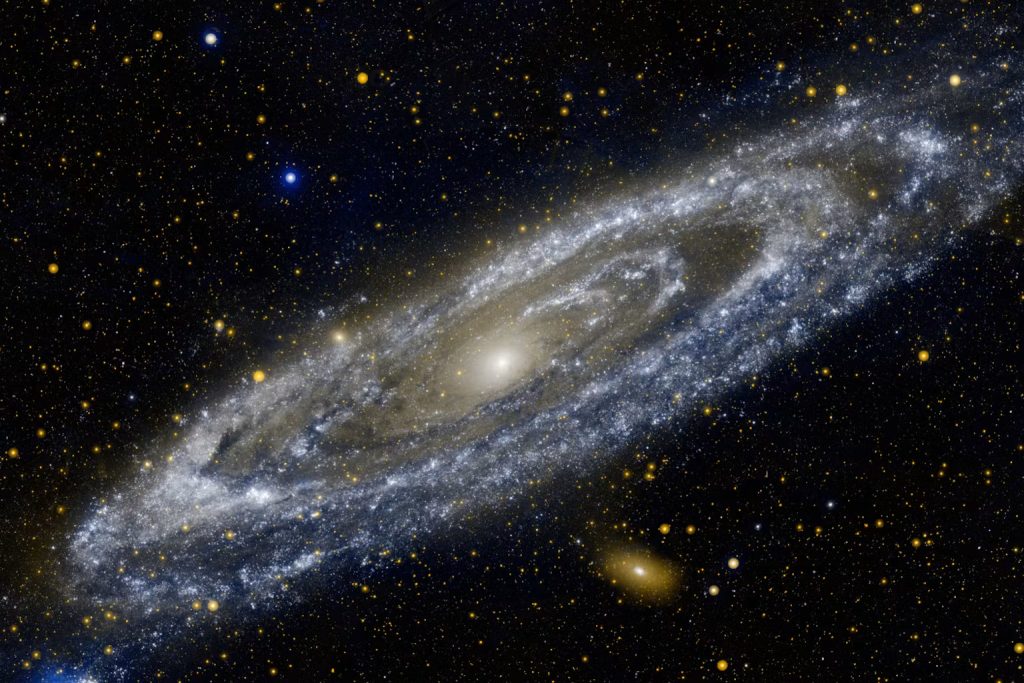
Henrietta Swan Leavitt was handed variable stars in the Magellanic Clouds. In 1908 she published measurements on 1,777 of them; in 1912, using a set of just twenty-five, she showed that the brighter Cepheids took longer to pulse. Because the Clouds sit at effectively the same distance from us, the comparison was clean. That relationship is what let Edwin Hubble, a decade later, find a Cepheid in Andromeda and prove it was not a cloud inside our galaxy but a galaxy of its own. A Swedish mathematician wanted to nominate her for a Nobel in 1925 and discovered she had died of cancer four years earlier.
Cecilia Payne finished a Harvard thesis in 1925 arguing that stars are overwhelmingly hydrogen and helium. Henry Norris Russell, the most senior astrophysicist in America, told her it was almost certainly wrong, and she softened the claim in print. He published the same conclusion four years later. She became Harvard’s first woman full professor in 1956, thirty-one years after being right.
Rubin and the mass nobody can find
Vera Rubin picked galaxy rotation partly because it was unfashionable. She said more than once that she chose problems nobody else wanted so she would be left alone to work — which describes both a career strategy and a climate.
With Kent Ford’s image-tube spectrograph she measured how fast stars orbit at different distances from a galaxy’s centre, starting with Andromeda around 1970. The outer stars should have been slowing down. They were not — the curves went flat and stayed flat, galaxy after galaxy through the decade, meaning each spiral sits inside something massive that emits no light. Rubin did not invent dark matter, but she made it impossible to wave off.
Half a century on, nobody has caught a dark matter particle. Detectors buried in mines keep coming back empty and the theorists keep adjusting. Rubin died in 2016 without a Nobel; the survey telescope on Cerro Pachón in Chile, built to photograph the whole southern sky every few nights with a 3.2-gigapixel camera, carries her name.
The flyby that got argued down
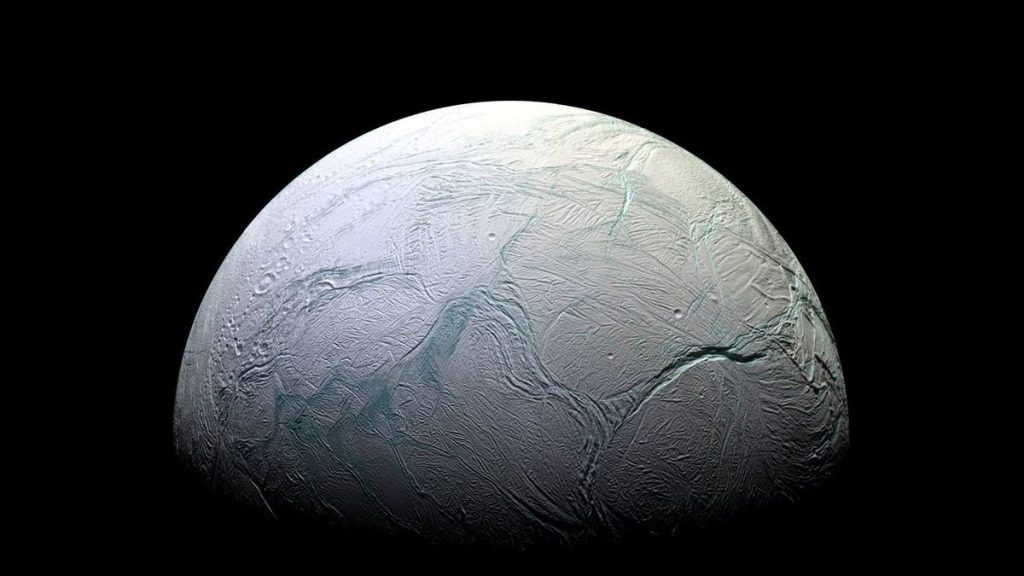
Cassini reached Saturn in 2004 with a magnetometer team led by Michele Dougherty. Passing Enceladus, a bright moon barely 500 kilometres across, the instrument recorded Saturn’s magnetic field bending as though flowing around an atmosphere. Moons that small are not supposed to have one. Dougherty pushed, over objections, to drop a later pass below two hundred kilometres, and the closer look confirmed it.
Then the imaging team, led by Carolyn Porco, caught the source: jets of ice and vapour firing out of fractures near the south pole, lit from behind by the Sun. Cassini later flew directly through that plume and sampled it. The spray carries salts, silica grains pointing to hot water reacting with rock on a seafloor, molecular hydrogen — an energy source microbes on Earth use — and large organic molecules. A moon you could drive across in a day is venting its buried ocean into space, where a spacecraft can taste it without landing. Whether anything lives in that water stays unknown until somebody flies a mission built to ask the question.
Astronomy you listen to
Wanda Díaz-Merced was studying physics in Puerto Rico when illness took her sight. Rather than leave the field she helped build sonification tools that map astronomical data onto pitch, volume and timbre, so a light curve becomes something you hear rather than plot.
Her claim is not merely about accessibility, though it is that too. She has argued that the ear catches structure inside noisy data that the eye smooths over, and tested it on space weather and gamma-ray burst records. If she is right, a technique built for a blind astronomer is a general tool — the sort of thing that only turns up when the people doing the science are not all alike.
Where it still tilts
UNESCO counts roughly one researcher in three worldwide as a woman, and that ratio moves slowly. Astronomy sits better than physics, worse than biology, and the gap widens the further up the ladder you look — professorships and mission leadership lag the graduate intake by decades, which is what you would expect if the pipeline leaks late rather than early.
One measurement is unusually clean. For years, Hubble observing proposals led by women were selected at a lower rate than those led by men. In 2018 the Space Telescope Science Institute switched to dual-anonymous review, stripping names off proposals so committees judged only the science. The gap closed in the first cycle. NASA has since extended the method to other programmes, including JWST. That does not prove every disparity is bias, and nobody claims it does — but it is one place where changing a procedure changed the outcome at once, which beats a hundred statements of intent.
The rest is harder to fix and harder to measure. Citation patterns, who gets asked to speak, who is remembered in the textbook version of a discovery that involved forty people. Naming this generation’s two flagship observatories after Nancy Grace Roman and Vera Rubin is a correction, and a late one.
Women Science Day is a decent excuse to notice all of this, though the noticing should not stop on February 12. If you want to follow where these questions go next — plume chemistry at Enceladus, the argument over what JWST is or is not seeing at K2-18b, the next round of technosignature searches — SETIworld covers this work year-round, and the conversation is better with more people in it.