Posted by
 Astronomers have detected erythrulose, a four-carbon sugar, in interstellar space for the first time, providing new evidence that biologically important molecules can form before planets and asteroids exist. The discovery was made in the molecular cloud G+0.693-0.027 near the Galactic Centre, about 8,200 parsecs from Earth. Researchers used ultrasensitive spectral surveys from the Yebes 40-metre and IRAM 30-metre radio telescopes to identify 17 rotational transitions associated with erythrulose. Six of the clearest transitions were largely unblended, and the probability that their alignment occurred by chance was estimated at only 0.2%.
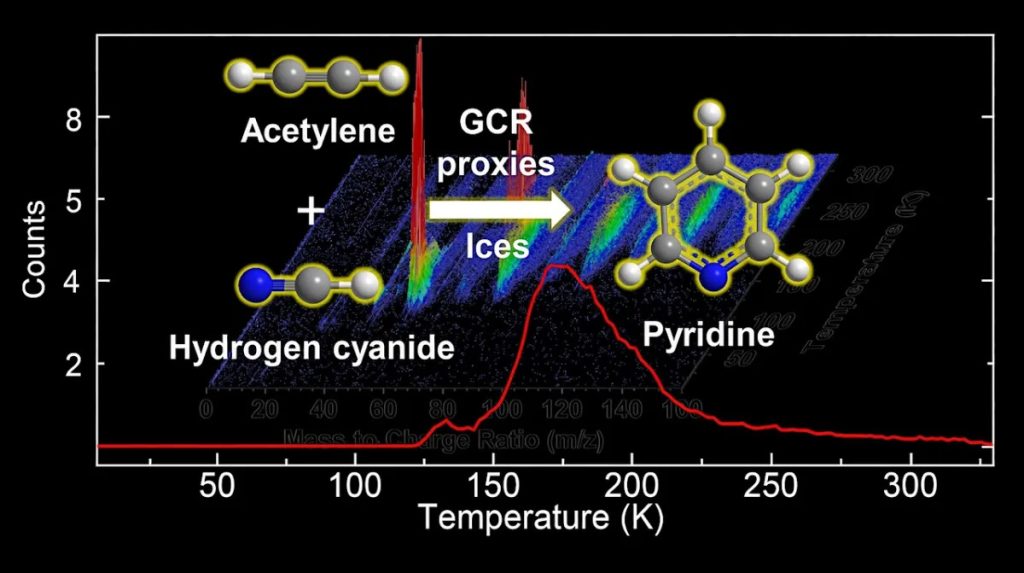
Erythrulose was found at an abundance of roughly 6.4 × 10⁻¹⁰ relative to molecular hydrogen. Surprisingly, it appears to be at least eight times more abundant than comparable three-carbon sugars, glyceraldehyde and dihydroxyacetone, neither of which was detected. Quantum-chemical calculations suggest that erythrulose can form efficiently on icy interstellar dust grains. The proposed pathway begins with glycolaldehyde and ethylene glycol, two smaller molecules already known to be abundant in the same cloud. Hydrogen abstraction creates reactive radicals, which can combine on amorphous water ice to produce erythrulose. Astrochemical simulations broadly reproduced the observed abundance under conditions of strong cosmic-ray ionization typical of the Galactic Centre.
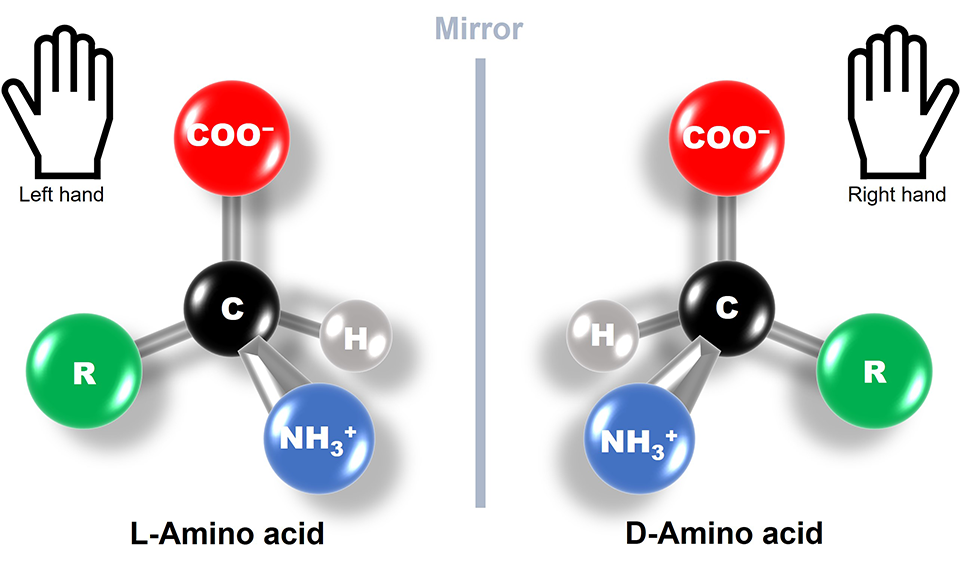
The finding is significant because erythrulose is chiral, contains four oxygen atoms and is the largest non-cyclic molecule yet identified in the interstellar medium. In water, ketose sugars such as erythrulose can rearrange into aldose sugars, including threose and erythrose, compounds relevant to the chemistry of early nucleic acids. The results strengthen the idea that sugars and their precursors formed in interstellar clouds, were incorporated into comets and asteroids, and may later have been delivered to the young Earth. Such extraterrestrial chemistry could have supplied part of the molecular inventory needed for the emergence of metabolism and genetic systems, long before life began on Earth.
For more details, read the full article.