Posted by
 Are we alone? People have asked it around fires, in temples, in observatories. What has changed in the last thirty years is that the question stopped being purely philosophical and turned into something you can actually chase with a telescope. Astrobiology sits right at that hinge. It borrows from astronomy, biology, chemistry and planetary science, and it aims at one target: figuring out how life starts, how it clings on in brutal conditions, and whether anything like it exists beyond Earth. The future of life detection depends on how well we read faint light from very far away.
The numbers help. Since Kepler, we’ve gone from a handful of known exoplanets to thousands of confirmed worlds, with thousands more waiting for confirmation. That flood of data is what makes real searching possible instead of just guessing.
What astrobiology actually studies
It’s tempting to picture astrobiologists staring at distant stars all day. A lot of the work happens closer to home. To know what alien life might look like, you first need to know how flexible life on Earth can be, and it turns out the answer is: absurdly flexible. There are microbes in acidic hot springs, in the crushing dark of deep-sea vents, inside rock kilometres underground, in Antarctic ice. Extremophiles, we call them. Every time biologists find something living where nothing should, the map of “habitable” gets redrawn a little wider.
So astrobiology runs on two legs. One studies the toughest life we already have. The other models where, out there, similar chemistry might get a foothold. Neither leg works alone.
Why exoplanets are the main event
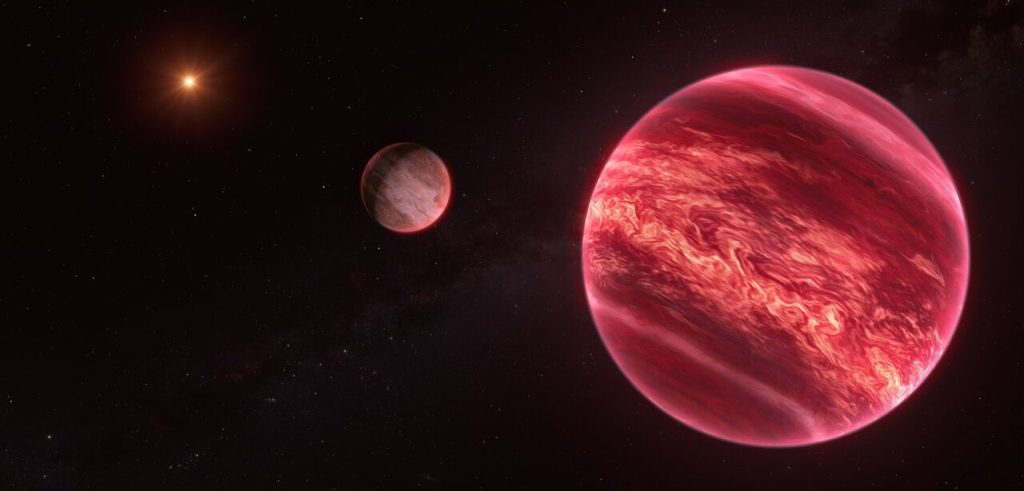
A planet outside our Solar System that happens to sit in its star’s habitable zone — close enough for liquid water, not so close it boils away — is roughly the first thing anyone checks. The TRAPPIST-1 system is a favourite example, a small cool star with several rocky planets, a few of them in that temperate band. Proxima Centauri b orbits the nearest star to the Sun. Kepler-452b, K2-18b, TOI-700 d all show up in these conversations for the same reason: right size range, right distance, plausible for water.
But here’s the thing about the habitable zone. It’s a starting filter, not a verdict. Distance from the star tells you almost nothing about whether a world actually holds onto an atmosphere, whether it has a magnetic field, whether it’s a rocky planet at all or a bloated ball of gas. A planet can sit in the perfect orbit and still be dead. Habitability is a stack of conditions, and orbital distance is just the first card off the deck.
Reading atmospheres for biosignatures
This is where it gets genuinely clever. When a planet passes in front of its star, a sliver of starlight filters through the planet’s atmosphere before reaching us. Different gases absorb different wavelengths, so that light comes out fingerprinted. Pick it apart carefully and you can start listing what the air is made of. The James Webb Space Telescope was built, in part, to do exactly this kind of spectroscopy on small worlds.
What are we hoping to find? Gases that hint at biology. Oxygen is the textbook one, because on Earth it’s produced and constantly replenished by living things — left alone it would react away. Methane is interesting for a similar reason. The strongest clue isn’t any single gas, though. It’s chemical disequilibrium: two gases coexisting that ought to cancel each other out, like oxygen and methane together, suggesting something keeps topping them up.
The catch — and you can’t say this loudly enough — is that geology lies. Volcanoes and plain rock chemistry can produce a lot of these same molecules with no life involved at all. The phosphine story is the cautionary tale here. A reported detection of that gas in the clouds of Venus set off years of argument, and the community still hasn’t fully settled whether the signal was real or how to explain it. That’s not a failure. That’s what honest science looks like when the measurement is at the edge of what instruments can do.
Listening for the other kind of signal
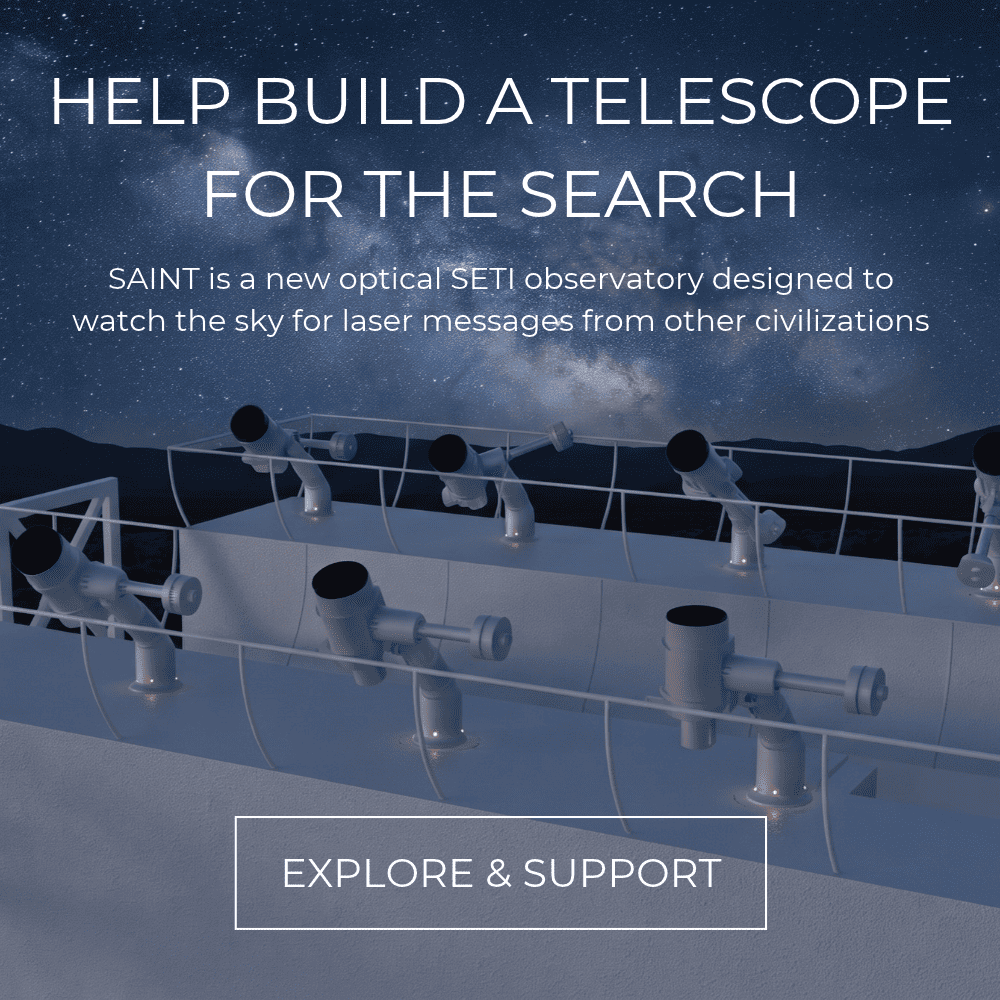
Biosignatures point at life of any sort, even pond scum. Technosignatures aim higher: signs of a civilization that builds things. Narrow-band radio broadcasts, pulses of laser light, maybe industrial pollutants smeared through an atmosphere. Radio telescopes have been sweeping the sky for structured signals for decades now, the kind of tidy patterns nature doesn’t usually bother to make.
Nothing confirmed has ever turned up. That silence is the whole shape of the Fermi paradox — if the galaxy is old and vast, where is everybody? Nobody has a clean answer. The Drake equation lays out the factors you’d need to even estimate how many talkative civilizations might be out there, and the honest truth is that we can only pin down the first few terms. The rest are guesses dressed as variables.
The instruments doing the heavy lifting
Kepler and TESS handle the census work, catching the tiny dips in brightness when a planet crosses its star. Webb does the chemistry, prying apart atmospheric light. Hubble still contributes after all these years. And the next generation is coming: the Extremely Large Telescope going up in the Chilean desert, and the Square Kilometre Array, a radio observatory spread across two continents that will listen with a sensitivity we’ve never had.
Alongside the hardware, machine learning has quietly become essential — less glamorous, but you need it. Modern surveys spit out more data than any team could ever read by hand, and algorithms are good at flagging the faint transit hidden in noisy starlight, or throwing out the false alarms that instruments generate by the thousand. It won’t decide whether a signal is alien. It just helps the humans notice the handful of candidates worth a second look.
Why it’s so hard, and why it still matters
Distance is the wall you keep running into. Even the closest exoplanets are staggeringly faint next to the glare of their own stars, and teasing a planet’s thin whisper of atmosphere out of that is near the limit of the possible. Every promising signal has to survive the question every scientist asks first: could something boring have made this? Which is exactly why nobody trusts a single method. Confidence comes from stacking evidence — a transit, then a radial-velocity measurement of the planet’s mass, then direct imaging where it’s feasible, then spectroscopy of the air. Different techniques, catching different lies, converging on the same answer.
And if we find nothing? That’s still worth knowing. A nearby system that turns out sterile tells us something real about how planets evolve and how rare the right conditions might be. A confirmed detection, on the other hand, would rearrange science, philosophy, and our sense of our own place — probably overnight. We’re not there. Maybe we’re closer than we think, maybe not; the instruments are getting sharper either way, and that’s the part I’d bet on.
If any of this pulls at you, the SETIworld portal is a good place to follow where the search goes next.