Posted by
 People who type “extra terrestrial real” into a search bar usually want a yes or a no. Science can’t give either yet. There is no confirmed organism, fossil or signal from anywhere beyond Earth. What has changed, enormously, over the last half century is the case for plausibility. We now know that life on this planet is far tougher than anyone assumed in the 1960s, that planets around other stars are the rule rather than the exception, and that liquid water hides in places that once seemed frozen solid. None of that is evidence of aliens. All of it makes the question a fair one to ask.
Life in places it had no business being
In the mid-1960s a microbiologist named Thomas Brock went looking in the hot springs of Yellowstone and found bacteria thriving in water near 70 °C. One of them, Thermus aquaticus, later supplied the heat-resistant enzyme that made the polymerase chain reaction practical, which is why a puddle in Wyoming ended up in nearly every genetics lab on Earth. Brock’s finding cracked open a field. Since then researchers have found microbes that like acid strong enough to dissolve metal, microbes living in brine pockets in Antarctic ice, and a bacterium, Deinococcus radiodurans, that shrugs off radiation doses far above what would kill a person.
Perhaps the strangest lives almost three kilometres down in a South African gold mine. Desulforudis audaxviator, described in 2008, seems to get by in isolation, drawing energy from chemistry ultimately driven by the radioactive decay of uranium in the surrounding rock. No sunlight is involved at any step.
Organisms like these don’t prove anything about other worlds. They do widen the list of environments that can’t be ruled out.
There is also the matter of timing. Earth formed about 4.5 billion years ago, and some of the oldest signs of life, layered structures called stromatolites in the Pilbara region of Western Australia, are roughly 3.5 billion years old. Whether those structures are biological is itself debated. If they are, life appeared fairly early once conditions settled down. One example is a thin basis for statistics, but it is the only one we have.
Planets are everywhere
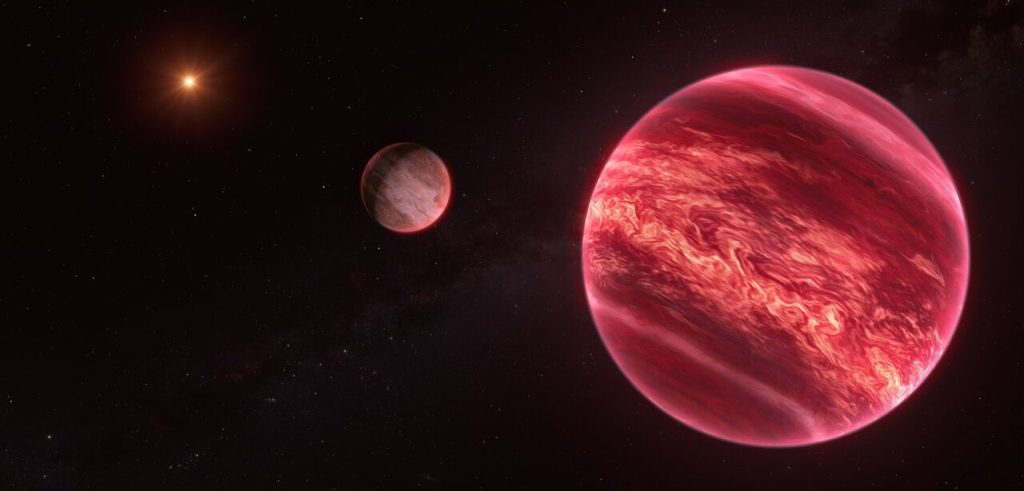
When Michel Mayor and Didier Queloz announced 51 Pegasi b in 1995, it was a single hot giant orbiting a Sun-like star in just over four days. Today NASA’s exoplanet archive lists more than 6,000 confirmed worlds. Most were found by the transit method, especially by the Kepler space telescope, which watched one patch of sky between Cygnus and Lyra from 2009 until its fuel ran out in 2018.
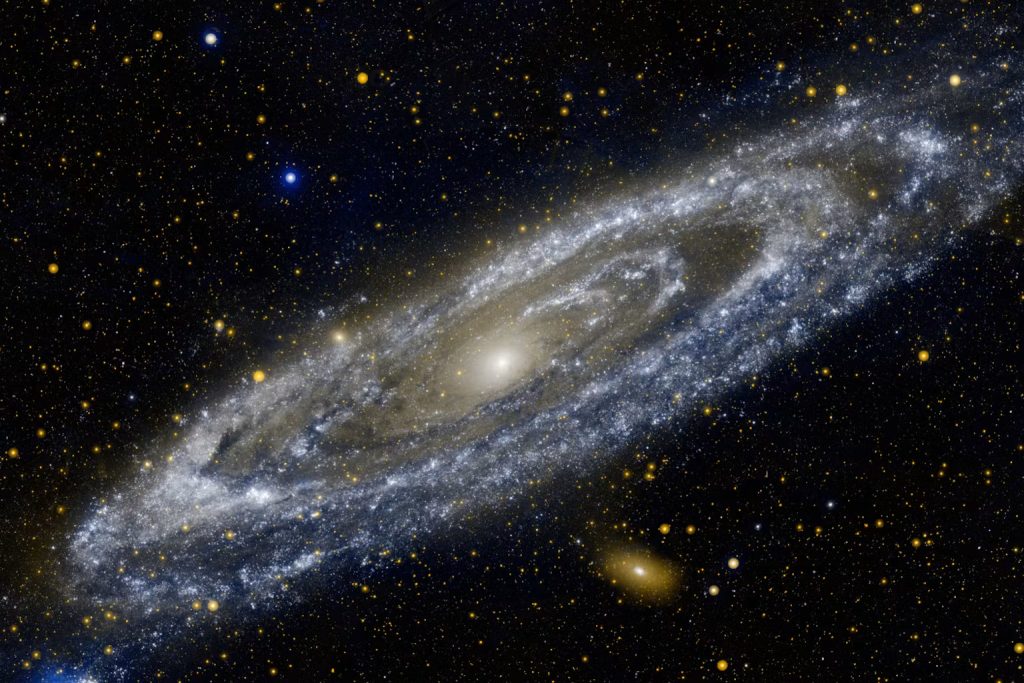
Kepler’s real legacy is statistical. By counting how often small planets show up at different distances from their stars, astronomers can estimate how common Earth-sized worlds in temperate orbits might be. The estimates vary a lot, from a few percent of Sun-like stars to more than one in five, depending on assumptions and on how the habitable zone is defined. Even the low end, multiplied across a galaxy of a few hundred billion stars, leaves a great many candidates.
Here comes the caveat, and it is a big one. A planet in the habitable zone is a planet at roughly the right distance. Venus sits near the inner edge of ours and has surface temperatures hot enough to melt lead. Size and orbit tell you nothing about air, oceans or chemistry.
Mars and its methane riddle
Mars is the obvious next-door candidate, and it has been teasing researchers for years. Dry river valleys, ancient deltas and clay minerals show that liquid water flowed on its surface more than three billion years ago. The surface today is freezing, thin-aired and bathed in ultraviolet light, which is why most hopes have moved underground or into the past.
Then there is methane. Curiosity’s onboard spectrometer has measured tiny amounts in Gale Crater, well under one part per billion, rising and falling with the seasons and occasionally spiking. On Earth most methane comes from living things. But the European Trace Gas Orbiter, circling Mars since 2018, has seen essentially none higher up in the atmosphere. How both results can be true at once is still an open argument, and geological sources such as water reacting with olivine-rich rock could produce methane without any biology at all.
Oceans under ice
The most surprising part of the story is happening close to home. In 2005 NASA’s Cassini spacecraft flew past Saturn’s small moon Enceladus and saw jets of water vapour and ice grains spraying from cracks near its south pole. Over the next decade Cassini flew through those plumes several times. It found salts, organic molecules and molecular hydrogen, the last hinting at hot water reacting with rock on the ocean floor. In 2023 a team analysing Cassini data reported phosphates as well, which matter because phosphorus is part of DNA and of the molecules cells use to store energy.
Jupiter’s moon Europa almost certainly has an ocean too, possibly holding more water than all of Earth’s seas combined. NASA’s Europa Clipper launched in October 2024 and is due to reach Jupiter in 2030 to study it from orbit.
So: water, energy, chemistry. Three ingredients present. Whether the fourth, life itself, is there is a different question, and nobody can answer it from a flyby.
How a scientist would actually say “yes”
The question “is extra terrestrial real?” has a technical answer hidden inside it: real according to what standard? For a microbe on Mars or Enceladus, scientists would want samples showing structures and chemistry that non-living processes can’t reproduce, examined by independent labs and checked carefully for contamination from Earth. For an exoplanet, it would mean an atmosphere whose combination of gases is hard to explain without biology, measured more than once, with the star and the planet’s geology understood well enough to rule out impostors.
For technology, the standard is different again: a signal or artefact that repeats, can be located, and survives every attempt to pin it on human transmitters or natural sources.
Blurry videos and eyewitness reports of unidentified objects don’t reach that bar, not because anyone has ruled out a strange explanation, but because “unidentified” only means the data were too thin to identify something. That sounds strict. It is meant to be. The history of astronomy is full of observations that looked unexplainable for a while and then turned out to have perfectly ordinary causes.
What we can and can’t say
Here is the most honest summary available in 2026. Life on Earth arrived early, adapted to almost every niche on the planet, and is built from common elements. Planets are abundant. Water exists in surprising places in our own Solar System. Those facts make it reasonable to think life could exist elsewhere.
They do not show that it does. The probability that life arises on a suitable world might be close to one, or so small that Earth is a fluke. With a single data point, both are consistent with what we see. That is the uncomfortable centre of the extra terrestrial real debate, and it is why a single confirmed microbe anywhere else would matter so much: it would turn one example into two.
Until then, “we don’t know yet” is not a dodge. It is the accurate answer.
SETIworld follows the missions, telescopes and arguments that might eventually change that answer, so if this question keeps you up at night, there is a lot more waiting for you on the portal.