Posted by
 For roughly three billion years, Earth was a planet of microbes. Bacteria and archaea built reefs, changed the chemistry of the oceans and eventually filled the atmosphere with oxygen, and in all that time nothing on the planet could have built a radio. Anatomically modern humans appeared perhaps 300,000 years ago. Radio transmitters capable of crossing an ocean arrived in the first years of the twentieth century. If you are trying to estimate how common intelligent extraterrestrial life might be, that timeline is the most important piece of evidence available, and it cuts both ways.
One planet, one data point
The optimistic reading goes like this. Life started on Earth early, within the first billion years or so, which suggests it may not be hard to get going on a suitable world. Intelligence of some kind has evolved more than once here: crows, octopuses and dolphins solve problems in ways that impress the scientists who study them, and their lineages arrived at cleverness by different routes. Nature seems willing to produce brains.
The pessimistic reading uses the same facts. Only one species out of billions that have ever lived built technology. It took about four billion years. Complex animals did not appear until roughly 600 million years ago, after a long stretch in which nothing much bigger than a cell existed. In 1983 the physicist Brandon Carter argued that if Earth’s history contains several genuinely improbable “hard steps”, we might expect exactly this pattern: long waits, then a sudden finish just before the Sun makes the planet uninhabitable. Under that view, civilisations would be extremely rare.
Both readings fit the evidence. That is the problem with a sample of one.
Drake’s equation is a list of questions
In November 1961 Frank Drake gathered about a dozen scientists at Green Bank, West Virginia, among them a young Carl Sagan, to discuss the search for signals. To organise the agenda he wrote down an equation. It multiplies the rate of star formation in the galaxy by the fraction of stars with planets, the number of habitable planets per system, the fractions on which life, intelligence and detectable technology appear, and finally L, the length of time a civilisation remains detectable.
The first few terms were guesses in 1961. Today some are measured. Thanks to Kepler and other surveys, we know that most stars have planets and that small, temperate ones are not rare.
Everything after that is still blank. Nobody knows how often life begins, how often it gets complex, how often complexity leads to tools, or how long a technological species keeps transmitting. Put in cautious numbers and the galaxy holds one civilisation, us. Put in hopeful ones and it holds millions. The equation was never meant to produce an answer. It is a way of seeing where our ignorance lives.
Where is everybody?
Around 1950, over lunch at Los Alamos, Enrico Fermi reportedly interrupted a conversation about flying saucers with a simple question: where is everybody? The galaxy is about 100,000 light-years across and more than ten billion years old. Even a civilisation spreading slowly, by slow ships over millions of years, could in principle reach every star system long before now. Michael Hart sharpened the argument in 1975.
Proposed answers fill whole books. Technological species may be vanishingly rare. They may not last, which is what the economist Robin Hanson called a “Great Filter” somewhere between dead chemistry and galaxy-spanning civilisation, possibly ahead of us. They may have no interest in expansion. Or they may be out there and our searches may simply be too small, which, given how little of the sky and the radio spectrum has been examined carefully, is a serious possibility rather than a cop-out.
No answer has been established. The silence so far is real, but it is the silence of a very short listening session.
The timing problem
Of all the Drake terms, L may matter most, and it is the one we know least about. Humanity has been technologically noisy for barely a century. Suppose a typical civilisation stays detectable for a thousand years before it falls silent, whether through collapse, a switch to quieter technology or simple loss of interest in broadcasting. The galaxy could then host many civilisations over its history and still contain only a handful at any given moment, scattered across a disc so wide that their signals would not overlap.
Light-travel time makes it worse. A signal from the far side of the Milky Way left its source tens of thousands of years ago. Two civilisations could each exist for millennia and never share a window in which one can hear the other. Nobody knows what L is. Estimates range from decades to millions of years, which is a polite way of saying we have no idea.
Not every world builds radios
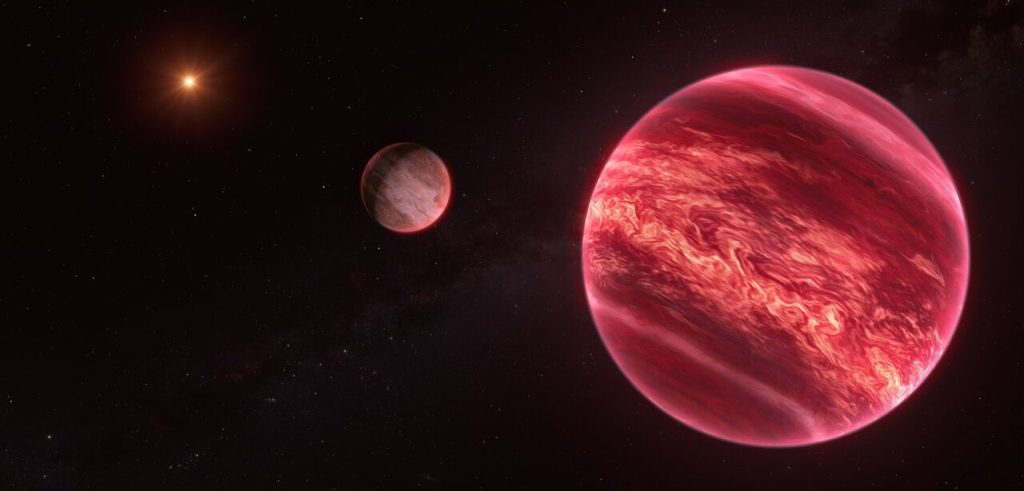
Most stars in the Milky Way are red dwarfs, small cool stars that live for trillions of years. Their temperate planets orbit very close in, so they are probably tidally locked, with one side in permanent daylight, and they get blasted by flares, especially while the star is young. Whether complex life can manage that is an open question. Some climate models suggest a thick atmosphere could spread heat around and make such planets surprisingly mild. Others are less hopeful.
Ocean worlds raise a stranger puzzle. Europa and Enceladus probably have liquid water under kilometres of ice. Suppose something intelligent evolved there. It would never see a star, never use fire, and might never find a reason to build a telescope or a transmitter. Intelligence and detectability are not the same thing, and a galaxy might hold many minds that no radio survey would ever notice.
What would a civilisation look like from here?
In 1964 the Soviet astronomer Nikolai Kardashev proposed classifying civilisations by energy use: a Type I harnesses roughly the power available on its planet, a Type II the full output of its star, a Type III that of an entire galaxy. Humanity is not yet Type I. The scale is crude, but it highlights a practical point. Only energy-hungry civilisations would be easy to see across interstellar space; a quiet, efficient one could be nearly invisible.
Some researchers, Seth Shostak of the SETI Institute among them, have argued that any civilisation we detect is more likely to be machines than biological beings, since artificial intelligence could outlast its makers and travel where organisms cannot. It is a speculative idea. It does remind us that searching only for beings like ourselves may be the narrowest possible strategy.
Keeping hope and evidence apart
There is no confirmed evidence of intelligent extraterrestrial life. There is also no evidence against it beyond a short and limited search. Holding both of those at once is harder than it sounds, because the human instinct is to pick a side.
The searches are getting better. Breakthrough Listen and similar programmes scan far more stars and frequencies than any earlier project, and telescopes like JWST are starting to read the atmospheres of rocky planets. If the question of intelligent extraterrestrial life is ever answered, it will be answered by those slow, unglamorous surveys, not by argument.
On SETIworld we follow the searches, the arguments over the Drake equation and the occasional candidate signal as each one is tested, so if this is your kind of question, there is much more to explore on the portal.