Posted by
 For about fifty years after Apollo 17 left the Moon in December 1972, NASA space travel meant low Earth orbit. Shuttles, then the International Space Station, a few hundred kilometers up. Astronauts did remarkable things there, but nobody went farther than Gene Cernan and Harrison Schmitt had. That changed on 16 November 2022, when an uncrewed Orion capsule launched on the first Space Launch System rocket, swung around the Moon, travelled farther from Earth than any spacecraft built for humans had gone before, and splashed down in the Pacific after 25 days. The Artemis era had started, and with it a plan that tries to connect the Moon and Mars into one long program.
A plan that admits it will change
NASA calls that plan its Moon to Mars architecture. Rather than a single mission timeline, it’s a framework the agency first published in 2023 and revises through annual reviews, describing what capabilities are needed and in roughly what order. It’s split into four stages: Human Lunar Return, Foundational Exploration, Sustained Lunar Evolution and, finally, Humans to Mars.
The language is deliberately cautious. Each stage is defined by what it should achieve, such as landing crews near the lunar south pole or keeping people on the surface for longer stretches, rather than by fixed launch dates. Cynics read this as a way to avoid being held to schedules. A kinder reading is that NASA has been burned by fixed promises before and is building in room for the inevitable surprises. Both are probably partly true. The plan also keeps growing in detail. NASA’s 2026 architecture materials, for example, discuss a phased approach to building up a Moon base, step by step, rather than a single grand construction project, and the agency’s yearly workshops keep returning to the same unresolved items, Mars landing chief among them.
Why go back to the Moon at all?
Apollo already went there six times. The difference now is the goal: staying rather than visiting. Apollo crews spent at most about three days on the surface. Artemis aims, over time, for weeks and eventually something closer to a continuous presence, which tests exactly the things a Mars crew would rely on: power through long nights, dust-resistant suits and seals, habitats, logistics and life support that runs for months.
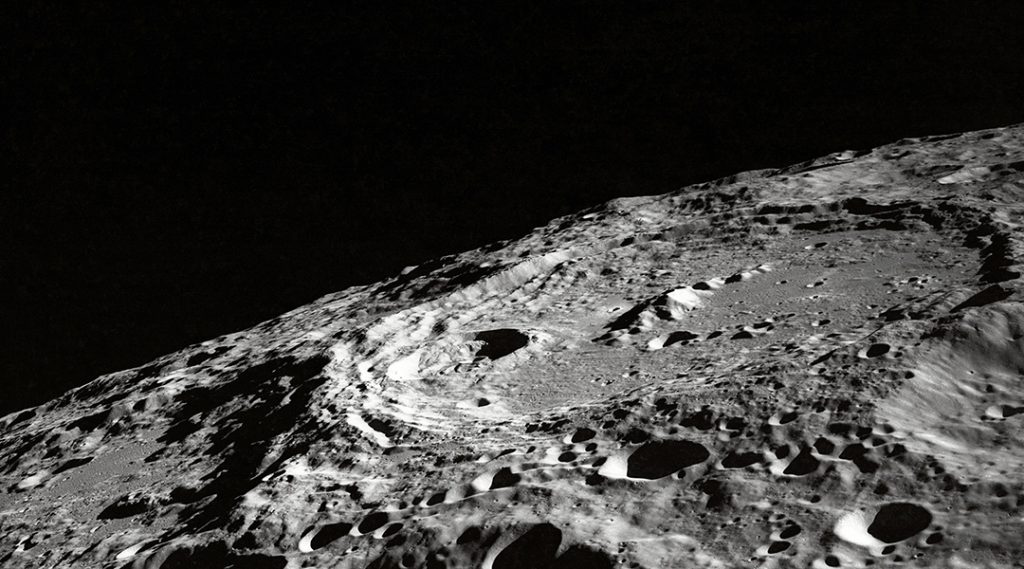
The site matters too. Artemis targets the region around the lunar south pole, where some crater floors haven’t seen sunlight in billions of years. In 2009, NASA’s LCROSS mission slammed a spent rocket stage into one of those craters, Cabeus, and detected water in the plume of debris. If that ice can be mined, it becomes drinking water, breathable oxygen and rocket propellant. Proving that on the Moon is far easier than proving it on Mars, which is precisely the point.
The hardware, piece by piece
Orion is the crew capsule, built for deep space rather than quick hops to orbit. Artemis I mostly went well, but engineers found that Orion’s heat shield had lost charred material in unexpected chunks during re-entry, which led to a long investigation and contributed to delays for the next flight. Artemis II, a roughly ten-day crewed flight around the Moon with NASA’s Reid Wiseman, Victor Glover and Christina Koch and Canada’s Jeremy Hansen, is the step that turns Orion from a test article into a crew vehicle. Their assignment made Glover, Koch and Hansen the first person of colour, the first woman and the first non-American ever named to a lunar crew.
Getting from lunar orbit to the surface relies on commercial landers. In 2021 NASA picked SpaceX’s Starship for its first crewed landing system, and in 2023 added Blue Origin’s Blue Moon as a second provider. Both are enormous vehicles compared with the Apollo lunar module, and both depend on refuelling in space, which has never been done at that scale. Gateway, a small station planned for a long, looping orbit around the Moon, was meant to serve as a staging point; its future has become a subject of budget fights in Washington, which says a lot about how stable the whole architecture really is.
Smaller robots go first. Under its Commercial Lunar Payload Services program, NASA buys space on privately built landers. In February 2024, Intuitive Machines’ Odysseus became the first American spacecraft to touch down on the Moon since 1972, although it tipped over on landing. In March 2025, Firefly’s Blue Ghost landed upright and ran its experiments through a full lunar day. Cheap, risky, and much quicker than traditional NASA missions.
Power, talk and the boring stuff that matters
The less photogenic parts of the plan may matter most. Lunar nights near the equator last about two weeks, and even at the poles the light comes and goes. NASA’s fission surface power project grew out of the Kilopower reactor tests and aims to put a small nuclear reactor on the Moon, a technology a Mars base would almost certainly need.
Communications are another quiet frontier. In 2023, the Psyche asteroid mission carried a laser communications experiment that beamed high-definition video back to Earth from millions of kilometers away, at data rates far beyond typical radio links. A Mars outpost sending back hours of geology footage and medical data will need that kind of bandwidth.
The leap from the Moon to Mars
NASA is fairly frank that Mars is a different beast. The Moon is three days away; Mars is many months. A lunar crew in trouble can, in principle, head home within days. A Mars crew can’t. Landing on the Moon means dropping onto an airless body with gentle gravity, while landing a heavy crewed vehicle through the thin Martian atmosphere is an unsolved engineering problem that NASA’s architecture workshops still list as a key open question.
Propulsion is equally unsettled. The agency’s studies compare chemical rockets with nuclear thermal and nuclear electric options, each trading travel time against mass, cost and maturity. As of now, none of those choices is locked in, and the hardware for a Mars transit vehicle doesn’t exist. Anyone who quotes a firm date for NASA astronauts on Mars is quoting a hope, not a schedule.
There’s also the question of who pays. NASA’s Mars ambitions sit inside annual budgets that shift with each Congress and administration, and SpaceX has openly pursued its own Mars plans in parallel. The final shape of NASA space travel to Mars may be a partnership, a competition or something stranger. Nobody knows yet.
Why it is still worth watching
None of this is as dramatic as a Saturn V launch on live television. It’s slower, more incremental, more commercial and more international, with partners from Europe, Japan, Canada and the UAE contributing hardware and astronauts. But it’s also more serious about the question Apollo never really asked: not whether people can reach another world, but whether they can stay and work there. The Moon is where NASA intends to find out, before it bets lives on Mars.
If you want to follow NASA space travel as Artemis flights fly or slip, and as the Moon to Mars plan gets rewritten in each annual review, SETIworld keeps track of the missions and the science behind them. Read on with us and keep an eye on the Moon. It’s where the road to Mars actually begins.