Posted by
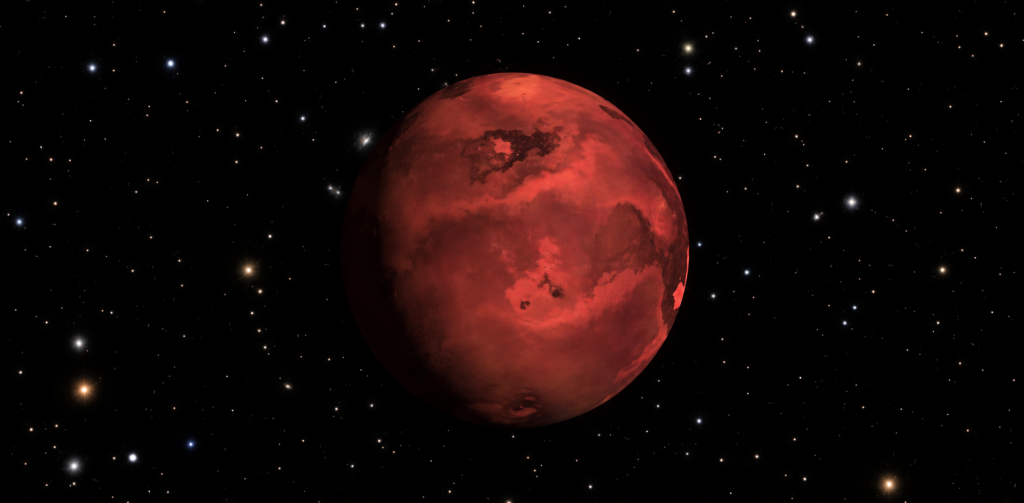
A new study has identified 27 giant exoplanets that could become prime targets for the Lazuli Space Telescope, a privately funded observatory planned for launch by 2029.
Lazuli will carry a 3-meter primary mirror, larger than Hubble’s 2.4-meter mirror, together with three instruments: a wide-field optical imager, an integral field spectrograph, and the ExtraSolar Coronagraph (ESC). The coronagraph is designed to suppress starlight so that astronomers can directly detect and characterize planets through the light they reflect from their host stars.
Until now, directly imaged exoplanets have primarily been detected through their own thermal emission. This approach favors young, hot planets because worlds cool and become fainter as they age. Reflected-light observations avoid this limitation because their brightness depends on starlight rather than residual heat from formation. Observing at visible and near-infrared wavelengths also provides better spatial resolution than thermal infrared imaging, potentially allowing Lazuli to study planets orbiting closer to their stars. In the future, similar techniques could become important for examining planetary atmospheres and searching for atmospheric signatures associated with habitability or even life.
Researchers selected 27 known giant exoplanets whose orbital parameters are sufficiently well constrained to make observations efficient. Detecting planets in reflected light requires contrasts of roughly 10⁻⁷ to 10⁻⁹ relative to their stars, potentially demanding tens or hundreds of hours of exposure. Knowing when a planet is most favorably positioned can therefore dramatically reduce wasted observing time. The target list includes familiar systems such as 55 Cancri d, a Jupiter-like giant; HD 181433 d, which follows a highly eccentric orbit; and β Pictoris b, one of the earliest directly imaged exoplanets and a planet embedded within a well-known debris-disk system. Several targets could also be observed by the Nancy Grace Roman Space Telescope’s coronagraph and the Extremely Large Telescope’s METIS instrument. Combining reflected-light and thermal observations could provide much more complete measurements of planetary atmospheres.
The researchers argue that Lazuli could extend direct imaging into a previously difficult regime: older and colder giant planets in mature planetary systems. In doing so, the telescope could help develop the observational techniques eventually needed to characterize smaller rocky worlds and search their atmospheres for potential biosignatures.
For more details, read the full article by Universe Today.