Posted by
 For ten days in April 2026, four people were further from home than anyone had been since 1972. Artemis II launched on April 1, swung around the Moon in the Orion capsule and splashed down on April 10. It did not land. It was never meant to. But it was the first time since Apollo 17 that a crew had left low Earth orbit, and it set the tone for a year in which space exploration current events have been less about single headlines and more about several long stories moving at once. Some of those stories are about rockets and people. The more interesting ones, for anyone who cares about life elsewhere, are about water.
Ten days around the Moon
The Artemis II crew was NASA’s Reid Wiseman, Victor Glover and Christina Koch, with Jeremy Hansen of the Canadian Space Agency. Their flight was a test in the plain engineering sense. Life support, navigation, communications, the heat shield on re-entry from lunar speeds: all of it had to work with people aboard before anyone tries to put boots on the surface.
That sounds dull next to a landing. It is also exactly how Apollo did it. Apollo 8 orbited the Moon months before Apollo 11 touched down, and nobody now remembers that as a half-measure.
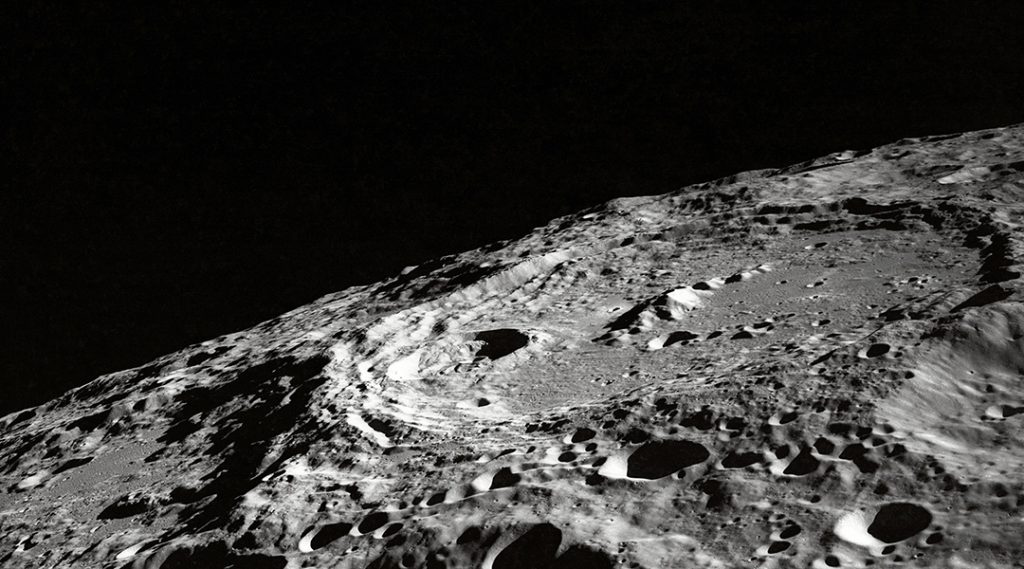
Why bother with the Moon again? Partly because it is the nearest place to practise living far from Earth, with real dust, real radiation and real communication delays. Partly because the Moon is a geological archive. Its surface has barely changed in billions of years, so it keeps a record of the early Earth-Moon system and of the impacts that pounded the inner Solar System long ago. Our own planet erased most of that record with plate tectonics and weather.
Two spacecraft, one giant planet
The quieter story of the year is happening hundreds of millions of kilometres away. Two spacecraft are crossing the Solar System towards Jupiter, and both are interested in the same question: what is under the ice?
NASA’s Europa Clipper launched in October 2024 and flew past Mars in early 2025 to pick up speed. Its next big moment is an Earth flyby planned for December 2026, which will fling it onward to arrive at Jupiter in 2030. It will not orbit Europa itself, because the radiation there would cook its electronics too quickly. Instead it will loop around Jupiter and dive past Europa again and again, several dozen times, mapping the ice shell, sniffing for water and organic chemistry, and measuring the magnetic signature of the salty ocean that very likely lies underneath.
The European Space Agency’s JUICE, launched in April 2023, is on a longer, looping path. It has already used flybys of the Earth, the Moon and Venus to adjust its course, and it is due at Jupiter in 2031. JUICE will study Europa and Callisto, then settle into orbit around Ganymede, the largest moon in the Solar System, which probably hides an ocean of its own between layers of ice.
Neither mission carries an instrument that can detect life. That point gets lost in coverage surprisingly often. They are built to answer a narrower question: are these oceans habitable? Is there liquid water, the right chemistry, and a source of energy that has lasted long enough to matter? A yes would not mean anything lives there. It would mean we know where to look next, and with what.
Mars, still in the middle of it all
Mars has not gone anywhere. Curiosity and Perseverance are still driving, and Perseverance keeps collecting sealed rock cores from what was once a lake and river delta in Jezero crater. The big open question is how those samples get to Earth. NASA’s original return plan grew so expensive that the agency has spent the past couple of years reconsidering how, and whether, to do it. Until that is settled, the most promising Martian rocks are sitting in tubes, waiting.
The scientific case is not in doubt. Mars had rivers and lakes billions of years ago and lost them. Working out how long the planet stayed wet, and why it dried, tells us how long a world can remain habitable, which is a question that applies far beyond Mars.
Worlds around other stars
Exoplanet science has its own running news cycle, and in recent years it has mostly been about atmospheres. JWST can catch starlight filtering through the air of some planets as they pass in front of their stars, and read off molecules from the way that light is absorbed.
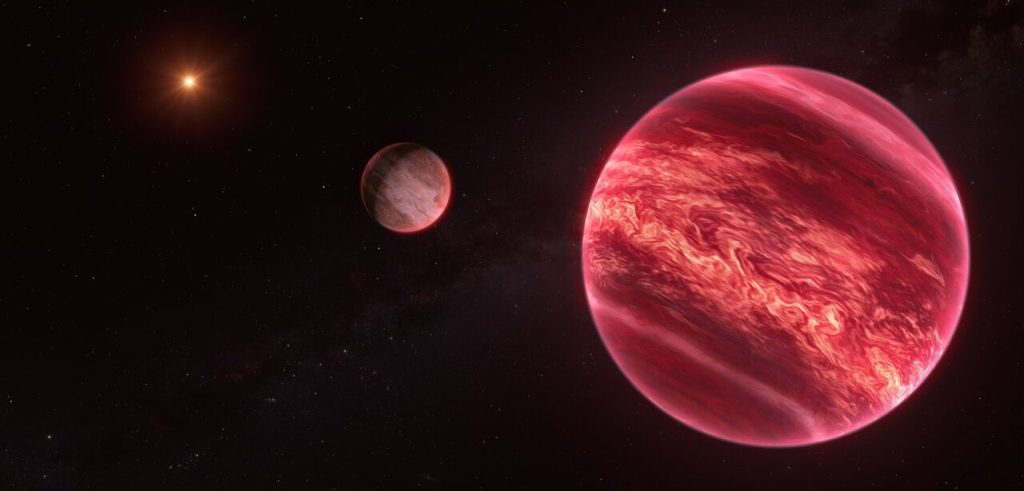
The most argued-over example is K2-18b, a planet a bit more than twice Earth’s size orbiting a red dwarf about 124 light-years away. A Cambridge-led team reported a possible signal of dimethyl sulfide, a gas that on Earth comes mainly from marine life. Other researchers reanalysed the same data and found the evidence much weaker, or explainable without any biology at all. That debate is not finished. It is a good example of how real science looks from close up: a tantalising hint, then a pile-up of reasonable objections.
Closer to home in the galaxy, JWST has been checking whether the rocky planets of TRAPPIST-1 keep any atmosphere at all. The innermost ones so far look bare or nearly so, which is useful information even if it is not the story people hoped for. Stars like TRAPPIST-1 throw out a lot of flares, and a planet that sits close to one may struggle to hold on to its air.
How to read the headlines
Space news has a habit of compressing careful findings into dramatic claims, and following space exploration current events without getting fooled takes a few habits. None of them are complicated.
Potentially habitable does not mean inhabited. It means conditions might allow life under some assumptions. An unusual molecule in a spectrum is not automatically a biosignature, because almost every gas that biology makes can also be made by geology, photochemistry or a quirk of the instrument. And an Earth-sized planet is not another Earth. Venus is Earth-sized, after all.
The phrase worth watching for in any research paper is “consistent with”. It is doing a lot of work, usually honestly.
What to watch for next
A few things are on the calendar for the rest of 2026 and just beyond. Europa Clipper’s Earth flyby in December. ESA’s Hera spacecraft, sent to inspect the asteroid that NASA’s DART probe struck in 2022, is scheduled to arrive there around the end of the year. The Nancy Grace Roman Space Telescope is being readied for launch, with NASA aiming for no later than May 2027 and possibly earlier. Schedules slip, so treat every date as a target rather than a promise.
Among space exploration current events, the most important breakthrough may not look dramatic when it arrives. A better measurement of an ice shell, a cleaner spectrum or a ruled-out hypothesis can matter more than a flashy headline. Science moves by subtraction as often as by discovery.
Is Earth the only inhabited world we know because life is rare, or because we have barely started looking? Nobody knows yet. If you want to follow the answer as it slowly comes together, SETIworld keeps track of the missions, the data and the arguments, and there is plenty on the portal to read and talk about.