Posted by
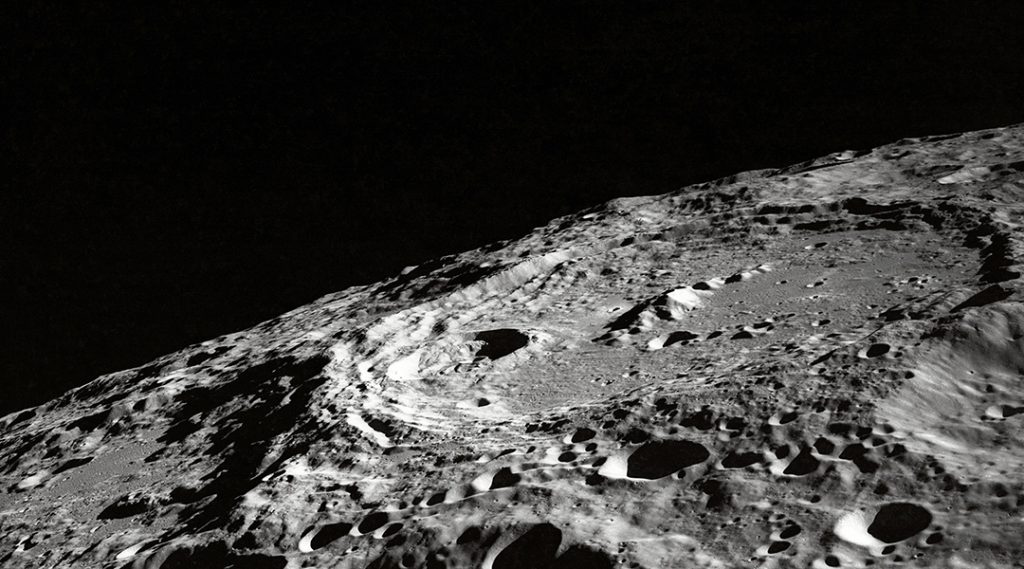
 Some microorganisms carried to the Moon by future astronauts may be able to survive in permanently or temporarily shaded areas near the lunar South Pole, according to NASA researchers. The findings, published in Science Advances, raise new questions about planetary protection as human activity on the Moon increases.
The concern is that microbes released from spacesuits, habitats, equipment, and astronauts themselves could persist long enough to complicate future scientific investigations. Humans naturally carry enormous microbial populations, making some level of contamination unavoidable even when strict sterilization procedures are used. This matters because scientists hope to study lunar materials for clues about the Moon’s geological history and potentially ancient chemistry relevant to life. If terrestrial microbes or their chemical traces become established in protected lunar environments, researchers may find it increasingly difficult to determine whether a future signal originated naturally on the Moon or was brought from Earth.
The study examined five microorganisms, including both bacteria and fungi, selected because of their demonstrated resilience in spaceflight conditions. One example is Aspergillus niger, a common fungus previously detected aboard the International Space Station. Experiments have shown that it can also survive exposure outside the station.
According to the researchers, such survival is surprising because many of these organisms are not normally classified as extremophiles. Yet spaceflight experiments suggest that some ordinary terrestrial microbes can endure conditions far harsher than expected. The authors argue that the problem could also become an opportunity. Shaded regions near the lunar South Pole could serve as natural laboratories for testing how long Earth microbes can survive in extreme extraterrestrial environments that are difficult to reproduce on Earth. Before extensive human exploration begins, however, scientists say it will be important to establish a baseline of the microorganisms and other contaminants that missions are likely to introduce.
For more details, read the full article by NASA Astrobiology.