Posted by
 NASA’s upcoming Nancy Grace Roman Space Telescope could become a crucial stepping stone toward directly imaging Earth-like exoplanets. In a recent SETI Live discussion, SETI Institute senior scientist Dr. Margaret Turnbull explained how Roman’s Coronagraph Instrument will test technologies needed for future missions designed to study potentially habitable worlds.
Most exoplanets have been discovered indirectly through transits or gravitational effects on their host stars. Direct imaging is much harder because planets are extremely close to their stars in the sky and can be millions or billions of times fainter. Roman’s coronagraph is designed to suppress starlight and reveal the much weaker reflected light from orbiting planets. Two deformable mirrors will continually adjust their surfaces to cancel unwanted stellar light, effectively creating an artificial eclipse inside the telescope.
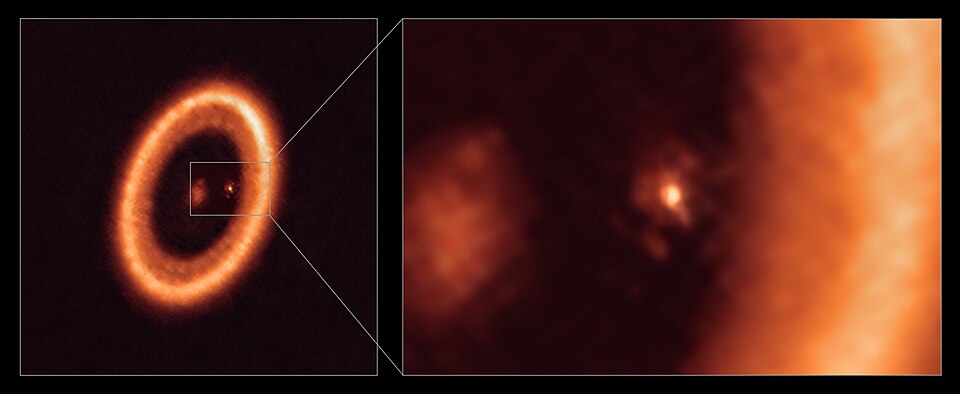
Roman’s Wide Field Instrument will complement this work through a large gravitational microlensing survey, measuring how common planets of different sizes are throughout the Milky Way, initially focusing on giant planets rather than Earth analogues. By studying their reflected-light spectra, astronomers hope to detect molecules such as methane and investigate clouds, hazes, dust and atmospheric structure. One promising target is 47 Ursae Majoris b. The mission will also study exozodiacal dust surrounding nearby stars: these debris structures can reveal the gravitational influence of unseen planets and provide clues about how planetary systems are organized and evolve.
For future exoplanet research, Roman’s greatest importance may be technological. Its coronagraph will demonstrate whether advanced starlight-suppression systems can operate successfully in space. If successful, the lessons learned will directly support NASA’s future Habitable Worlds Observatory, which is intended to image rocky planets around nearby Sun-like stars and analyze their atmospheres for possible signs of life.
For more details, watch the full SETI Live conversation.