Posted by
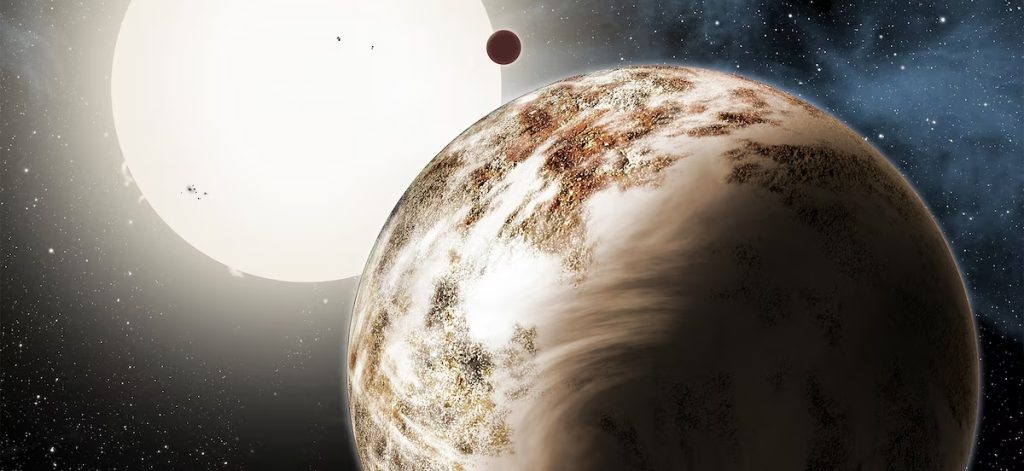
Astronomers have confirmed the youngest exoplanet discovered so far, offering a rare opportunity to observe a giant planet while it is still actively forming.The planet, Elias 2-24 b, is less than one million years old and lies about 450 light-years from Earth. It remains embedded within the disk of gas and dust surrounding its young host star, where it is still gathering material and building its atmosphere.
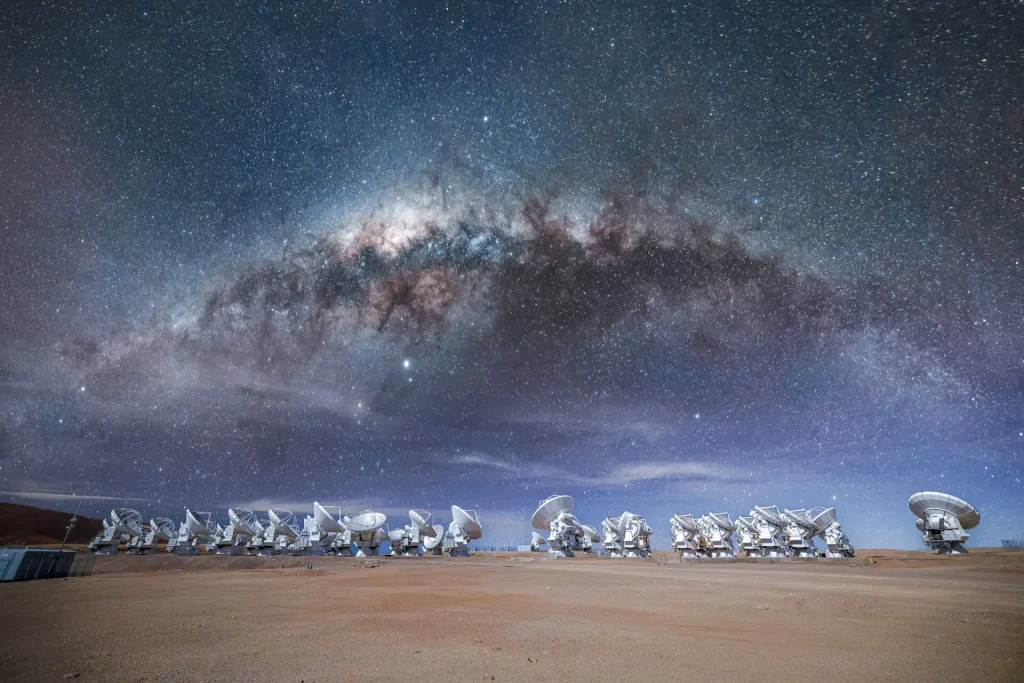
Young stars are commonly surrounded by protoplanetary disks – rotating structures made of gas and dust from which planets emerge. Observations with facilities such as ALMA have revealed numerous rings, gaps and cavities in these disks. Astronomers have long suspected that some of these structures are created by growing planets sweeping up material along their orbits, but directly detecting those planets is extremely difficult. Elias 2-24 b provides unusually strong evidence for that connection. The planet sits within a prominent gap in its star’s disk and appears to be undergoing a rapid phase of gas accretion expected in the core-accretion model, the leading explanation for how giant planets form.
The discovery also demonstrates the value of astronomical archives. Keck Observatory first observed the system with its NIRC2 near-infrared camera and coronagraph in 2018. At the time, the data contained only a faint signal. Years later, researchers reprocessed those observations using improved analysis techniques and recovered evidence for the planet. Additional Keck data from 2020, together with observations from the Very Large Telescope and ALMA, helped confirm that the source was a forming planet rather than a background object or imaging artifact. Because Elias 2-24 b is still in such an early evolutionary stage, it could help astronomers test models that struggle to predict the properties of newborn giant planets, including their mass, temperature, luminosity and rate of gas accretion.
The system may also offer a glimpse of processes that shaped the early Solar System – Earth and the other planets formed billions of years ago, leaving astronomers to reconstruct their origins indirectly. Elias 2-24 b instead allows scientists to observe planetary formation while it is still happening. Future spectroscopy could reveal more about the planet’s atmosphere, temperature and ongoing growth.
For more details, read the full article by W.M. Keck Observatory.